



- Home
- /
- Supreme court
- /
- Multiplier Method Under Motor...
Multiplier Method Under Motor Vehicles Act Cannot Be Applied To Electrocution Death Cases : Supreme Court
Yash Mittal
22 Aug 2026 1:55 PM IST
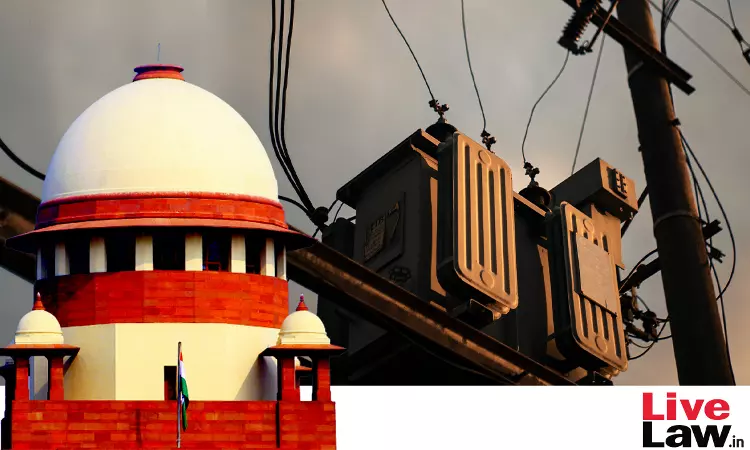
The Supreme Court recently clarified that the multiplier method used in computing compensation in motor accident claim cases cannot be applied for computing compensation in electrocution death cases. “…the multiplier method cannot be applied to determine compensation in cases of electrocution. Since the calculation paradigm as provided for in connection with the Motor Vehicles Act, 1988...
This is a premium content
Available exclusively to
Our subscribers
Subscribe Premium 
INR 1099+GST
Your support helps us to bring you more content at
an affordable subscription scheme !!!
All payment options available
The Supreme Court recently clarified that the multiplier method used in computing compensation in motor accident claim cases cannot be applied for computing compensation in electrocution death cases.
“…the multiplier method cannot be applied to determine compensation in cases of electrocution. Since the calculation paradigm as provided for in connection with the Motor Vehicles Act, 1988 is dependent on the multiplier, the scenario thereunder could not have been applied mutatis mutandis to electrocution cases, as done by the High Court in the impugned judgment. It is a matter of law that the Electricity Act 2003 does not provide for the method to calculate compensation. What it does provide is the liability of the licensee to pay compensation in certain scenarios under Section 57 thereof but does not say anything regarding the method applicable to calculating the same.”, observed a bench of Justice Sanjay Karol and Justice Nongmeikapam Kotiswar Singh.
Referring to its own judgment of Raman v. Uttar Haryana Bijli Vitran Nigam Ltd. (2014), the Court held that the multiplier method cannot be applied to determine compensation in cases of electrocution.
The judgment arose from two electrocution incidents, including the death of a man who came into contact with an 11 KV transmission line and the severe injury suffered by another person after he came into contact with a 66 KV line while attempting to retrieve a cricket ball.
Writ petitions were filed before the High Court seeking compensation for the death that occurred due to electrocution. The High Court, ignoring the disputed question of facts, has allowed the writ petitions, granting compensation to the claimants, applying the multiplier method on the lines of the Motor Vehicles Act, 1988.
Aggrieved by the High Court's decision, an appeal was preferred before the Supreme Court by the Karnataka Power Transmission Corporation.
Setting aside the High Court's decision, the judgment authored by Justice Karol faulted the High Court for applying the Motor Vehicle Act's multiplier method, despite the same being inapplicable to the Electricity Act, 2003.
Also From Judgment: Electrocution Deaths Attract Strict Liability On Electricity Boards, Not Absolute Liability: Supreme Court
Headnote
Constitution of India, 1950 — Article 226 — Writ Jurisdiction — Maintainability in Electrocution Claims — Disputed Questions of Fact - Writ petition under Article 226 of the Constitution of India is not an appropriate remedy to claim compensation for death or injury caused by electrocution where disputed questions of fact are involved - The High Court erred in entertaining writ petitions and awarding compensation by treating the occurrence as a matter of absolute liability and ignoring factual disputes relating to negligence, contributory negligence, compliance with statutory safety distances, and third-party liability - Where material facts are in dispute, parties must be relegated to civil courts or appropriate alternate forums. [Relied on Chairman, Grid Corpn. of Orissa Ltd. (Gridco) v. Sukamani Das, (1999) 7 SCC 298; Radha Krishan Industries v. State of H.P., (2021) 6 SCC 771; T.N. Cements Corpn. Ltd. v. Unicon Engineers, (2025) 4 SCC 1; Paras 8-16]
Law of Torts — Electrocution Cases — Principle of Liability Applicable — Strict Liability vs. Absolute Liability — Exceptions to Strict Liability - In cases of electrocution involving electricity transmission and distribution entities, the standard of liability applicable is Strict Liability (under the rule in Rylands v. Fletcher), and not Absolute Liability - Although transmission of electricity is inherently dangerous and enterprises engaging in it are strictly liable irrespective of absence of negligence/fault, such liability remains subject to recognized legal exceptions (e.g., act of God, act of a stranger, default/negligence of the plaintiff, consent, statutory authority) - The standard of absolute liability (evolved in M.C.
Mehta without exceptions) does not apply indiscriminately to all electrocution cases so as to preclude statutory and factual defences. [Relied on Union of India v. Prabhakaran Vijaya Kumar, (2008) 9 SCC 527; M.P. Electricity Board v. Shail Kumari, (2002) 2 SCC 162; Kaushnuma Begum v. New India Assurance Co. Ltd., (2001) 2 SCC 9; Distinguished from M.C. Mehta v. Union of India (Shriram - Oleum Gas), (1987) 1 SCC 395; Paras 10-14]
Electricity Act, 2003 — Section 57 — Compensation in Electrocution Claims — Inapplicability of Motor Vehicles Act Multiplier Formula - The calculation paradigm and multiplier method provided under the Motor Vehicles Act, 1988 cannot be applied mutatis mutandis to determine compensation in electrocution cases - In the absence of a prescribed calculation method under the Electricity Act, 2003, compensation must be determined on the overarching principle of awarding just, fair, and reasonable compensation based on proven income and relevant facts before the competent forum. [Relied on Raman v. Uttar Haryana Bijli Vitran Nigam Ltd., (2014) 15 SCC 1; Balram Prasad v. Kunal Saha, (2014) 1 SCC 384; Para 15-16].
Cause Title: KARNATAKA POWER TRANSMISSION CORPORATION LIMITED VERSUS REKHA & ORS.
Citation : 2026 LiveLaw (SC) 799
Tags

Yash Mittal
Yash Mittal is a Correspondent with LiveLaw, covering the Supreme Court of India

