



- Home
- /
- Supreme court
- /
- Non-Parties Liable For Contempt If...
Non-Parties Liable For Contempt If They Knowingly Aid Disobedience Of Orders: Supreme Court
LIVELAW NEWS NETWORK
2 March 2026 8:14 PM IST
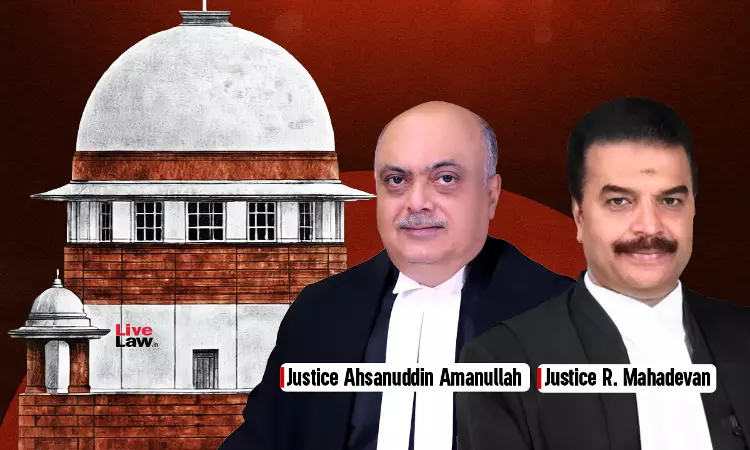
The Supreme Court has clarified that even persons who were not parties to the original proceedings can be held liable for contempt if they knowingly aid or facilitate the disobedience of a court order. The Court emphasised that once a person or authority becomes aware of a judicial order, deliberate inaction or assistance in non-compliance can amount to contempt of court.A bench of...
This is a premium content
Available exclusively to
Our subscribers
Subscribe Premium 
INR 1099+GST
Your support helps us to bring you more content at
an affordable subscription scheme !!!
All payment options available
The Supreme Court has clarified that even persons who were not parties to the original proceedings can be held liable for contempt if they knowingly aid or facilitate the disobedience of a court order. The Court emphasised that once a person or authority becomes aware of a judicial order, deliberate inaction or assistance in non-compliance can amount to contempt of court.
A bench of Justice Ahsanuddin Amanullah and Justice R. Mahadevan made the observations while dealing with contempt petitions alleging non-compliance with its May 20, 2025 judgment relating to officials of the Chhattisgarh Government. The Court explained that contempt jurisdiction extends beyond the parties named in a judgment and can cover any authority whose conduct frustrates implementation of a court order.
Third Parties Can Commit Contempt
The Court explained that contempt is not limited to violation of an order by the person directly bound by it. A third party who knowingly assists or enables disobedience can also be punished because such conduct obstructs the administration of justice.
Relying on the decision in Sita Ram v. Balbir (2017), the Court clarified that liability of third parties arises independently. A non-party does not commit contempt by technically breaching the order, but by acting in a manner that interferes with the enforcement of the order.
The Court observed that a third party becomes liable if:
- It has knowledge of the court order
- It knowingly assists in disobedience or non-compliance
- Its conduct obstructs or frustrates implementation of the order
Thus, the source of liability is not formal party status but conduct that undermines judicial authority.
The Court emphasised that once authorities become aware of a court order, they are duty-bound to act to ensure compliance. An authority involved in the chain of implementation cannot escape responsibility by arguing that it was not a party to the original proceedings.
The bench stated that any person or authority required to cooperate in implementation is obligated to do so and cannot take the plea that it was not originally impleaded.
The Court also noted that if officials believed compliance required action by higher authorities or was beyond their competence, they should have approached the Court promptly for directions. Failure to do so cannot be used as a defence in contempt proceedings.
"it is no longer res integra that a party, once becomes or is made aware of an Order of this Court, if yet acts in wilful default or deliberate non-compliance or any such like conduct against/in breach of the Order concerned, makes itself liable to face the full wrath of Contempt Jurisdiction."
The judgment also reiterates that a court exercising contempt jurisdiction only examines whether the original order has been complied with. Questions regarding correctness, feasibility or legality of the original judgment cannot be raised in contempt proceedings.
The Court clarified that if a party considers an order impracticable or incorrect, the remedy lies in seeking clarification, modification or appeal within time. Simply failing to comply and later raising administrative difficulties cannot be accepted as a valid defence.
Factual Background
In the present case, the Court was dealing with contempt petitions alleging non-compliance with its May 20, 2025 judgment directing the Chhattisgarh authorities and the Chhattisgarh State Minor Forest Produce Cooperative Federation to take specified steps, including creation of a supernumerary post of Godown Keeper. The order was to be implemented within three months, but the authorities failed to comply within the stipulated time. The Court found that the officials delayed seeking guidance from the State Government, attempted to make compliance conditional on a review petition, and filed a defective review petition after expiry of the compliance period. The Court noted that senior State officials including the Additional Chief Secretary had knowledge of the order but did not ensure compliance.
The Court held that a prima facie case of contempt was clearly made out, including against officials who were not originally parties but were aware of the order and involved in its implementation. It granted a final opportunity for compliance and warned that charges would otherwise be framed. Significantly, the Court directed that any authority forming part of the implementation chain is duty-bound to act and may face contempt proceedings if it knowingly contributes to non-compliance. The judgment thus reinforces that non-party authorities with knowledge of a court order can be held personally accountable if their conduct frustrates enforcement of judicial directions.
Headnote
Contempt of Courts Act, 1971 – Civil Contempt – Intentional Delays and Administrative Hurdles – The Supreme Court deprecated the practice of government departments seeking "guidance" or citing "administrative hurdles" and "internal correspondence" as excuses for the non-compliance of clear court orders - Supreme Court noted that such actions are often a "calculated strategy" to delay or defeat the implementation of judicial directions.
Contempt of Courts Act, 1971 – Liability of Non-Parties – Reiterated that even a third party or an officer not originally impleaded in the main proceedings can be held liable for contempt if they have knowledge of the court's order and act in a manner that willfully prevents its compliance or aids and abets its violation - Supreme Court emphasized that in contempt proceedings, the court cannot traverse beyond the original order or supplement its directions - The focus remains strictly on whether the specific directions issued in the judgment have been willfully disobeyed. [Relied on Sita Ram v. Balbir, (2014) 13 SCC 489; J.S. Parihar v. Ganpat Duggar, (1996) 6 SCC 291; Snehasis Giri v. Subhasis Mitra, (2023) 18 SCC 529; Paras 9-29]
Case : Israr Ahmed Khan v. Amarnath Prasad and others
Citation : 2026 LiveLaw (SC) 209
Click here to read the judgment


