



- Home
- /
- Supreme court
- /
- Order XIII-A CPC | Supreme Court...
Order XIII-A CPC | Supreme Court Lays Down Guidelines For Summary Judgment In Commercial Suits
Yash Mittal
1 May 2026 6:00 PM IST
The Supreme Court has laid down guidelines for the grant of summary judgment in commercial suits in terms of Order XIII-A of the Civil Procedure Code.Interpreting Order XIII-A of the Code of Civil Procedure, the Court emphasized that summary judgment is a vital procedural mechanism intended to promote efficiency and prevent unnecessary trials in commercial disputes.The Court clarified...
This is a premium content
Available exclusively to
Our subscribers
Subscribe Premium 
INR 1099+GST
Your support helps us to bring you more content at
an affordable subscription scheme !!!
All payment options available
The Supreme Court has laid down guidelines for the grant of summary judgment in commercial suits in terms of Order XIII-A of the Civil Procedure Code.
Interpreting Order XIII-A of the Code of Civil Procedure, the Court emphasized that summary judgment is a vital procedural mechanism intended to promote efficiency and prevent unnecessary trials in commercial disputes.
The Court clarified that summary judgment should be granted where the defence is merely speculative or lacks a real prospect of success, and where a full trial would serve no meaningful purpose. It cautioned courts against allowing litigation to continue on the basis of illusory or fanciful defences.
The Court made these observations while allowing a commercial suit, noting that where the foundational facts are undisputed and no oral evidence is required, then the Courts should not be reluctant to summarily dispose of such commercial suits.
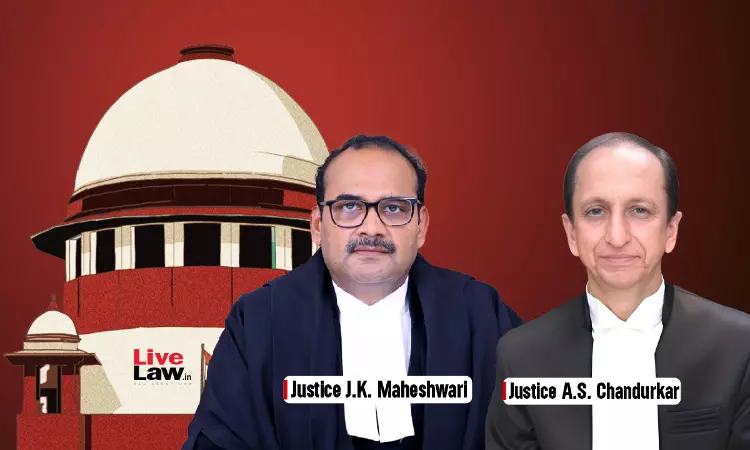
“…where the Court finds that a claim or defence is so weak that it prima-facie discloses no reasonable prospect of success, it is neither necessary nor desirable to subject the parties to the rigours of a full-fledged trial. The provision, thus, empowers the Court to arrest such proceedings at the threshold, thereby preventing undue expenditure use of judicial time and resources.”, observed the bench of Justice J.K. Maheshwari and Justice Atul S. Chandurkar.
The bench laid down the non-exhaustive guidelines have to be complied with while considering an application for summary judgment under Order XIII-A of the CPC:-
"(i) That the procedural mandate under Order XIII-A, CPC be strictly complied.
(ii) The Court should consider,
(a) Whether Plaintiff has no real prospect of succeeding on the claim or issue; or
(b) Whether the defendant has no real prospect of successfully defending the claim or issue; and
(iii) The Court should also consider whether there is no other reason why the case or issue(s) should be allowed to go to trial.
(iv) While ascertaining above, the Court does not have to take everything on the face value, but it must also not conduct a mini trial at the same time.
(v) That the Court has to differentiate between a cause of action/defence respectively, which is real as opposed to fanciful prospect.
(vi) That the Court ought to grasp the nettle, when dealing with the summary judgment applications to decide short points of law and interpretations.
(vii) The Court must take into account not only the evidence before it but also the evidence that can reasonably be expected to be led/available at the trial.
(viii) That the Court's usage of power under Order XIII-A, CPC is exceptional as it cuts short the process of trial and ought to be exercised where oral evidence and full trial is not required.
(ix) In order to ascertain the need for full trial over summary judgment, the Court has to see whether, in the interest of justice, it is more suited to conduct trial to –
(a) Weigh the evidence,
(b) Evaluate the credibility of a deponents,
(c) Draw reasonable inferences from the evidence."
The Case
The dispute traces back to a 2007 public auction conducted by the DDA for a commercial plot in Jasola, New Delhi. The appellant emerged as the highest bidder and paid over ₹164 crore, after which a conveyance deed was executed in 2008.
However, the title of the land came under a cloud after litigation by an erstwhile owner, leading to a finding that the acquisition had lapsed under Section 24(2) of the Right to Fair Compensation and Transparency in Land Acquisition, Rehabilitation and Resettlement Act, 2013. Despite being granted time, the DDA failed to re-acquire the land.
With the title rendered defective and possession lost, the purchaser sought a refund of the entire consideration along with interest.
At the heart of the case was whether the dispute could be decided without a full trial under Order XIII-A CPC.
The Delhi High Court's refusal to summarily dispose of the Appellant's suit under Order XIII-A CPC led to an appeal before the Supreme Court.
Decision
Allowing the appeal, the judgment authored by Justice Maheshwari set aside the High Court's judgment, which refused to summarily decide the plaintiff-Appellant's commercial suit in a money recovery suit, despite the fact that foundational facts were undisputed and the defendant failed to defend the summarily disposal of the suit.
The Court observed that the appellant's payment for the disputed land was undisputed and had not been refunded by the DDA. It further rejected the respondent's opposition to summary disposal of the commercial suit, holding that such arguments were merely an attempt to prolong litigation and reopen issues already settled.
The Court allowed the Appellant's plea to summarily dispose of the suit, upon acknowledging at face value that the Appellant has prima facie discharged his burden in showing a real prospect of success, while the Respondent-defendant failed to rebut the same, except raising some insignificant grounds, which do have a bearing on the case requiring adjudication of the issues in a full trial.
“…it is clear that there is nothing in this issue that requires facts to be ascertained by oral evidence or requires full trial.”, the court observed.
In terms of the aforesaid, the appeal was allowed, and the Respondent was directed to refund ₹164.91 crore with 7.5% interest from July 12, 2007 to the Appellant within 8 weeks.
Headnote
Commercial Courts Act, 2015 — Schedule — Insertion of Order XIII-A to the Code of Civil Procedure, 1908 — Summary Judgment — Scope, Principles, and Guidelines — Held - The emergence of summary judgment under Indian procedural law represents a significant shift steering litigation toward factual certainty and judicial efficiency - Rule 3 of Order XIII-A empowers the Court to grant a summary judgment against a party if they have no "real prospect" of successfully succeeding on or defending the claim, and there is no other compelling reason why the matter should go to trial - A "real prospect of success" postulates a likelihood that is real and substantial, as opposed to being merely fanciful or speculative - While the Court should not conduct a "mini-trial" at this threshold stage, it is not required to take everything at face value and must assess the evidence actually available alongside the evidence that can reasonably be expected to be led at trial - Summary judgment is an exceptional power that cuts short the trial process and ought to be exercised when oral evidence and a full trial would serve no real purpose. [Paras 36, 43, 51 – 59]
Code of Civil Procedure, 1908 — Order XIII-A Rule 3 — Limitation — Adjudication of Mixed Questions of Law and Fact via Summary Judgment — Held - Although limitation is ordinarily a mixed question of law and fact when foundational facts are contested, the Court can decisively address and determine the issue of limitation at the summary judgment stage if it rests on admitted and undisputed material on record - Forcing a matter to proceed to a full-fledged trial despite absolute clarity of the material on record contradicts the principle of proportionality and needlessly prolongs ripe litigation. [Relied on Ambalal Sarabhai Enterprises Ltd. v. K. S. Infraspace LLP and Another, (2020) 15 SCC 585; Swain v. Hillman, [2001] 1 All ER 91 (England and Wales Court of Appeal); Paras 60-65, 75, 76]
Cause Title: RELIANCE EMINENT TRADING AND COMMERCIAL PRIVATE LIMITED VERSUS DELHI DEVELOPMENT AUTHORITY
Citation : 2026 LiveLaw (SC) 442
Click here to download judgment
Appearance:
For Petitioner(s) : Mr. Shyam Divan, Sr. Adv. Mr. K. R. Sasiprabhu, AOR Mr. Ashwin M Dave, Adv. Mr. Shubhranshu Padhi, Adv. Mr. Vishnu Sharma A S, Adv. Ms. Vidhatri, Adv. Mr. Arpit Jacob Varaprasad, Adv.
For Respondent(s) : Mr. Kailash Vasdev, Sr. Adv. Mr. Shashi Pratap Singh, Adv. Mr. Nitin Mishra, AOR Mr. Umrao Singh Rawat, Adv.
Tags

Yash Mittal
Yash Mittal is a Correspondent with LiveLaw, covering the Supreme Court of India

