



- Home
- /
- Supreme court
- /
- Right To Walk A Fundamental Right;...
Right To Walk A Fundamental Right; Authorities Have Duty To Demarcate Footpaths : Supreme Court
Gursimran Kaur Bakshi
19 Jun 2026 11:18 AM IST
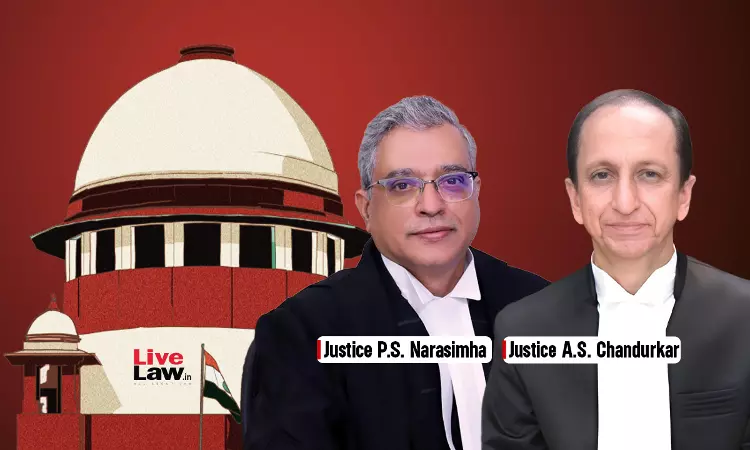
The Court held that motorists cannot negate the right o pedestrians to walk on footpaths.
In a significant judgment, the Supreme Court today held that the right to walk on a demarcated footpath is a fundamental right under Article 19(1)(d) of the Constitution, which includes the right to access safe and well-demarcated footpaths. This right shall have priority over movement by motorised vehicles. This has been held as a fundamental right considering that the right to walk has...
This is a premium content
Available exclusively to
Our subscribers
Subscribe Premium 
INR 1099+GST
Your support helps us to bring you more content at
an affordable subscription scheme !!!
All payment options available
In a significant judgment, the Supreme Court today held that the right to walk on a demarcated footpath is a fundamental right under Article 19(1)(d) of the Constitution, which includes the right to access safe and well-demarcated footpaths. This right shall have priority over movement by motorised vehicles.
This has been held as a fundamental right considering that the right to walk has always been "inextricably" connected to our daily life.
The Court observed that the duty to demarcate, construct, maintain and safeguard footpaths and other pedestrian infrastructure rests with urban development authorities, municipal corporations, municipalities and panchayats.
Emphasising that walking often remains "invisible to the light", the Court held that a violation of the right to walk on demarcated footpaths would entitle citizens to invoke constitutional remedies against the concerned authorities for restitution and compensation. The Court clarified that such remedies would be independent of those available under the Motor Vehicles Act.
A bench comprising Justice PS Narasimha and Justice Atul S Chandurkar held: "
"The right to walk is a fundamental right under Part III of the Constitution. It is integral to the right to movement guaranteed under Article 19(1)(d), read with Article 19(1)(a), Article 19(1) (b), Article 19(1) (c) and Article 21 of the Constitution of India. The fundamental right to walk will take within its sweep the right to demarcated footpaths. These rights are primary and shall have priority over movement by motorised vehicles."
The Court has recognised that despite the primacy of the right to walk, it has been overtaken by movement by motorised vehicles to the extent that walking has now been considered as a nuisance by drivers.
" It is rather strange that we fail to focus on recognising and securing the right to walk. It may be because wheels eclipsed our imagination, and our municipal authorities were busy creating roads that were suitable for motorized people. It could also be elitism to start with machines with wheels who are only for the rich, but as economies progressed and cheaper motor vehicles were introduced, the entire spectrum of motorized transportation dominated the roads, which pushed aside the walkers to the extent that they are treated as a nuisance for the drivers who routinely run over the walkers and their footpaths."
Holding that this should stop now, the bench also stated that the Motor Vehicle Act has also caused impediment in recognising this right to walk: "This should stop from now on as we declare the fundamental right to walk on demarcated footpaths.
"The Motor Vehicles Act has not been and has never been a statute that recognised the fundamental right to walk. In fact, Motor Vehicles Act has been an impediment and in many ways undermines the precious rights of the walkers.The absence of safe and comfortable footpaths to walk on, and even when they exist, their subjugation to motor transport, has been a civilizational problem."
The fundamental right to walk on demarcated footpaths has a correlated duty. If the road exists, there must be a duty to ensure that there are demarcated, well-maintained footpaths for walkers.
Violation of this right would entitle for restitutionary remedies: "The duty bearers are the urban development authorities, municipal corporations, municipalities and even panchayats who must endeavour to demarcate, construct, maintain and safeguard footpaths and other necessary pedestrian infrastructure as walking is invisible to the light. The violation of the right to walk on demarcated footpaths will entitle constituents to invoke constitutional legal remedies against duty bearers for restitution and compensation. This remedy is independent of the remedies that are available under the Motor Vehicles Act."
The conclusions of the judgment are as follows :
a. The right to walk is a fundamental right under Part III of the Constitution. It is integral to the right to movement guaranteed under Article 19(1)(d), read with Article 19(1)(a), Article 19(1) (b), Article 19(1) (c) and Article 21 of the Constitution of India. The fundamental right to walk will take within its sweep the right to demarcated footpaths. These rights are primary and shall have priority over movement by motorised vehicles.
b. The fundamental right to walk on demarcated footpaths has a correlative duty. If the road exists, there is a duty to ensure that there are demarcated and well-maintained footpaths for walkers. The duty bearers are the urban development authorities, municipal corporations, municipalities and even panchayats, who must endeavour to demarcate, construct, maintain, and safeguard footpaths and other necessary pedestrian infrastructure, as walking is integral to life.
c. The violation of the right to walk on demarcated footpaths will entitle the citizens to invoke constitutional and legal remedies against duty bearers for restitution and compensation. This remedy is independent of the remedies that are available under the Motor Vehicles Act, 1988.
The Court made these declarations while deciding an appeal in a motor accident claim.
This case arises from an unfortunate set of facts where a tanker hit a 5-year-old son while he was on his way to school with his father. The father filed a claim petition for Rs. 25,00,000 compensation to be considered by the Motor Accidents Claim Tribunal, but it awarded Rs. 7,82,000 with 6% interest. In appeals filed by both sides, the compensation was reduced to Rs. 4,70,000 by the High Court.
Setting aside the order of the High Court, the Supreme Court held that the father would be entitled to compensation of Rs. 11,44,628 to be paid within 2 months.
It may be noted that various other benches of the Supreme Court have also held that the right to use a footpath is a fundamental right under Articles 19 and 21. In S Rajaseekaran v Union of India, a bench comprising Justice AS Oka and Justice Ujjal Bhuyan had issued directions for unobstructed and disabled friendly use of footpaths.
A bench comprising Justice JB Pardiwala has been monitoring the implementation of these directions and has also issued further directions relating to the safety of pedestrians on roads and footpaths, including the wearing of helmets, wrong-lane driving, and the use of unauthorised hooters on cars in a long-standing writ petition.
Also from the judgment - Law Needed To Protect Right To Walk On Footpaths : Supreme Court Tells Centre
Headnote
Constitution of India, 1950 — Article 19(1)(d), Article 19(1)(a), Article 19(1)(b), Article 19(1)(c), and Article 21 — Fundamental Right to Walk and Access Demarcated Footpaths — Priority over Motorised Vehicles - The Supreme Court declared that the "Right to Walk" is a fundamental right guaranteed under Part III of the Constitution of India - It is inextricably connected to life and is integral to the right to move freely throughout the territory of India - This right takes within its sweep the right to safe, comfortable, and well-demarcated footpaths alongside motorised roads, which must be treated as primary and take priority over the movement of motorized vehicles - Walking also embodies expressional, congregational, and associational rights. [Paras 20]
Constitutional & Administrative Law — Correlative Public Duties of Local Authorities — Maintenance of Pedestrian Infrastructure – The Supreme Court ruled that the fundamental right to walk on demarcated footpaths carries a corresponding, enforceable legal duty upon public authorities - Wherever a road exists, there is a strict public duty to ensure a footpath is demarcated, constructed, and safely maintained - The primary duty-bearers responsible for provisioning and safeguarding this pedestrian infrastructure are Urban Development Authorities, Municipal Corporations, Municipalities, and Panchayats. [Paras 7 - 10]
Remedies — Restitutionary Remedy vs. Motor Vehicles Act Claims — Independent Action for Rights Violation - The Supreme Court distinguished between claims arising out of motor accidents and the violation of pedestrian rights - If the fundamental right to walk on a demarcated footpath is violated due to the failure of state/local actors, citizens are fully entitled to invoke constitutional remedies or public law restitutionary remedies (such as under Sections 38–40 of the Specific Relief Act, 1963) against the defaulting local bodies - This restitutionary remedy is independent of, and distinct from, any statutory compensation claim made under the Motor Vehicles Act, 1988. [Paras 15 - 20]
Motor Vehicles Act, 1988 — Statutory Limitations regarding Pedestrian Rights — Regulatory Framework Deficiencies - The Supreme Court observed that the Motor Vehicles Act, 1988 (and its 1939 predecessor) is primarily built around the "vehicle" as its subject, making human/pedestrian interests merely incidental - While the Motor Vehicles (Driving) Regulations, 2017 impose general safety duties on drivers regarding vulnerable road users, they fail to recognize the fundamental right to walk or prioritize footpaths over motorized roads - The Parliament has not yet established a full-time regulatory body for motor transport or pedestrian safety under the Act. [Paras 6-14]
Motor Accident Compensation — Fatal Accident of a Minor Child — Recalculation of Loss of Dependency and Conventional Heads - In assessing the compensation for the death of a 5-year-old child caused by a speeding tanker, the High Court erred in reducing the MACT's award - Applying established legal principles for minor victims, the daily wage was assessed based on the skilled worker rates under the Minimum Wages Act, 1948, evaluating annual income with a 40% addition for future prospects and a 50% deduction for personal expenses - Applying a multiplier of 18, the Supreme Court enhanced the total compensation to ₹11,44,628/-, distributed across loss of dependency, consortium, estate, and funeral expenses. [Relied on Karuna Parmar v. Prakash Sinha, 2025 INSC 1244; In Re: Phalodi Accident, 2026 INSC 388; Lucknow Public School, Eldico v. State of Uttar Pradesh, 2026 INSC 422; Paras 17-19]
Case Details: MANIYAR ILIYAZ SHAIK RIYAZ Vs P. AYYAPPAN|C.A. No. 4665-4666/2025
Citation : 2026 LiveLaw (SC) 632
Tags
Gursimran Kaur Bakshi
Gursimran is the Principal Correspondent with LiveLaw for the Supreme Court. She can be reached out at: simrankaurbakshi@livelaw.in

