



- Home
- /
- Supreme court
- /
- S.175(4) BNSS | Superior's Report...
S.175(4) BNSS | Superior's Report Must If Offence Was During Public Servant's Duties : Supreme Court Advises Magistrates
Yash Mittal
27 Jan 2026 8:19 PM IST
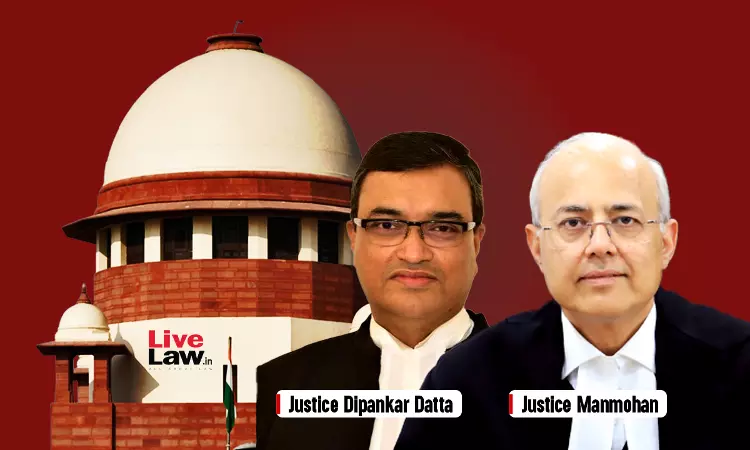
The Court issued guidance to Magistrates on Section 175(4) of the BNSS.
The Supreme Court on Tuesday (January 27) prescribed the procedure for Magistrates to order an investigation against a public servant under Section 175 (4) of the Bharatiya Nagarik Suraksha Sanhita (BNSS) when the alleged offense arises "in the course of the discharge of his official duties." Unlike Section 156(3) of the Cr.P.C., which does not require a Magistrate to seek a report from...
This is a premium content
Available exclusively to
Our subscribers
Subscribe Premium 
INR 1099+GST
Your support helps us to bring you more content at
an affordable subscription scheme !!!
All payment options available
The Supreme Court on Tuesday (January 27) prescribed the procedure for Magistrates to order an investigation against a public servant under Section 175 (4) of the Bharatiya Nagarik Suraksha Sanhita (BNSS) when the alleged offense arises "in the course of the discharge of his official duties."
Unlike Section 156(3) of the Cr.P.C., which does not require a Magistrate to seek a report from the superior officer when the accused is a public servant before directing an investigation, Section 175(4) of the BNSS provides such a procedure.
The Court noted that the provision uses the word 'may' and it has to be read as 'may' itself and not "shall".
"Significantly, sub-section (4) of Section 175 uses the modal verb “may” and not 'shall'. In the context where it finds place and the object that is sought to be achieved, “may” has to be read as “may”, bearing an element of discretion, and not 'shall'."
At the same time, the Court provided the following guidelines for Magistrates.
Upon receiving a complaint under sub-section (4) of Section 175, BNSS alleging commission of an offence by a public servant arising in the course of the discharge of his official duties, the Court said that the magistrate may do either of the following:
"Reading the complaint, if the judicial magistrate is prima facie satisfied that commission of the alleged act giving rise to an offence arose in course of discharge of official duties by the public servant, such magistrate may not have any option other than following the procedure prescribed under sub-section (4) of Section 175 of calling for reports from the superior officer and the accused public servant.
Or, on a consideration of the complaint, where the judicial magistrate entertains a prima facie doubt depending upon the circumstances as to whether the offence alleged to have been committed by the public servant arose in course of discharge of his official duties, such magistrate might err on the side of caution and proceed to follow the procedure prescribed in sub-section (4) of Section 175.
Or, where the judicial magistrate is satisfied that the alleged act of offence was not committed in the discharge of official duties and/or it bears no reasonable nexus thereto, and also that the rigours of sub-section (4) of Section 175 are not attracted, the complaint may be dealt with in accordance with the general procedure prescribed under sub-section (3) of Section 175.”
Background
A bench of Justices Dipankar Datta and Manmohan heard the case that arose from allegations made by a woman that she was sexually assaulted on three occasions by police officers while she was pursuing a complaint relating to a property dispute.
After the police filed a report terming her allegations as “untrue”, she approached the Judicial Magistrate First Class (JMFC) under Section 210 BNSS read with Section 175, seeking directions for registration of an FIR. Invoking Section 175(4), the Magistrate called for a report from the superior officer of the accused police personnel.
While those proceedings were pending, the woman moved the Kerala High Court by way of a writ petition. A Single Judge allowed the petition, holding that Section 175(4) was not mandatory in cases involving serious offences such as rape and directed the Magistrate to order registration of an FIR.
However, a Division Bench of the High Court reversed the Single Judge decision, observing that interference under Article 226 of the Constitution was inappropriate when statutory proceedings before the Magistrate were already pending, leading to an appeal before the Supreme Court.
Affirming the impugned order, the judgment authored by Justice Datta observed that the Single Judge erred in interfering with the magistrate's decision to seek a superior official's report in compliance with Section 175(4) of BNSS.
It explained that Section 175(4) introduces a two-fold safeguard for public servants. First, at the investigation stage, the Magistrate must call for a report from the superior officer and afford an opportunity of hearing to the accused public servant. Second, at the stage of taking cognizance, a sanction under Section 218(1) BNSS would ordinarily be required, subject to the statutory exceptions carved out for certain categories of offences such as sexual offences.
Further, it clarified that “the judicial magistrate would continue to retain the authority to reject an application under sub-section (3) of Section 175, lodged against a public servant, where such magistrate finds that the allegations made therein are wholly untenable, manifestly absurd, or so inherently improbable that no reasonable person could conclude that any offence is disclosed. However, it is needless to observe, such an order of rejection ought not to be based on whims and fancy but must have the support of valid reasons.”
What would happen when a report sought from a superior officer was not submitted?
“A situation may arise where, in an appropriate case, the judicial magistrate has called for a report from the concerned superior officer under clause (a) of sub-section (4) of Section 175, but such officer fails to comply with the direction or does not submit the report within a reasonable period of time. What is the course open to the magistrate in such a situation? In the unlikely event of such a situation, we hold, the judicial magistrate is not obliged to wait indefinitely for compliance and may proceed further in accordance with sub-section (3) of Section 175 after considering the version of the accused public servant under clause (b) of sub-section (4) of Section 175, if on record. What would constitute 'reasonable time' cannot be determined in rigid or inflexible terms and must necessarily depend upon the facts and circumstances of each case before the judicial magistrate who has to take the call.”, the court observed.
Mandatory affidavit requirement
One of the key rulings of the judgment is that even complaints invoking Section 175(4) must be supported by an affidavit. Although the text of sub-section (4) refers only to a “complaint”, the Court held that the term must be understood contextually and harmonised with Section 175(3), which expressly mandates an affidavit.
The Court reasoned that it would be illogical to insist on an affidavit when allegations are made against a private individual but dispense with the same safeguard when allegations are made against a public servant. Such an interpretation, it said, would defeat the object of preventing abuse of the criminal justice process.
Conclusion
The Court declined to decide whether the alleged acts of sexual assault could be said to have been committed in the discharge of official duties. It held that such a determination involved factual assessment and lay squarely within the domain of the Magistrate seized of the matter.
Accordingly, the matter was remitted back to the JMFC, directing that the proceedings be continued in accordance with the legal position clarified in the judgment. It directed the Magistrate to first verify whether the application was accompanied by a proper affidavit as required under Section 333 BNSS (as per Priyanka Srivastava v. State of UP), and thereafter to proceed in accordance with Sections 175(3) and 175(4).
Headnote
Bharatiya Nagarik Suraksha Sanhita, 2023 (BNSS) – Section 175(3) and Section 175(4) – Interplay and Procedural Safeguards - The Supreme Court clarified that Section 175(4) is not an independent or standalone provision, nor is it a mere proviso to Section 175(3) - the two sub-sections must be read harmoniously.Section 175(4) acts as a procedural adjunct and an additional protective layer for public servants - Supreme Court held that although Section 175(4) uses the term "complaint" (which under Section 2(1)(h) can include oral allegations), in the context of proceedings against public servants, it must be interpreted as a written complaint supported by an affidavit - It is illogical to require an affidavit for allegations against private individuals under Section 175(3) but exempt it for public servants under Section 175(4). [Relied on Priyanka Srivastava v. State of U.P. 2015 6 SCC 287; Lalita Kumari v. Govt. of U.P 2014 2 SCC 1; Radhe Shyam v. Chhabi Nath 2015 5 SCC 423; Pradnya Pranjal Kulkarni v. State of Maharashtra 2025 SCC OnLine SC 1948; Paras 20-29, 37-39, 45-48]
Two-Tier Protection for Public Servants – Noted that BNSS provides a dual protection mechanism for public officials: i. Threshold Stage: Under Section 175(4), a Magistrate must call for a report from the superior officer and consider the assertions of the accused public servant before ordering an investigation; ii. Cognizance Stage: Under Section 218(1), prior government sanction is required before the Court takes cognizance.
Guide for Judicial Magistrates – Discretionary Power - The use of the word "may" in Section 175(4) signifies discretionary power- i. If the Magistrate is prima facie satisfied the act was in the discharge of official duty, they must follow the Section 175(4) procedure; ii. If they are satisfied the act had no reasonable nexus to official duty, they may proceed under the general procedure of Section 175(3); iii. Magistrates are not required to wait indefinitely for a report from superior officers; if a report is not submitted within a reasonable time, the Magistrate may proceed based on the public servant's version if available - Supreme Court reiterated that a judicial order passed by a Magistrate in criminal matters (such as calling for a report under Section 175(4)) cannot be challenged through a writ petition under Article 226 - The appropriate remedy is a petition under Section 528 of the BNSS or Article 227 of the Constitution. [Paras 46-55]
Cause Title: XXX VERSUS STATE OF KERALA & ORS
Citation : 2026 LiveLaw (SC) 85
Click here to download judgment
Appearance:
For Petitioner(s) :Mr. Raghenth Basant, Sr. Adv. Mr. Vikas Jain, AOR Ms. Hima Bhardwaj, Adv. Mr. Akash Rajeev, Adv. Mr. Muhammad Firdouz, Adv. Ms. Shrawani, Adv. Mr. Aviral Saxena, Adv. Mr. Hardik Jayal, Adv. Mr. Nilesh Singh, Adv. Mr. Shashank S Pandey, Adv.
For Respondent(s) :Mr. Siddhartha Dave, Sr. Adv. Mr. A. Karthik, AOR Ms. Smrithi Suresh, Adv. Mr. Ujjwal Sharma, Adv. Mr. Sugam Agrawal, Adv. Mr. Nayan Dham, Adv. Mr. Ranjit Kumar, Sr. Adv. Mr. C. K. Sasi, AOR Ms. Meena K Poulose, Adv. Mr. Akash Dikshit, Adv.
Tags

Yash Mittal
Yash Mittal is a Correspondent with LiveLaw, covering the Supreme Court of India

