



- Home
- /
- Supreme court
- /
- Service Benefits Can't Be Denied...
Service Benefits Can't Be Denied Citing Absence Of ACRs Not Attributable To Employee: Supreme Court
LIVELAW NEWS NETWORK
29 July 2026 6:17 PM IST
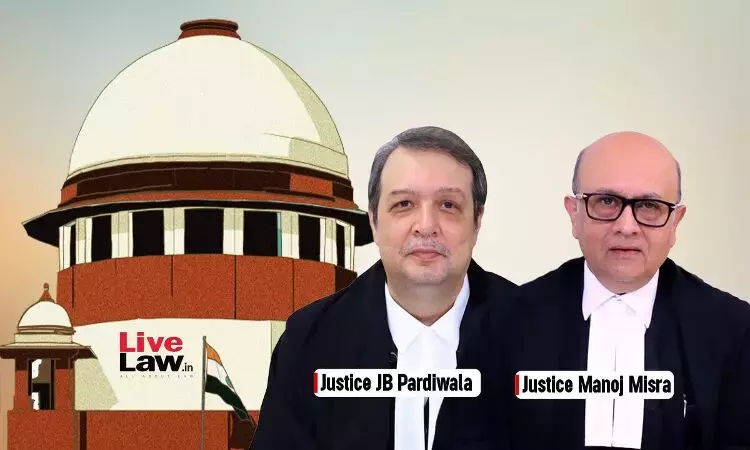
In such situations, the service benefits must be decided on the basis of available ACRs, the Court ruled.
The Supreme Court has held that a judicial officer who was wrongfully discharged from service cannot be denied Selection Scale and Super Time Scale merely because Annual Confidential Reports (ACRs) were unavailable for the period when he was under wrongful discharge. Holding that an employer cannot take advantage of its own wrong, the Court ruled that where the absence of ACRs is...
This is a premium content
Available exclusively to
Our subscribers
Subscribe Premium 
INR 1099+GST
Your support helps us to bring you more content at
an affordable subscription scheme !!!
All payment options available
The Supreme Court has held that a judicial officer who was wrongfully discharged from service cannot be denied Selection Scale and Super Time Scale merely because Annual Confidential Reports (ACRs) were unavailable for the period when he was under wrongful discharge. Holding that an employer cannot take advantage of its own wrong, the Court ruled that where the absence of ACRs is attributable to the employer, the officer's entitlement must be assessed on the basis of the remaining valid ACRs.
"We hold that where the non-availability of the requisite ACRs is attributable to the employer, the employee's entitlement to the promotion/pay in question is required to be assessed on the basis of the remaining valid ACRs," the Court stated.
A Bench of Justice JB Pardiwala and Justice Manoj Misra passed the ruling while deciding an application filed by the Rajasthan High Court seeking clarification of the Supreme Court's March 15, 2022 judgment, which had quashed the discharge of Additional District Judge Abhay Jain and directed his reinstatement with continuity of service, seniority, all consequential benefits and 50% back wages.
In the 2022 judgment, the Supreme Court had held that a judicial officer cannot be discharged merely on the ground of passing a wrong order, and directed the High Court to reinstate him with all consequential benefits. He was discharged in 2016.
Later, the Rajasthan High Court filed a Miscellaneous Application seeking clarification on whether the direction granting "all consequential benefits" entitled Jain to Selection Scale and Super Time Scale despite the absence of ACRs for six of the seven years preceding consideration by the Higher Judiciary Committee, as he had remained out of service from January 2016 to April 2022.
Rejecting the High Court's stand, the Bench observed that Jain's inability to earn ACRs during the relevant period was the direct consequence of his wrongful discharge.
"It would be manifestly unjust to permit the applicant to rely upon a shortcoming which it itself created in order to deny the opponent the consequential service benefits that would otherwise have accrued to him. The law does not permit a party to derive an advantage from its own wrongful act," the Court held.
Relying on its earlier decisions in Union of India v. K.V. Jankiraman (1991) 4 SCC 109, Central Bank of India v. Dragendra Singh Jadon (2022) 8 SCC 378, Prabhu Dayal Khandelwal v. Chairman, UPSC & Ors. [(2015) 14 SCC 427] and R.K. Jibanlata Devi v. High Court of Manipur & Ors 2023, the Court reiterated that where an employee is wrongfully kept out of service, consequential benefits such as promotion or higher pay scales cannot be denied because eligibility conditions became impossible to fulfil due to the employer's own illegal action.
The Bench also noted that its 2022 judgment had already found Jain's discharge unsustainable, held that there was no material showing unsatisfactory performance or misconduct, and ruled that the uncommunicated 2015 ACR could not be relied upon against him.
The judgment authored by Justice Pardiwala held :
"Thus, it has already been held by this Court in the present case that the opponent was wrongfully discharged from service. It is but a natural and inevitable corollary of such such wrongful discharge that the opponent could not have earned the requisite number of ACRs for the relevant period of time, since he was kept out of service by the applicant itself. The absence of the requisite ACRs, therefore, is not attributable to any omission, default or deficiency on the part of the opponent, but is solely the direct consequence of the applicant's wrongful action. In such circumstances, it would be manifestly unjust to permit the applicant to rely upon a shortcoming which it itself created in order to deny the opponent of the consequential service benefits that would otherwise have accrued to him. The law does not permit a party to derive an advantage from its own wrongful act. Consequently, the opponent cannot be made to bear the adverse consequences of the wrongful discharge, by being denied consideration for the grant of the Selection Scale or the Super Time Scale on the ground of non-availability of the requisite number of ACRs, for the period during which he was unlawfully kept out of service."
Accordingly, the Court held that Jain's entitlement had to be assessed on the basis of his valid ACRs for 2013 and 2014, which contained "Very Good" and "Good" gradings along with integrity certificates.
The Court ruled that Jain was entitled to Selection Scale with effect from July 16, 2018, the date on which he completed five years of service, and Super Time Scale with effect from July 16, 2021, after completing three years in the Selection Scale. It noted that officers appointed alongside and even junior to him had already been granted these benefits from those dates.
Directing the Rajasthan High Court to implement the decision within three months, the Bench ordered it to re-fix Jain's pay, revise all consequential benefits and disburse the arrears, while clarifying that the monetary benefits would be computed in terms of its earlier direction restricting back wages to 50%.
The Court also directed the Registry to forward a copy of the judgment to all High Courts.
Headnote
Service Law — Grant of Selection Scale / Super Time Scale — Consequential Benefits on Reinstatement — Non-Availability of ACRs Due to Illegal Discharge — Effect of Employer's Own Wrong - Rajasthan Judicial Service Rules, 2010 — Rules 49 and 50 — Grant of Selection Scale and Super Time Scale to District Judges — Absence of Requisite ACRs - Employer Cannot Take Advantage of Its Own Wrong - When an employee/judicial officer is wrongfully discharged/dismissed from service and subsequently reinstated with all consequential benefits including continuity of service and seniority, the employer cannot deny career progression benefits (such as Selection Scale or Super Time Scale) merely on the ground of non-availability of the requisite number of Annual Confidential Reports (ACRs) for the period during which the officer was unlawfully kept out of service - Assessment on Available Valid ACRs - In circumstances where ACRs are short of the required number due to no fault of the employee, or where certain ACRs are uncommunicated/invalid, the employee's entitlement to promotion or higher pay scale must be assessed afresh on the basis of the remaining available valid ACRs, rather than rejecting their claim altogether - Uncommunicated ACRs (such as the ACR for the year 2015 recorded after the discharge order) cannot be relied upon to the detriment of the judicial officer while determining their entitlement to pay scales or career advancement. [Paras 30- 41]
Service Law — Back Wages and Arrears on Re-Fixation of Scale - Where the original judgment quashing the discharge order directed reinstatement with all consequential benefits but restricted back wages to 50%, the financial arrears resulting from the retroactive grant of Selection Scale and Super Time Scale must also be computed by giving effect to the 50% back wages limitation for the period the officer remained out of service. [Relied on Union of India v. K.V. Jankiraman, (1991) 4 SCC 109; Central Bank of India v. Dragendra Singh Jadon, (2022) 8 SCC 378; R.K. Jibanlata Devi v. High Court of Manipur, 2023 SCC OnLine SC 178; Sukhdev Singh v. Union of India, (2013) 9 SCC 566; Para 40-43]
Case : High Court of Judicature for Rajasthan v Abhay Jain
Citation : 2026 LiveLaw (SC) 733
Tags


