



- Home
- /
- Supreme court
- /
- State Cannot Deny Benefits Under...
State Cannot Deny Benefits Under Final Order Merely Because Employees Delayed Seeking Its Implementation : Supreme Court
Yash Mittal
16 May 2026 5:31 PM IST
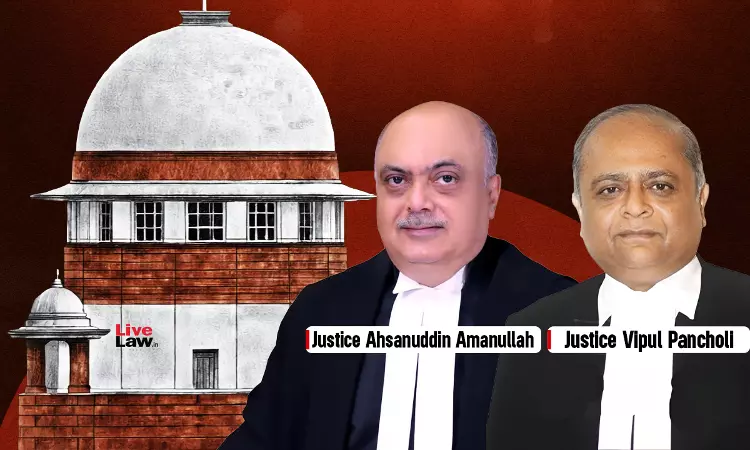
The Supreme Court has held that the State cannot refuse to implement a judicial order that has attained finality merely because the beneficiaries approached the courts belatedly for its enforcement, stressing that the government, as a model employer, cannot take advantage of its own failure to comply with the law.A bench of Justice Ahsanuddin Amanullah and Justice Vipul M. Pancholi allowed...
This is a premium content
Available exclusively to
Our subscribers
Subscribe Premium 
INR 1099+GST
Your support helps us to bring you more content at
an affordable subscription scheme !!!
All payment options available
The Supreme Court has held that the State cannot refuse to implement a judicial order that has attained finality merely because the beneficiaries approached the courts belatedly for its enforcement, stressing that the government, as a model employer, cannot take advantage of its own failure to comply with the law.
A bench of Justice Ahsanuddin Amanullah and Justice Vipul M. Pancholi allowed an appeal filed by a group of Grade-IV employees against the State of Andhra Pradesh and the Visakhapatnam Municipal Corporation, directing the authorities to implement a 2012 Andhra Pradesh Administrative Tribunal order in their favour within four months.
Background
The Appellants-employees were Grade-IV workers in the Visakhapatnam Municipal Corporation. In 2012, the Andhra Pradesh Administrative Tribunal ordered the Government to give them the minimum regular pay scale because of their long tenure of service.
The Government never challenged that order, so it became final. But even after that, the Government did not implement the order or pay the benefits.
The employees then kept filing different cases and petitions to force the Government to obey the Tribunal's order. During these later proceedings, the employees failed to disclose some earlier cases they had filed. Because of this, the High Court dismissed their writ petition, saying they had suppressed material facts and had not approached the Court with “clean hands.”
Against this judgment of the High Court, the employees moved to the Supreme Court.
Decision
Allowing the appeal, the judgment authored by Justice Amanullah noted that though the Appellants may be at fault for suppressing the facts about the other litigation, that would itself not be a ground to deny them relief, when an unchallenged order was lying in their favour.
“State cannot refuse to implement a final and unchallenged tribunal order merely by relying on delay, procedural lapses, or technical objections raised against employees seeking enforcement of their rights.”, the court observed.
In essence, the Court found the Respondent-State trying to take advantage of its own wrong, by raising technical objection pleas to avoid fulfilling its duty to act as and be model employers.
“For reasons aforesaid, this Court cannot and would not permit respondents no.1 and 2 to deny the appellants the benefit of an Order passed in their favour, which was never challenged by the said respondents, on the mere ground of delay in invoking/taking recourse to the appropriate judicial machinery in seeking directions for implementation. Needless to state, it cannot be held that the Tribunal's Order dated 20.07.2012 would lose its force by efflux of time. Despite the failings in the appellants' conduct, in the ultimate eventuate, we do hereby set aside the Impugned Order.”, the court held.
In terms of the aforesaid, the appeal was allowed.
Cause Title: B. YERRAJI & ORS. VERUS THE STATE OF ANDHRA PRADESH & ORS.
Citation : 2026 LiveLaw (SC) 505
Click here to download judgment
Appearance:
For Petitioner(s) Mr. V. Chitambaresh, Sr. Adv. Mr. Ch. Leela Sarveswar, Adv. Mr. M. A. Chinnasamy, AoR Mr. Saurabh Gupta, Adv. Mr. Kakani Sridhar, Adv. Mr. T. Meikandan, Adv. Mr. Guntur Pramod Kumar, AoR Mr. Byrapaneni Suyodhan, Adv. Ms. Tatini Basu, AoR Ms. Obulapuram Keerthi, Adv. Mr. Kumar Shashank, Adv.
For Respondent(s) Caveator-in-person Mr. L. Narasimha Reddy, Sr. Adv. Mr. Ch. Leela Sarveswar, Adv. Mr. Saurabh Gupta, Adv. Mrs. C. Rubavathi, Adv. Mr. C. Raghavendren, Adv. Mr. M. A. Chinnasamy, AoR Mr. Kakani Sridhar, Adv. Mr. T Meikandan, Adv. Mr. Galla Sateesh, Adv. Mr. Nandi Kiran Kumar, Adv. Mr. Uppala Peddanna, Adv. Mr. Somanatha Padhan, AoR Mr. Akash Kakade, Adv. Mr. N. Rajaraman, AoR Ms. Prerna Singh, Adv. Mr. Guntur Pramod Kumar, AoR Mr. Keshav Singh, Adv. Ms. Rakshita Rana, Adv. Mr. Sateesh Galla, Adv. Mr. H. Gouri Senkar, Adv. Mr. S. Pradhan, AoR

Yash Mittal
Yash Mittal is a Correspondent with LiveLaw, covering the Supreme Court of India

