



Supreme Court Cancels Bail Of Man Accused Of Sharing Sensitive Military Information With Pakistan
Saima Anjum
28 Oct 2026 9:26 PM IST
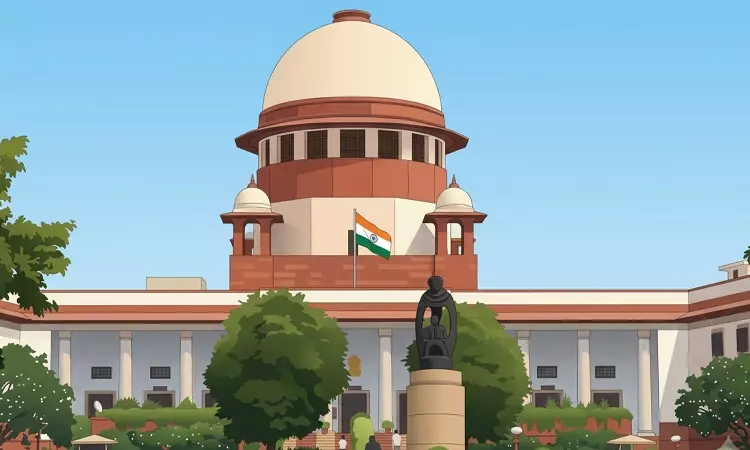
The Supreme Court on Monday set aside a Rajasthan High Court order that had granted regular bail to an accused in an espionage case solely because the grounds of arrest were not furnished to him in writing.
“A hyper-technical objection regarding the form or mode of communicating grounds of arrest cannot be treated as a self-executing, blanket key to unlock regular bail, bypassing the core parameters governing bail jurisprudence,” the bench held.
A bench of Justice MM Sundresh and Justice Prasanna B Varale made the observations while directing the respondent Jhabra Ram to surrender within two weeks from the date of the order, while reiterating that communication of grounds of arrest is a crucial constitutional and statutory safeguard, but held that the record showed substantial and effective compliance in the case, and that no prejudice had been found.


The case deals with offences under Sections 3 and 9 of the Official Secrets Act, 1923 (OSA), and Sections 152 and 238(b) of the Bharatiya Nyaya Sanhita, 2023 (BNS), alleging that the respondent was in contact with foreign handlers belonging to a Pakistani intelligence agency and was transmitting sensitive military photographs, videos and troop movement details from Pokhran and Jaisalmer in exchange for financial benefits.
The respondent was served several notices calling him to appear before interrogation centres, before the FIR was registered. Subsequently, an FIR was registered against him which led to his arrest on 30 January 2026. The Arrest Memo was read over to him in the presence of two witnesses and bears his signature. At the same time, his brother was also informed telephonically of his arrest, as recorded in an Arrest Information Memo.
On 31 January 2026, the respondent was produced before the Additional Chief Judicial Magistrate where he opposed police custody remand on merits, but neither he nor his counsel raised any grievance about non-communication of grounds of arrest. His regular bail plea was rejected by the Additional District and Sessions Judge on 10 March 2026, which held that the signed Arrest Memo amounted to compliance in substance with Section 47 of the Bharatiya Nagarik Suraksha Sanhita, 2023 (BNSS).
Later, on 18 May 2026, the High Court granted bail on the basis that the grounds of arrest were not furnished in writing before or at the time of remand. It held that oral intimation or case diary entries did not satisfy Section 47 BNSS in light of Mihir Rajesh Shah v State of Maharashtra.
Aggrieved by the High Court's order, the State government approached the Supreme Court.
SC agrees with precedents, but says there was substantial compliance in the present case
Before the Supreme Court, Additional Solicitor General Rajkumar Bhaskar argued that the High Court granted bail on a purely hyper-technical ground without considering the gravity of accusations involving national security. He submitted that Article 22(1) and Section 47 BNSS were meaningfully complied with, and that the respondent also had prior knowledge of the allegations through the statutory notices. Relying on Kasireddy Upender Reddy v State of Andhra Pradesh and State of Karnataka v Sri Darshan, it was argued that substantial compliance suffices unless demonstrable prejudice is shown.
On the contrary, the respondent argued that non-furnishing of written grounds is a mandatory violation of Article 22(1) and Section 47 BNSS, and that the gravity of allegations cannot cure non-compliance. Relying on Pankaj Bansal v Union of India, Prabir Purkayastha v State (NCT of Delhi), Vihaan Kumar v State of Haryana and Mihir Rajesh Shah, it was contended that written grounds must be served at least two hours before the remand hearing.
Pursuing the submissions, the Court held as follows:
“We have no hesitation in observing that the communication of grounds of arrest is a crucial constitutional and statutory safeguard under Article 22(1) of the Constitution and Section 47 of the BNSS, designed to ensure that an arrested person is promptly apprised of the reasons for his apprehension so as to enable him to consult legal counsel, oppose remand, and seek legal remedies effectively.”
It added that there was no dispute about the principles in Pankaj Bansal, Prabir Purkayastha and Mihir Rajesh Shah, but that the facts “unequivocally establish that there was substantial and effective compliance.”
No prejudice caused to accused, gravity of allegations must be considered
The Court also observed that while deciding regular bail under Section 483 BNSS, courts must consider the nature and gravity of the accusation, the severity of punishment on conviction, the danger of the accused absconding or tampering with evidence, and the impact on public interest and national security. A hyper-technical objection on the mode of communicating grounds, it said, cannot bypass these parameters.
Perusing the facts of the case, the bench recorded how the requirements were satisfied at every stage as the statutory notices under Section 8(1) of the OSA were served before arrest, putting the respondent on notice of the investigation into unauthorised transmission of classified military data. On arrest, the factual basis, including espionage and transmitting photographs, videos and troop movements to foreign handlers, was communicated to him and the High Court also noted from the case diary that he was informed of the fact and basis of arrest. The vernacular Arrest Memo set out the material against him in detail, recorded the time of arrest, the arresting officer's identity, and that he was informed of his constitutional rights. It was read over to him and signed by him. The Court noted that “this material, which itself constitutes the ground of arrest, was thus informed to the respondent at the time of his arrest.” The bench also noted that since the respondent was arrested in Jaipur while being a resident of Jaisalmer, the only practicable way of promptly informing his brother was by telephone, and the officer could not have obtained the brother's signature. At remand, neither him nor his advocate raised any grievance about grounds, and the Magistrate recorded that the family was informed, sufficient grounds existed, and the accused appeared to have been apprised of them.
Relying on State of Karnataka v Sri Darshan, the bench held that the governing principle is the prejudice-oriented test. It extracted the observation that “the mere absence of written grounds does not ipso facto render the arrest illegal, unless it results in demonstrable prejudice or denial of a fair opportunity to defend.”
It also referred to Kasireddy Upender Reddy, which explained that the requirement is meant to serve a substantive purpose and that, under Article 22(1), it is not necessary to furnish full details of the offence, but the information “should be sufficient to enable the arrested person to understand why he has been arrested.”
Applying the above, the bench held as follows:
“Applying these principles to the present facts, the record clearly reflects that the respondent was fully cognizant of the grounds for his apprehension and was effectively represented by counsel at the stage of remand. The substantive mandate of Article 22(1) thus stands meaningfully fulfilled, with no demonstrable prejudice having been suffered.”
It further observed as follows:
“The constitutional framework requires that the arrestee be informed of the grounds of arrest but does not insist upon written communication as an indispensable formality irrespective of the attendant circumstances. In the absence of demonstrable prejudice or denial of an opportunity to defend, an alleged procedural defect in the mode of service cannot ipso facto invalidate detention or entitle an accused to regular bail, more so in cases involving grave allegations of espionage affecting national security and sovereign integrity.”
In the light of aforesaid, the Supreme Court held that the High Court erred in treating an alleged procedural irregularity as an automatic ground for bail, while completely ignoring the gravity of the offences under the OSA and BNS, and the material collected during investigation, which is why the High Court's order cannot be sustained.
Further, the bench clarified that it was not expressing any opinion on the merits of the allegations, and that its observations ought not have any bearing on the trial.
Hence, the High Court's order was set aside, and the bail granted to the respondent was cancelled, directing him to surrender before the trial court or investigating agency within two weeks, failing which the State shall take him into custody in accordance with law.
Appearance:
For Appellant: Mr. Rajkumar Bhaskar Thakare, ASG; Mr. Padmesh Mishra, AAG; Mr. S. Udaya Kumar Sagar, AOR
For Respondent: Mr. Anupam Singh, AOR; Mr. Saurabh Soni, Adv.; Ms. Mannat Singh, Adv.; Mr. Pavan Vashishth, Adv.; Mr. Kratiney Goel, Adv.; Mr. Abhyudai Mehrotra, Adv.; Mr. Sanjeet Kumar Thakur, Adv.; Mr. Chandra Prakash, Adv.


