



- Home
- /
- Supreme court
- /
- Supreme Court Rejects Retired...
Supreme Court Rejects Retired Professor's Claim To Be Covered By GPF Scheme Instead Of Central Provident Fund Scheme
Saima Anjum
20 Aug 2026 5:38 PM IST
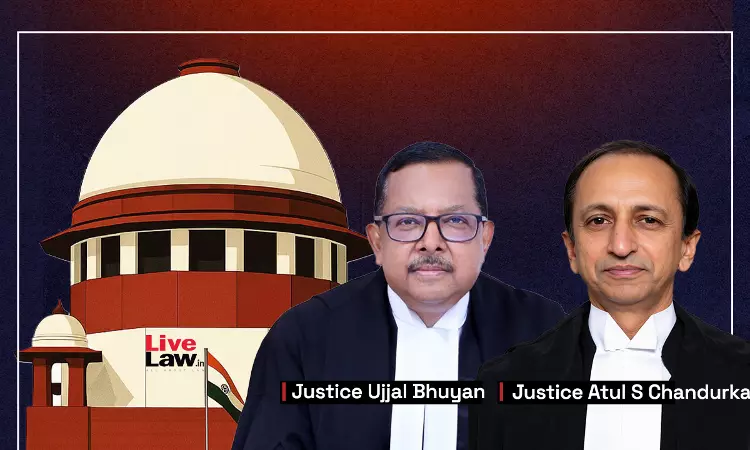
The Supreme Court on Thursday (20.08.2026) has dismissed a petition filed by a retired Professor of the National Institute of Rural Development (NIRD). The petitioner sought to be covered under the General Provident Fund-cum-Pension Scheme (GPF Scheme) instead of the Central Provident Fund Scheme (CPF Scheme). The Court, however, dismissed it, holding that since the terms of his...
This is a premium content
Available exclusively to
Our subscribers
Subscribe Premium 
INR 1099+GST
Your support helps us to bring you more content at
an affordable subscription scheme !!!
All payment options available
The Supreme Court on Thursday (20.08.2026) has dismissed a petition filed by a retired Professor of the National Institute of Rural Development (NIRD). The petitioner sought to be covered under the General Provident Fund-cum-Pension Scheme (GPF Scheme) instead of the Central Provident Fund Scheme (CPF Scheme). The Court, however, dismissed it, holding that since the terms of his regularisation were never challenged, he could not raise the grievance after retirement, as he already accepted the benefits under the CPF Scheme.
A bench of Justice Ujjal Bhuyan and Justice Atul S Chandurkar ruled so while hearing the petitioner's challenge to an order passed by a Division Bench of the Telangana High Court, which had set aside a favourable order of the Central Administrative Tribunal (CAT) (Hyderabad).
The petitioner was initially appointed as a Research Associate with NIRD on a contractual basis in 1984, and was covered under the CPF Scheme. His services were regularised in 1985. Subsequently, he was appointed as Assistant Director in 1992 on a regular basis, Deputy Director in 1999 on a regular basis, and Professor on contract in 2007. His service as Professor was later regularised in 2012, as his colleague, Shyam Sunder Prasad Sharma.
The petitioner retired in 2017 and was paid his retiral benefits, including NIRD's contribution to the CPF. Thereafter, he approached the CAT seeking a declaration that continuing him under CPF Scheme, instead of the GPF Scheme, was illegal and contrary to the NIRD Rules 2011 and NIRD Services Bye-laws.
Sharma had earlier obtained a favourable order from CAT in 2018 which was also upheld by the High Court. Relying on this, the CAT permitted the petitioner to be covered under the GPF Scheme.
However, NIRD challenged the CAT's order in Sharma's case before the Supreme Court in National Institute of Rural Development v Shyam Sunder Prasad Sharma and Ors, which held that Sharma's regularisation would operate only from the date of order and would not relate back to his appointment. The ruling was made considering the 2012 order, which itself stated that it would take effect from the date of issuance, a condition that Sharma had never challenged. Accordingly, the orders passed by the CAT and the High Court were set aside, holding that Sharma was entitled to benefits only under the CPF Scheme.
When NIRD appealed against CAT orders passed in petitioner's case, the High Court took note of the ruling in Sharma's case and found the two cases to be similar. It noted that the petitioner had approached the CAT only after his retirement, and that too after already receiving benefits under the CPF Scheme. Accordingly, CAT's order was set aside. Pursuant to this, the petitioner approached the Supreme Court.
Before the Supreme Court, the petitioner contended that his case is different from that of Sharma's. Rejecting the contention, the Court held, “the petitioner's case is based on Office Order No. 98 dated 04.05.2012 by which the services of Academic Staff working on contractual basis were regularised. By the said Office Order, the services of the petitioner as Professor on contractual basis were regularised subject to various terms and conditions, which included the order of regularisation taking effect from the date of the said order as well as services being continued to be governed by the existing CPF Scheme.”
The bench also noted that, as in Sharma's case, the terms and conditions of regularisation stipulated in the Office Order had never been challenged by the petitioner at any point in time. Observing that the petitioner had accepted the terms of regularisation and raised his grievance only after retirement and after having already accepted benefits under the CPF Scheme, the Court held that “the petitioner was rightly non-suited by the High Court.”
The bench further recorded its concurrence with the reasoning in Sharma's case, which had considered in detail the effects of NIRD Rules and Bye-laws, and declined to reopen the issue. “We do not find any reason, whatsoever, to re-open the aforesaid issue at the instance of the petitioner,” it stated.
The petition was accordingly dismissed.
Case: K Suman Chandra v Union of India & Ors
Citation : 2026 LiveLaw (SC) 834
Appearance:
For Petitioner: Mr Manish Kumar Saran, Adv
For Respondents: Ms Ruchi Kohli, Adv.; Ms Vishakha, Adv.
Click Here To Read/Download Order
Tags


