



- Home
- /
- Supreme court
- /
- Supreme Court Directs Bar Council...
Supreme Court Directs Bar Council Of India To Audit Disciplinary System For Advocates, Stresses Accountability In Legal Profession
Yash Mittal
8 July 2026 11:04 AM IST
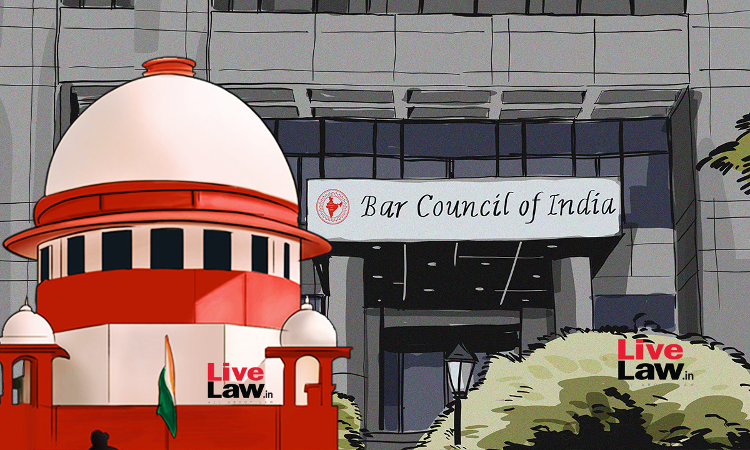
The Supreme Court has directed the Bar Council of India (BCI) to undertake a comprehensive performance audit of the disciplinary mechanisms administered by it and the State Bar Councils, emphasising that the legal profession's privilege of self-regulation must be matched by transparency, accountability and institutional effectiveness.While emphasizing the need for Continuing Legal Education...
This is a premium content
Available exclusively to
Our subscribers
Subscribe Premium 
INR 1099+GST
Your support helps us to bring you more content at
an affordable subscription scheme !!!
All payment options available
The Supreme Court has directed the Bar Council of India (BCI) to undertake a comprehensive performance audit of the disciplinary mechanisms administered by it and the State Bar Councils, emphasising that the legal profession's privilege of self-regulation must be matched by transparency, accountability and institutional effectiveness.
While emphasizing the need for Continuing Legal Education for advocates, the Court also asked the Bar Council of India (BCI) to undertake a comprehensive performance audit of the disciplinary mechanisms administered by it and the State Bar Councils under the Advocates Act, 1961, to determine the existing mechanisms regarding the progress and outcome of disciplinary proceedings against advocates.
“…having regard to the importance of maintaining public confidence in the institution of lawyers, it is desirable that the Bar Council of India undertakes a comprehensive performance audit of the disciplinary mechanisms administered by it and the State Bar Councils under the Advocates Act, 1961. We direct the Bar Council of India to constitute a committee and seek an objective assessment of its duties of self-regulation of professional conduct and discipline, consider the report and file an affidavit of the action proposed/taken.”, observed a bench of Justice Pamidighantam Sri Narasimha and Justice Alok Aradhe.
The bench made the aforesaid direction while allowing an appeal filed by advocate Ajay Vijh, whose name had been included in the Indian Banks' Association's (IBA) Caution List over an allegedly negligent legal opinion. While setting aside the inclusion of his name in the list, the Court used the occasion to make wide-ranging observations on strengthening professional standards and accountability within the legal profession.
“Over the years, concerns have repeatedly been expressed regarding pendency, procedural delays, lack of uniformity in practices across councils, limited availability of information regarding the progress and outcome of disciplinary proceedings. While the statutory framework is well-intentioned, there appears to be insufficient publicly available information regarding whether the existing mechanisms are achieving their intended objectives in practice.”, the Court observed, while laying down the tentative factors for undertaking an objective assessment of the disciplinary framework governing advocates:
i) The number of complaints instituted annually before each State Bar Council.
ii) The number of complaints disposed of annually.
iii) Average and median disposal times.
iv) Age-wise pendency of cases.
v) Regional variations in disposal patterns.
vi) Procedural practices adopted by different Bar Councils.
vii) Adequacy of staffing and administrative support.
viii) Nature of outcomes and sanctions imposed.
ix) Accessibility and transparency of disciplinary proceedings.
x) Compliance with statutory timelines.
Further, the Court advocated for the “participation of multiple stakeholders, including representatives of litigants as well as experts in public administration, data analysis professionals, and individuals with experience in institutional reform.” According to the Court, the diversity is necessary to ensure efficiency and objectivity of the evaluation process, where in the “plurality in the composition of the committee will enable the regulators to avoid institutional blind spots.”
Noting that a compelling public interest is involved in the legal profession, the Court said that a comprehensive audit would preserve the fairness and professional independence, as well as ensure that the profession meets the contemporary standards of accountability.
“The purpose of this exercise is not to attribute blame but to identify systemic strengths and weaknesses. The objective should be evidence-based reform aimed at improving the effectiveness of the disciplinary framework while preserving fairness and professional independence. There is also a compelling public interest in ensuring that the legal profession's regulatory mechanisms meet contemporary standards of accountability. There is no reason why the disciplinary framework governing advocates should remain exempt from similar scrutiny.”, the Court observed.
Relying on its earlier decision in
The BCI has been asked to place on record the action proposed or taken after considering the committee's report.
Also From Judgment: Banks Association Cannot Blacklist Lawyers By Putting Them In Caution List : Supreme Court
Cause Title – Ajay Vijh v. Indian Banks Association
Citation : 2026 LiveLaw (SC) 656
Tags

Yash Mittal
Yash Mittal is a Correspondent with LiveLaw, covering the Supreme Court of India

