



- Home
- /
- Supreme court
- /
- Supreme Court Empowers District...
Supreme Court Empowers District Collectors To Enforce Solid Waste Management Rules 2026, Issues Directives
Yash Mittal
6 May 2026 6:56 PM IST
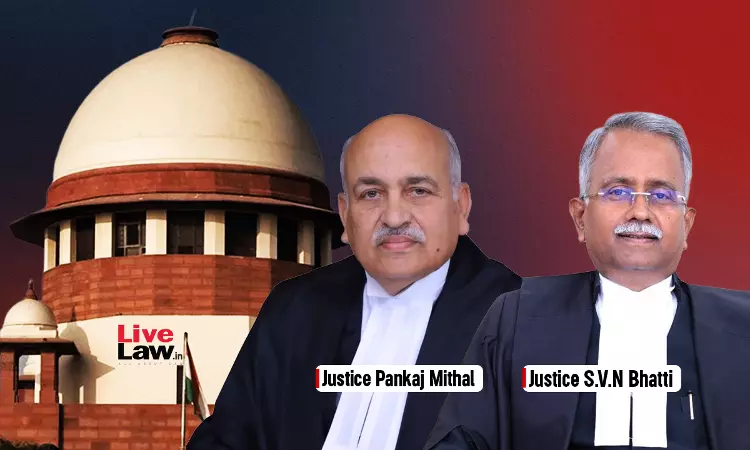
The Court stated that the directions issued by the District Collectors should be understood as its directives.
The Supreme Court has empowered District Collectors across the country to enforce the Solid Waste Management Rules, 2026, by delegating statutory powers under the Environment (Protection) Act, 1986. A bench of Justice Pankaj Mithal and Justice SVN Bhatti directed the Ministry of Environment, Forest and Climate Change (MoEFCC) to issue a notification under Section 23 of the...
This is a premium content
Available exclusively to
Our subscribers
Subscribe Premium 
INR 1099+GST
Your support helps us to bring you more content at
an affordable subscription scheme !!!
All payment options available
The Supreme Court has empowered District Collectors across the country to enforce the Solid Waste Management Rules, 2026, by delegating statutory powers under the Environment (Protection) Act, 1986.
A bench of Justice Pankaj Mithal and Justice SVN Bhatti directed the Ministry of Environment, Forest and Climate Change (MoEFCC) to issue a notification under Section 23 of the Environment (Protection) Act, 1986, delegating powers under Section 5 to District Collectors for a period of one year. These powers include the authority to issue binding directions, including coercive measures such as the stoppage of water and electricity supply to bulk waste generators who fail to comply with statutory obligations.
“…the MoEFCC is directed to issue a notification under Section 23 and delegate the powers under Section 5 of the Environment Protection Act, 1986, to the District Collectors across the country for a period of one year, exclusively for supervising, administering and implementing SWM Rules, 2026, within their jurisdictional limits. The District Collectors are directed to constitute and dedicate a 'Special Cell' not only to oversee the implementation, but in given circumstances, to issue directions for the stoppage of water/electricity to bulk generators of solid waste who disobey the directions or disregard the Rules. The District Collectors are directed to conduct virtual spot inspections of the dumping sites, implement the rules, and fortnightly prepare and forward the report to the designated Secretaries in the respective States. The directions, if any, issued by the District Collectors under the delegated authority are understood as directives issued in furtherance of the orders of this Court.”, the court ordered.
The aforesaid order dated May 5, 2026, was passed in continuation of an earlier order dated Feb. 19, 2026, where the Court had flagged widespread non-compliance with existing waste management norms across the country. In a previous order, the Court had noted serious gaps in segregation, processing, and scientific disposal of waste, and had assigned a key supervisory role to District Collectors, directing them to conduct infrastructure audits, monitor compliance by local bodies, and report deficiencies to State authorities.
However, noting that despite a robust legal framework, implementation gaps persist, necessitating stronger administrative intervention within the statutory scheme, thus District Collectors have now been tasked with constituting special cells, conducting inspections, including virtual inspections of dump sites, regulating waste transportation, and ensuring compliance at the ground level. They are also required to submit periodic reports as part of a structured monitoring mechanism.
“The District Collectors are directed to prepare a brief summary of the performance/progress of the implementation of the SWM Rules once a month and submit it to the respective secretaries. The respective secretaries, in turn, with an abstract, certifying assessment of progress and deficiency within their respective states, forward the report to the concerned Ministries, viz, (i) Secretary, MoEFCC; (ii) Secretary, Department of Drinking Water and Sanitation, Ministry of Jal Shakti; (iii) Secretary, MoHUA; (iv) Secretary, Ministry of Panchayati Raj; and (v) Secretary, Ministry of Rural Development for filing the abstract of the report in this Court.”, the court said.
Also, the Regional Officers of the State Pollution Control Boards are directed to be included in the Special Cells to be set by the District Collectors, who shall conduct field inspection and report non-compliance to the District Collectors, to take necessary actions.
“The Regional Officers of the respective Pollution Control Boards shall also be included in the Special Cell directed to be set up under the supervision of the District Collector. The Regional Officers of the respective Pollution Control Boards are directed to conduct field inspections of authorised and unauthorised dump yards/sites within their jurisdictions and forward photographs to the District Collector and Local Bodies for further action and compliance. The District Collector issues directions to ensure that Solid Waste is transported, managed, and disposed of by vehicles authorised by the Local Bodies. This enables the Local Bodies not only to regulate but also to prevent unauthorised dumping along roadsides, railway tracks, lakes, foothills, etc.”, the court said.
Directives On Effective Waste Management
The Court also issued wide-ranging directions for effective waste management, including:
a. Local Self Governments (“LSGs”) must bring in source segregation with focus on Bulk Waste Generators (BWGs). Door to door mapping of waste generators can be done with the Safai Supervisors challaning the non-compliant generators. The focus on BWGs needs to be complete and absolute.
b. LSGs must upgrade their collection and transportation to have completely closed vehicles for secondary transportation.
c. LSGs must use technology to map Garbage Vulnerable Points (GVPs) and ensure that there is no recurrence by using a mix of penalties and improved collection systems.
d. All high footfall areas must be identified by that are garbage-prone and a mix of initiatives like - Swachhata Marshals (community patrollers), strict enforcement amongst vendors, twice-a-day sweeping, and additional manpower as per seasonality requirements, declarations of no-Single-Use Plastice zone and its enforcement, etc.
e. Special Purpose Vehicle is set up only for Solid Waste Management with specialisation in the processing of all streams of waste. While primary collection and transportation of waste can be the ULBs' mandate, efficient operation of processing plants can be the SPVs' specialised domain. Even collection and transportation can be handed over to the SPV, as per well-structured KPIs.
f. ULBs must designate at least percent of their total funds for effective city cleanliness and solid waste management.
g. City cleanliness being a priority, States/UTs must evolve Ward cleanliness ranking which must be a criteria for providing incentives to a Ward. The Ward member/councillor/corporator will lead these activities with the help of a Ward Swachhata Committee with select members of the Ward as voluntary members.
h. The city must designate waste handling areas in all new areas of planned expansion.
i. There should be no dumping of waste or legacy dumpsites. Only rejects should be allowed to sanitary scientific landfill. The decentralised waste management sites must also be used to educate children and other citizens.
j. All wards should have a neighbourhood RRR centre (Reduce -Reuse-Recycle) Centre so that citizens can use this to donate their used materials, electronic products, clothes, books, etc.
k. Each big city must tie up with industry so that the Material Recovery Facility is the pick-up point for industrial recycling, including plastics, and the city can generate Extended Producer Responsibility Certificates from the same.
The Court directed the state governments/UTs to filed a status report of the compliance of the aforesaid directions to the Secretary, MoHUA and the Secretary, MoEFCC for further action at both ends.
Short, Medium, and Long-Term Objectives
The Urban, Rural, and MoEFCC ministries are directed to set out 'short', 'medium', and 'long-term' objectives to be accomplished by the State/UTs and their Local Bodies. The concerned Ministries shall file separate abstract statements in the following format by 24th of May, 2026 on the percentage of accomplishment by the State/UTs and their Local Bodies in the format provided in an order.
The matter is next listed on 25.05.2026 at 10.30 AM.
Headnote
Environment Protection Act, 1986 — Section 5 & Section 23 — Solid Waste Management Rules, 2026 — Implementation and Delegation of Powers — Supreme Court directed the Ministry of Environment, Forest and Climate Change (MoEFCC) to issue a notification delegating powers under Section 5 to District Collectors across India for one year - This delegation is exclusively for supervising, administering, and implementing the Solid Waste Management (SWM) Rules, 2026 - Key Directives for Waste Management Enforcement – i. Establishment of Special Cells: District Collectors directed to constitute a 'Special Cell', including Regional Officers of respective Pollution Control Boards, to oversee implementation - The cell is authorized to issue directions to stop electricity/water supply to bulk solid waste generators who disobey or disregard the rules; ii. Field and Spot Inspections: Regional Officers of Pollution Control Boards must conduct field inspections of authorized and unauthorized dump yards and forward photographic evidence to District Collectors and local bodies for action - Collectors must conduct virtual spot inspections and submit monthly progress summaries to the State; iii. Leveraging CSR Funds: Union Ministries directed to explore incorporating Corporate Social Responsibility (CSR) contributions by industries for establishing Compressed Biogas plants or waste-to-energy technologies, prioritising improvement of local bodies where contributing industries are located; iv. Administrative & Human Resource Reforms: Directed integration of a 3-level paperless approval method for SWM projects under the Swachh Bharat Mission-Urban - States/UTs directed to review human resources, fill vacancies in local bodies in a time-bound manner, and ensure at least a full-time Panchayat Secretary in every Gram Panchayat; v. Source Segregation and Upgradation: Local Self Governments (LSGs) mandated to focus on source segregation for Bulk Waste Generators (BWGs), deploy door-to-door mapping via Safai Supervisors, upgrade to completely closed vehicles for secondary transportation, and establish neighbourhood Reduce-Reuse-Recycle (RRR) centres. [Paras 4 - 21]
Cause Title: BHOPAL MUNICIPAL CORPORATION VERSUS DR SUBHASH C. PANDEY & ORS.
Citation : 2026 LiveLaw (SC) 465
Appearance:
For Appellant(s) Ms. Vanshaja Shukla, AOR Ms. Gunjan Chowksey, Adv. Ms. Ankeeta Appanna, Adv. Mr. Siddhant Yadav, Adv.
For Respondent(s) Mrs. Aishwarya Bhati, A.S.G. Ms. Anupriya Srivastava, Adv. Ms. Gargie Boss, Adv. Mr. Gurmeet Singh Makker, AOR Mrs. Chitragda Rastvara, Adv. Mr. Balendu Shekhar, Adv. Mr. Udit Dediya, Adv. Mr. Harshvardhan Pandey, Adv. Mr. Raghavendra Pratap Singh, AOR Mr. Ram Kumar, Adv. Mr. Mahendra Pratap Singh, Adv. Mr. Akshat Kashyap, Adv. Mr. Arpit Gupta, AOR Mr. Dilpreet Singh, Adv. Mr. Divya Pratap Parmar, Adv. Ms. Akansha Agarwal, Adv. Mr. Aadil Yar Chaudhary, Adv. Mr. Shariq Yar Chaudhary, Adv. Mr. Pashupathi Nath Razdan, AOR Mr. Abhimanyu Singh, Adv. Mr. Abhinav Srivastav, Adv. Ms. Maitreyee Jagat Joshi, Adv. Mr. Astik Gupta, Adv. Ms. Akanksha Tomar, Adv. Mr. Shravan Bagora, Adv. Mr. Raghav Sharma, Adv. Mr. Salvador Santosh Rebello, AOR Mr. Jaskirat Pal Singh, Adv. Mr. Mridul Shukla, Adv. Mr. Pranjal Pandey, Adv. Ms. Moulishree Pathak, Adv. Mr. Saurabh Balwani, AOR Mr. Chirag Pathor, Adv. Mr. Vikramaditya Singh, AOR Mr. Qasim Ali, Adv. Mr. Arjun Singh, Adv. Ms. Yashika Gupta, Adv. Mr. R Venkat Prabhat, Adv. Ms. Pragati Neekhra, AOR Mr. Aryan Vaibhav Srivastava, Adv. Mr. Aaditya Aniruddha Pande, AOR Mr. Siddharth Dharmadhikari, Adv. Mr. Shrirang B. Varma, Adv. Mr. Sourav Singh, Adv. Ms. Chitransha Singh Sikarwar, Adv. Mr. Sameer Abhyankar, AOR Mr. Krishna Rastogi, Adv. Mr. Aryan Srivastava, Adv. Mr. Surjendu Sankar Das, AOR Ms. Yoovika Toor, Adv.

Yash Mittal
Yash Mittal is a Correspondent with LiveLaw, covering the Supreme Court of India

