



- Home
- /
- Supreme court
- /
- Supreme Court Flags Anomalies In...
Supreme Court Flags Anomalies In Fixing Consumer Fora Jurisdiction Based On Consideration Paid, Seeks Centre's Response
Yash Mittal
18 Aug 2026 11:40 AM IST
The Supreme Court has flagged certain anomalies which can arise from the provisions of the Consumer Protection Act, 2019, if the pecuniary jurisdiction of the consumer fora is determined as per the value of consideration paid by the consumer for goods or services, and sought the response of the Union Government.Unlike the repealed 1986 Act, where the pecuniary jurisdiction of consumer...
This is a premium content
Available exclusively to
Our subscribers
Subscribe Premium 
INR 1099+GST
Your support helps us to bring you more content at
an affordable subscription scheme !!!
All payment options available
The Supreme Court has flagged certain anomalies which can arise from the provisions of the Consumer Protection Act, 2019, if the pecuniary jurisdiction of the consumer fora is determined as per the value of consideration paid by the consumer for goods or services, and sought the response of the Union Government.
Unlike the repealed 1986 Act, where the pecuniary jurisdiction of consumer commissions was determined based on the aggregate value of goods or services involved and the compensation claimed, the Consumer Protection Act, 2019, marked a significant departure by limiting jurisdictional computation to the value of the goods or services paid as consideration.
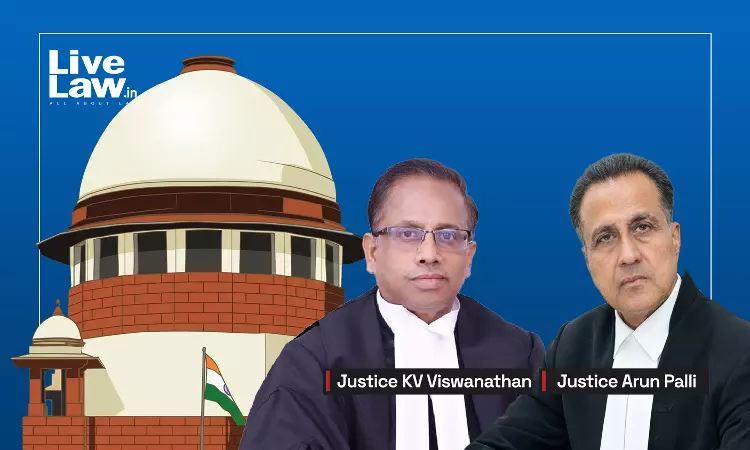
The bench of Justice KV Viswanathan and Justice Arun Palli was essentially considering a consumer dispute arising from an insurance contract. During the hearing, the bench expanded the consideration to the larger issue.
Sr. Adv. Gagan Gupta along with Adv. Anuroop Chakravarti, for the insured petitioner, highlighted anomalies that may arise if the pecuniary jurisdiction of the consumer forums is decided based on the consideration paid for the purchase of goods or services.
By way of an illustration, the senior counsel highlighted a dispute arising from a fixed deposit account in a Bank. He pointed out that although they are consumers of banking services, there may be no separate consideration paid for opening an FD account in a bank. So, if any dispute arises, such as loss of money or loss of interest, the account holder would be barred from filing a consumer complaint, as jurisdiction is now determined based on the consideration paid for a service, which the consumer purportedly has not paid.
He also referred to medical services provided on a subsidised basis. Where some patients pay for services while others receive them without payment, determining pecuniary jurisdiction exclusively based on consideration could create difficulties even though both categories may fall within the statutory definition of "consumer".
Further, a situation was also highlighted where, if consideration paid is taken as the basis for determining the pecuniary jurisdiction, in a given case, where the deficiency is only against certain fixtures and fittings in the house/flat, since there is no breakup of consideration available, the value of the entire house/flat may have to be taken for lodging a claim before the appropriate fora.
Another aspect pointed out was that if a consumer who bought a car worth Rs.2.50 crores, but only has a grievance against a defective windshield, even to replace that windshield, the consumer will have to move to National Commission, whereas in the case of a consumer who has paid an advance of Rs.40 lakhs for the car, where delivery of the car is delayed, the said consumer will have to approach the District Commission, instead of National Commission, as the total consideration value of Car i.e., 2.5 crore will not a basis for determining the pecuniary jurisdiction but Rs. 40 Lacs.
The Court also took note of the fact highlighted by Adv. Jagdish Chandra Solanki that consumer proceedings are not necessarily instituted only by an individual who has personally paid consideration. Under the Consumer Protection Act, complaints can also be initiated by registered consumer associations, the Central or State governments and the Central Consumer Protection Authority. In proceedings instituted by such entities, the question of consideration paid by the complainant may not arise at all. According to the Court, this also requires consideration while determining how the pecuniary jurisdiction provisions are intended to operate.
Citing Rutu Mihir Panchal & Ors. vs. Union of India & Ors. 2025 LiveLaw (SC) 503, the Additional Solicitor General Vikramjit Banerjee for the Union, submitted that the constitutional validity of the relevant provisions concerning pecuniary jurisdiction under the 2019 Act had already been upheld.
However, the Court clarified that there was no dispute regarding the legislature's power to prescribe the basis for pecuniary jurisdiction but was “anxious to know how the pecuniary jurisdiction will operate in the light of the alleged anomalies highlighted above.”
In this backdrop, the Court granted six weeks to the Union to file a detailed affidavit addressing the concerns expressed hereinabove.
Also, the Court sought an explanation for the reduction of the National Consumer Disputes Redressal Commission's pecuniary jurisdiction from ₹10 crore under the Consumer Protection Act, 2019 to ₹2 crore by the December 30, 2021 notification.
The matter has been listed for October 8, 2026.
Cause Title: M/S AVON ELASTOMERS (INDIA) VERSUS M/S BAJAJ ALLIANZ GENERAL INSURANCE CO. LTD & ORS.
Appearance:
For Petitioner(s) Mr. Gagan Gupta, Sr. Adv. Mr. Anuroop Chakravarti, Adv. Mr. M.s.vishnu Sankaar, Adv. Mr. Aryan Shankar, Adv. Ms. Athira G. Nair, Adv. Mr. Saurabh Gupta, Adv. Mr. Jasbir Singh, Adv. M/s Lawfic, AOR
For Respondent(s) Mr. Vikramjit Banerjee, A.S.G. Mr. Jagdish Chandra, Adv. Mr. Jagdish Chandra Solanki, Adv. Mr. Vishal Meghwal, AOR (through VC) Ms. Sanskriti Sharma, Adv. Mr. Amit Kumar Singh, AOR Ms. K Enatoli Sema, Adv. Ms. Chubalemla Chang, Adv. Mr. Prang Newmai, Adv. Dr. Surender Singh Hooda, AOR Mrs. Vanshaja Shukla, Adv. Mr. Bhuvan Mishra, Adv. Mr. Padmesh Mishra, Adv. Mr. Gautam Bhardwaj, Adv. Mr. Gautam Bharadwaj, Adv. Mr. Prashant Rawat, Adv. Ms. Akansha, Adv. Mr. Aditya Kashyap, Adv. Mr. Sahil Bhalotia, Adv. Mr. Amrish Kumar, AOR
Tags

Yash Mittal
Yash Mittal is a Correspondent with LiveLaw, covering the Supreme Court of India

