



- Home
- /
- Supreme court
- /
- Supreme Court Holds OTIS Liable For...
Supreme Court Holds OTIS Liable For RAW Officer's Death Due To Lift Malfunction, Says Elevator Makers Have High Duty Of Care
Yash Mittal
29 July 2026 8:00 PM IST
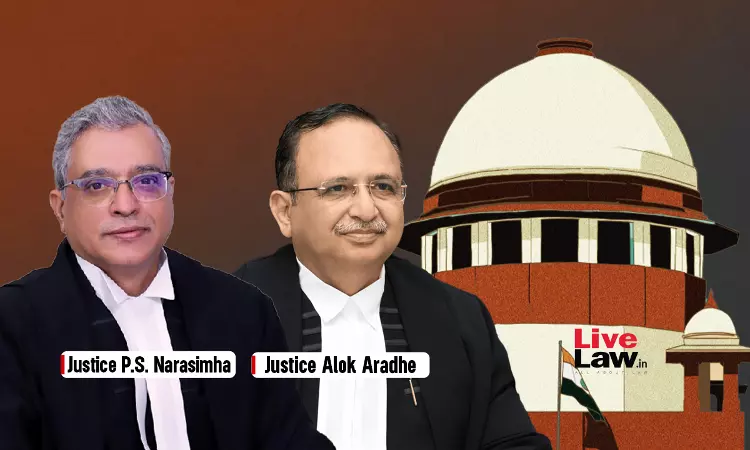
"An elevator must be construed and deemed to be a common carrier," the Court said.
The Supreme Court on Wednesday (July 29) upheld the liability of OTIS Elevator Company (India) Ltd. for the death of a Research & Analysis Wing (RAW) officer who was crushed to death in a lift malfunction at the RAW headquarters in New Delhi in 2003. Dismissing OTIS's appeal against the order of the National Consumer Disputes Redressal Commission, a bench comprising Justice Pamidighantam...
This is a premium content
Available exclusively to
Our subscribers
Subscribe Premium 
INR 1099+GST
Your support helps us to bring you more content at
an affordable subscription scheme !!!
All payment options available
The Supreme Court on Wednesday (July 29) upheld the liability of OTIS Elevator Company (India) Ltd. for the death of a Research & Analysis Wing (RAW) officer who was crushed to death in a lift malfunction at the RAW headquarters in New Delhi in 2003.
Dismissing OTIS's appeal against the order of the National Consumer Disputes Redressal Commission, a bench comprising Justice Pamidighantam Sri Narasimha and Justice Alok Aradhe held OTIS, being a manufacturer as well as comprehensive maintenance contractor, liable for the officer's death due to malfunction of the lift caused by fluctuation in the voltage, which remained unaddressed by the Elevator company for about eight months.
“A party that undertakes the comprehensive maintenance of a machine, which is in the nature of a vehicle, owes a heightened duty of care towards its users. OTIS was not a stranger to the defect that culminated in the accident. It was cognizant of the problem, and it had itself proposed the remedy. Having done so, its failure to ensure that the remedy was implemented, or, alternatively, to render the lift safe by other means pending its installation constitutes deficiency of service.”, the Court held.
It was the case where the Respondent No.1's husband, a RAW officer died due to malfunction in the elevator cause due to the voltage fluctuation. The Appellant-OTIS's denied liability saying that the issue of the voltage fluctuation was duly apprised to the Military Engineering Service, who was contracted for maintaining the elevator.
The NCDRC had held OTIS primarily responsible, fixing 70% liability on the company, 25% on MES and 5% on RAW. It awarded compensation of ₹3.01 crore with interest. RAW's and MES's appeals had already been dismissed earlier, leaving only OTIS' challenge before the Supreme Court.
In the judgment underscoring public safety, Justice Narasimha wrote that elevators have become an essential part of urban life and that passengers completely entrust their safety to the system.
"An elevator must be construed and deemed to be a common carrier," the Court held, adding that it is a "legal necessity to impose a heightened duty to care" because passengers have no control over the conveyance and are entirely dependent on automation or operators
The Bench further held that, from the perspective of public law, manufacturers, operators and owners of premises should all be treated as duty bearers and be jointly and severally liable to compensate victims. It said consumers should not be burdened with identifying the inter se liability of different tortfeasors before receiving compensation
Rejecting the company's contention, the Court held that it could not evade liability by shifting the blame onto the MES. The Court noted that, despite being aware of the malfunction for nearly eight months, the company failed to install the Service Line Voltage Corrector Stabiliser, which, according to its own recommendations, was essential for the safe operation and protection of the elevator. The Court noted that the Elevator company could have consciously restrained the use of the elevator till the issue of voltage fluctuation was fixed, however, it failed to do so.
“It is significant to note that OTIS's own conduct establishes that it was conscious, at least since 04.07.2002, over eight months before the accident, that the persistent stoppages were also attributable to voltage fluctuation, and that a Service Line Voltage Corrector Stabiliser was necessary, “for the protection & safe operation of our equipments”. Having itself identified the remedy, it was incumbent upon OTIS, as the party responsible under Clause 3.1 for the safe functioning of the lift, to have followed up on this recommendation, to have declined to certify the lift as fit for continued use pending installation of the stabiliser, or, at the very least, to have escalated the matter given that the breakdowns continued unabated through July and August of 2002, as recorded in the letters of 05.07.2002 and 29.08.2002. Instead of following such course of action, the lift continued to be operated on a daily basis, carrying senior officers of RAW, without any of the safeguards that OTIS itself had identified as necessary.”, the Court observed.
The Court also rejected OTIS's argument that the accident was caused solely by the manual release of brakes by MES personnel. While a technical report attributed the cause to manual brake release, the Court held that this did not absolve OTIS, as it was "responsible for the electrical and mechanical fittings of the lifts and maintenance of the same to keep them in sound condition to avoid risk of accident."
“That OTIS was simultaneously the manufacturer of the lift and its comprehensive maintenance contractor placed it in a position of unique knowledge and control over features such as the safety interlocks, the brake mechanism, and the electrical circuitry whose malfunction caused the fatal accident. This position is materially different from that of either RAW or MES, neither of whom possessed the technical means independently to assess or rectify the defects that were being reported to them.”, the Court said.
“We are unable to accept the submission on behalf of the Appellant that responsibility for the accident rests solely with MES on the ground that its personnel manually released the brakes through the Brake Release Key. While the Technical Report may attribute cause of the accident to manual release of the brakes, this finding does not, in our view, absolve OTIS of liability, for various reasons as the said manual release is not a standalone incident. This event has to be seen in the context of various factors that have been articulated.”, the Court added.
In terms of the aforesaid, the appeal was dismissed. “The apportionment of 70% of the liability to OTIS, 25% to MES and 5% to RAW, in our view, properly reflects the differential degree of knowledge, control and responsibility that each party bore for the accident, and calls for no interference by this Court.”, the Court held.
Headnote
Consumer Protection Act, 1986 — Section 2(1)(g) / Section 21 — Deficiency in Service — Elevator Maintenance and Public Safety — Heightened Duty of Care & Liability of Joint Tortfeasors - Public Law Rationale & Nature of Passenger Elevators: Elevators, as modes of vertical transportation, function as common carriers in urban spaces - Since passengers exert no control over the conveyance and rely entirely on automation or operators, a heightened duty of care akin to common carriers is legally required to safeguard vulnerable users - In cases of accidents caused by lift malfunctions in public spaces, the manufacturer, operator, and owner/occupier are joint tortfeasors jointly and severally liable to compensate the victim at the first instance - Inter se contractual liabilities are to be apportioned separately without delaying relief to consumers.
Distinction Between 'Cause of Action' and 'Cause of Accident' - Held, while a technical investigation report may pin human error (e.g., manual release of mechanical brakes via a Brake Release Key during an emergency rescue) as the immediate cause of an accident, the Supreme Court must look at the broader chain of events establishing the cause of action when determining deficiency in service - A persistent, unrectified mechanical/electrical breakdown that sets off the rescue operation cannot be treated as an isolated or standalone event to absolve the maintenance contractor of liability. [Paras 24–28, 30-32]
Comprehensive Maintenance Duty & Negligence - The elevator manufacturer and maintenance contractor (OTIS), having exclusive technical knowledge and contractually undertaking comprehensive maintenance to keep lifts in sound condition, owes a heightened duty of care - Where the contractor was repeatedly put on notice regarding persistent breakdowns, knew that voltage fluctuations necessitated a voltage stabilizer for safe operation, but failed to follow up, halt lift operations, or impart emergency rescue training to site personnel, it cannot evade primary liability - Failure to produce contractually mandated maintenance/attendance registers also invites an adverse inference. [Paras 26-34]
Apportionment of Liability Among Joint Tortfeasers - The National Consumer Disputes Redressal Commission (NCDRC) correctly apportioned the overall liability as 70% on the Lift Maintenance Contractor/Manufacturer (OTIS) (primary operational & maintenance failure), 25% on the Maintenance/Facility Management Agency (MES) (failure of oversight, non-maintenance of registers, and leaving the machine room accessible), and 5% on the Premises Occupier (RAW) (residual administrative oversight failure). [Relied on Khenyei v. New India Assurance Co. Ltd. & Ors., (2015) 9 SCC 27; Treadwell v. Whittier, 80 Cal. 574, 22 Pac. 266 (1889); Paras 33–34]
Cause Title: M/S OTIS ELEVATOR CO. (INDIA) LTD. VERSUS RASHMI HANDA & ORS. (with connected case)
Citation : 2026 LiveLaw (SC) 734
Click here to download judgment
Appearance:
For Appellant(s) : Mr. Gopal Sankaranarayanan, Sr. Adv. Mr. Manu Nair, Adv. Mr. Manik Sachdeva, Adv. Mr. Saurabh Gupta, Adv. Ms. Zubia Rehan, Adv. Mr. Shourya Dasgupta, Adv. Mr. S. S. Shroff, AOR
For Respondent(s) : Mr. Saurabh Suman Sinha, Adv. Mr. Sharad Bhansali, Adv. Mr. Jitendra Singh, Adv. Ms. Chitra Yashodhan Parande, Adv. Ms. Rishbha Shivhare, Adv. Mr. Gautam Prabhakar, Adv. Mr. Yash Bhatnagar, Adv. M/s Ap & J Chambers, AOR Ms. Aishwarya Bhati, A.S.G. Mr. Sarthak Karol, Adv. Mr. Akshat Agarwal, Adv. Mr. Shubham Mishra, Adv. Mr. Padmesh Mishra, Adv. Mr. Sachin Sharma, Adv. Mr. Arvind Kumar Sharma, AOR Mr. Mukesh Kumar Maroria, AOR Ms. Aishwarya Bhati, A.S.G. Mr. Padmesh Mishra, Adv. Mr. Sarthak Karol, Adv. Mr. Akshat Agrawal, Adv. Mr. Shubham Prakash Mishra, Adv. Mr. S.N.Terdal, Adv
Tags

Yash Mittal
Yash Mittal is a Correspondent with LiveLaw, covering the Supreme Court of India

