



- Home
- /
- Supreme court
- /
- Property Conveyed In Sale Deed...
Property Conveyed In Sale Deed Cannot Be Changed Through Rectification Deed Without Original Transferor's Consent: Supreme Court
Yash Mittal
15 July 2026 1:25 PM IST
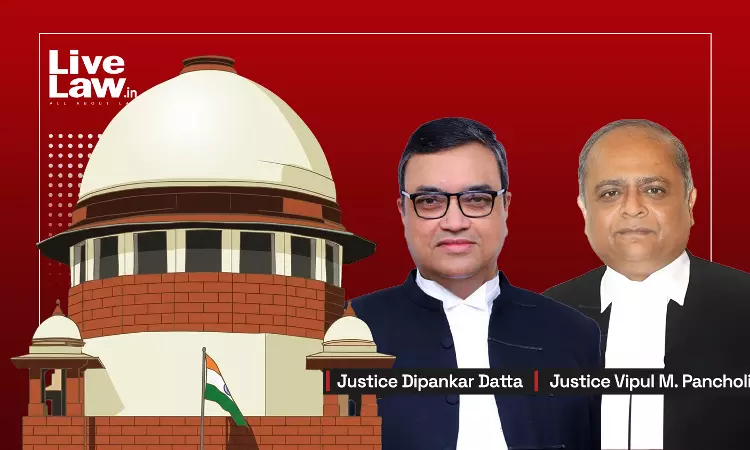
The Supreme Court has ruled that a rectification deed cannot change the identity of a property unless the original seller agrees, and that courts cannot give judgments based on arguments that parties never made."A rectification deed cannot, in the guise of correcting an error, substitute the very subject matter of a prior conveyance without participation of the original transferor.”, observed...
This is a premium content
Available exclusively to
Our subscribers
Subscribe Premium 
INR 1099+GST
Your support helps us to bring you more content at
an affordable subscription scheme !!!
All payment options available
The Supreme Court has ruled that a rectification deed cannot change the identity of a property unless the original seller agrees, and that courts cannot give judgments based on arguments that parties never made.
"A rectification deed cannot, in the guise of correcting an error, substitute the very subject matter of a prior conveyance without participation of the original transferor.”, observed a bench of Justice Dipankar Datta and Justice Vipul M Pancholi.
One-Thimmadasappa owned property in Survey No. 1/4, which he sold in 1971. The property changed hands twice and was finally purchased by K.M. Venkatamuniyappa (the plaintiff) in 1973. Meanwhile, in 1982, the government re-granted a different property, Survey No. 162, to Thimmadasappa.
In 1997, a rectification deed was executed between the plaintiff and his vendor, claiming the survey number in the 1973 sale deed was wrongly mentioned and should be Survey No. 162 instead of Survey No. 1/4. Thimmadasappa, the original owner, was not a party to this rectification deed.
In 2005, Thimmadasappa partitioned Survey No. 162 between his two sons. The plaintiff filed a suit challenging this partition, claiming ownership over Survey No. 162.
While the trial court dismissed the suit, holding that the plaintiff had failed to prove that Survey Nos. 1/4 and 162 referred to the same property, the first appellate court reversed the decree after comparing the property boundaries in the documents. The High Court affirmed that decision
Aggrieved, Thimmadasappa's sons approached the Supreme Court.
Setting aside the impugned judgment, the judgment authored by Justice Datta invoked the maxim 'nemo dat quod non habet', which means “No person can convey a better title than he himself possesses.”
“If Thimmadasappa never conveyed Sy. No.162, the defendant no.3 acquired no title thereto. The defendant no.4 too could not, therefore, acquire any such title. It necessarily follows that the defendant no.4 could not convey Sy. No.162 to the plaintiff merely by executing a rectification deed. A derivative title cannot outvalue the title from which it is derived.”, the Court observed.
The court rejected the plaintiff's claim, stating that the subject property survey no. 162 remained with the Thimmadasappa, therefore the partition between him and his sons cannot be faulted.
“ Since Thimmadasappa continued to retain title to Survey No.162, notwithstanding the rectification deed executed by and between the plaintiff and the defendant no. 4, the inclusion of the said property in the partition deed executed between him and his sons cannot be faulted.”, the Court observed.
“A plaintiff seeking declaration of title must succeed on the strength of his own case and not on the perceived weakness of the defence. It is trite that title cannot rest on surmises or probabilities. The burden squarely rested on the plaintiff to establish that the property conveyed under Sale Deeds I, II and III, though described throughout as Sy. No.1/4, was in reality Sy. No.162. Such burden remained undischarged.”, the Court added.
Further, the court noted that no step was taken by the plaintiff to have the revenue entries changed in his favour given that the rectification deed was of the year 1997.
“The conduct of the plaintiff is equally relevant. Although the rectification deed is of the year 1997, admittedly no effort was made to have the revenue entries changed in his favour. Even until the institution of the suit in 2007, the revenue entries consistently stood in the name of Thimmadasappa and, thereafter, in the names of the appellants. While it is trite that revenue entries themselves do not confer title, they may be seen as evidence regarding possession. A total absence of any contemporaneous assertion of right by the plaintiff over Sy. No.162 for nearly a decade after the alleged rectification deed is a circumstance which the first appellate court failed to accord due weight.”, the Court observed.
“We are of the considered opinion that the judgment and decree passed by the first appellate court reversing the decree of the trial court, since affirmed by the High Court, suffer from manifest errors of law and a complete misappreciation of the evidence on record. The trial court, we hold, was perfectly justified in dismissing the suit.”, the court held.
The appeal was allowed.
Headnote
Pleadings and Reliefs – Pleadings are foundational to a claim – A court cannot grant a relief or decide a case on grounds entirely outside the pleadings of the parties without a proper amendment of the plaint – Held, no amount of evidence on a plea not put forward in the pleadings can be looked into to grant any relief. Relief premised on a case not pleaded cannot be sustained in law. [Relied on Trojan & Co. Ltd. v. Nagappa Chettiar, (1953) 1 SCC 456; Bachhaj Nahar v. Nilima Mandal, (2008) 17 SCC 491; Paras 18 22]
Specific Relief Act, 1963 – Section 26 – Rectification of Instruments – Scope and Competence of Rectification Deed – A rectification deed cannot, in the guise of correcting an error, substitute the very subject matter of a prior conveyance or alter the essential transaction itself – Held, Section 26 embodies a limited equitable jurisdiction to rectify the expression of a concluded bargain inaccurately reflected due to fraud or mutual mistake; it does not substitute one bargain for another. [Paras 30, 31]
Specific Relief Act, 1963 – Section 26 – Non-participation of original transferor – A rectification deed executed unilaterally by a subsequent vendor without the participation or consent of the original executant/transferor is legally incompetent to alter the subject matter of the original conveyance or divest the rights flowing from subsequent grants/partitions - Transferees deriving title under an instrument cannot lawfully alter the subject matter of a conveyance executed by another person without the predecessor's concurrence. [Paras 26-35]
Transfer of Property Act, 1882 – Section 43 – Doctrine of Feeding the Grant by Estoppel – Inam Lands – Applicability – The doctrine of feeding the grant by estoppel or principles relating to the re-grant of Inam lands enuring to the benefit of an earlier alienee can only be invoked when it is established as a foundational fact that the property subject to the earlier transfer and the property subsequently re-granted are one and the same - When the identity of the suit property itself is left in doubt, the legal consequences flowing from Section 43 of the ToP Act do not arise for consideration. [Distinguished N. Venkateshappa v. Munemma, (2016) 4 SCC 147; Para 29]
Property Law / Property Maxims – Nemo dat quod non habet – Derivative Title – No person can convey a better title than he himself possesses. A derivative title cannot outvalue the title from which it is derived. If the original owner never conveyed a specific survey number, subsequent purchasers cannot acquire or convey title to that distinct property merely by executing a unilateral rectification deed. [Para 33]
Evidence Act, 1872 / Civil Law – Burden of Proof – Declaration of Title – A plaintiff seeking a declaration of title must succeed strictly on the strength of their own case and not on the perceived weakness of the defense - Title over an immovable property cannot rest on surmises, probabilities, or conjectural comparisons of boundaries by courts in the absence of solid revenue records, village maps, or expert evidence. [Paras 23-42]
Code of Civil Procedure, 1908 – Section 100 – Second Appeal – Jurisdictional Error and Perversity – The High Court commits a manifest jurisdictional error and its findings are rendered perverse when, under Section 100 of the CPC, it fails to test the legality of a reversal by the First Appellate Court and instead builds a new legal edifice by suo motu invoking statutory provisions (like Section 43 of the ToP Act) or factual premises (like interchange of boundaries) that were never pleaded, proved, or advanced by the parties, while simultaneously ignoring material admissions made by the plaintiff. [Paras 38, 39, 40, 41]
Cause Title: VENKATESHA AND ANR. VS. K.M. VENKATAMUNIYAPPA (D) THR. LRS. & Ors.
Citation : 2026 LiveLaw (SC) 679
Tags

Yash Mittal
Yash Mittal is a Correspondent with LiveLaw, covering the Supreme Court of India

