



- Home
- /
- Supreme court
- /
- Supreme Court Revives Over ₹16...
Supreme Court Revives Over ₹16 Crore Service Tax Demand Against BPCL & HPCL For Facilitating CNG Sales For Mahanagar Gas
Yash Mittal
21 July 2026 9:32 AM IST
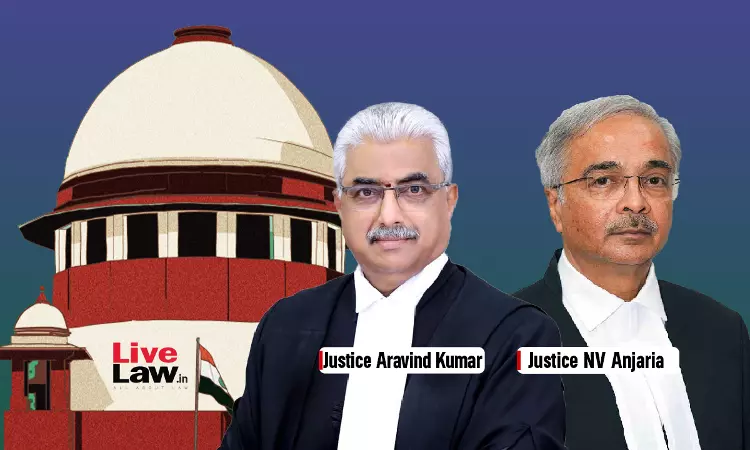
The Supreme Court on Monday (July 20) restored the service tax demands exceeding ₹16 Crore against the Bharat Petroleum Corporation Ltd. (BPCL) and Hindustan Petroleum Corporation Ltd. (HPCL), who acted as 'commission agents' of the Mahanagar Gas Limited (MGL) while selling Compressed Natural Gas (CNG) through their retail outlets. Referring to the agreement, a bench of Justice Aravind...
This is a premium content
Available exclusively to
Our subscribers
Subscribe Premium 
INR 1099+GST
Your support helps us to bring you more content at
an affordable subscription scheme !!!
All payment options available
The Supreme Court on Monday (July 20) restored the service tax demands exceeding ₹16 Crore against the Bharat Petroleum Corporation Ltd. (BPCL) and Hindustan Petroleum Corporation Ltd. (HPCL), who acted as 'commission agents' of the Mahanagar Gas Limited (MGL) while selling Compressed Natural Gas (CNG) through their retail outlets.
Referring to the agreement, a bench of Justice Aravind Kumar and Justice NV Anjaria noted that since the two oil companies acted as a marketing agents and promoters of sale of CNG for MGL, and, no buying and selling of CNG took place between the parties under the Agreement, thereby, qualifying them as a 'commission agent' within the definition of "Business Auxiliary Service" under Section 65(19) of the Finance Act.
“The respondent Corporations are the commission agents rendering the services to the appellant in distributing CNG acting on the basis of terms and conditions of the Agreement, of course, they are free to perform the task which they are entrusted with by the appellant-principal as per the terms of the Agreements. They do the business as facilitator and promote to sell CNG for the appellant. The respondent Corporations may be enjoying certain “powers” but they do not have the authority to override the principal–appellant and to hold the goods with any titular authority… The commission is paid to the respondent Corporations for rendering such services. The respondent Corporations are covered within the ambit of “commission agent” as per Explanation (a) of the definition. The services rendered by the respondent Corporations are “taxable services” as defined and understood in Section 65(105) of the Finance Act.”, the Court held.
The dispute arose from agreements entered into by Mahanagar Gas Limited (MGL) with BPCL and HPCL for selling Compressed Natural Gas (CNG) through the oil companies' retail outlets in Mumbai.
The Service Tax Department alleged that BPCL and HPCL were merely acting as commission agents for MGL and were therefore liable to pay service tax under the category of "Business Auxiliary Service" on the commission/profit margin received by them.
The oil companies, however, contended that they were purchasing and selling CNG on a principal-to-principal basis and that the transactions amounted to sale of goods, attracting VAT rather than service tax.
Service tax demands aggregating to over ₹16 crores for the period April 2005 to March 2011 were raised against the two corporations, leading to the present appeal before the Supreme Court by the Revenue, after the Customs, Excise and Service Tax Appellate Tribunal (“CESTAT”) set aside the revenue's demand order.
Allowing the revenue's appeal, the judgment authored by Justice Anjaria noted that the nature of an agreement between the Appellant and Respondent-oil companies was not of a sale-purchase of CNG, wherein the title was transferred to the Respondents. Rather, the agreement stipulated that MGL was to pay, to the Respondents the commission or profit margin as agreed upon between the parties from time to time as per the directives of the Government, made applicable, “upon the actual quantity sold to the consumers on behalf of MGL by the respondent Corporations.”
The Court explained that the litmus test to determine whether the agreement is that of a buyer and seller or agency would be to ascertain the element of passing of property in goods from one party to another.
“…the clinching consideration as to whether the relationship which exists is that of “Buyer and Seller” or the relationship of “Principal and Agent” is created, would be the element of passing of property in goods from one party to another. It would become decisive as to whether the property in goods or title over goods is retained or travels to another party. If the property passes, it will become contract of sale. If the title in the goods does not pass, it would be conclusive factor to suggest that the arrangement is one of agency, even though the goods may have been delivered. Dominion over property and continuance thereof is a litmus test. In a sale transaction, the buyer becomes owner of the property and the seller ceases to have any vestige of title left in the property.”, the Court observed.
Respondent-Oil Companies did business as facilitator and promote to sell CNG for the appellant
“The Agreements dated 30.03.1998 and 01.06.1999 between the parties in the present case do suggest that the supply of CNG by the appellant did not involve passing of property to the other side, namely BPCL/HPCL, who act only in capacity of agents to deal with the goods to be supplied to the consumers as middlemen acting on behalf of the appellant and by obeying the terms and conditions prescribed by the appellant. It would be seen that no clause or condition of the contract is indicative of an element of passing of property in favour of the respondent Corporations.”, the court observed.
“The respondent Corporations are not the buyers. MGL is not the seller. MGL sells LPG through the agency of respondent Corporations to the vehicle users, at a price charged which is fixed by MGL. The relationship born out is that of “Principal and Agent”. The respondent Corporations do not buy CNG and do not resell the same. The respondent Corporations are the “recipients” of the goods-CNG supplied by MGL.”, the court added.
K. Arumugam vs. Union of India Distinguished
The Court distinguished the case of K. Arumugam vs. Union of India (2024) from the present case, noting that in K. Arumugam, the appellants were carrying out buying and selling of lottery tickets which they used to purchase from the State Government, and in turn, sell them in various other states. Therefore, the Court therein held that the lottery selling transaction would not attract the concept of “Business Auxiliary Service”. On a contrary, the Court said that in the present case, the activity for promotion of sales or marketing services rendered by the assessees would fall within Clause 65(19) of the Finance Act where the party acts as a promoter of the business and is a marketing agent, the relationship between the parties would be principal and agent.
“Since in K. Arumugam (supra), there was no promotion or marketing of service on behalf of the State, therefore, it would fall outside the purview of service within the meaning of the Finance Act. The present case is a precise case where the respondent Corporations act as marketing agents and promoters of sale for MGL.”, the Court clarified.
“The respondent Corporations cannot escape the payment of service tax. The view taken by the adjudicating authority in determining the amounts payable towards service tax by the respondent Corporations, and the reasons recorded therefor, were eminently proper. The order of CESTAT reversing the same cannot stand valid.”, the Court observed.
Accordingly, the appeal was allowed. The demand of service tax was restored.
Headnote
Finance Act, 1994 – Section 65(19) and Section 65(105)(zzb) – Business Auxiliary Service – Service Tax – Service Tax Liability on Oil Marketing Companies (OMCs) for Dispensing Compressed Natural Gas (CNG) – Sale vs. Agency – Principal-Agent Relationship – Distinction between Outright Sale and Contract of Agency - The Supreme Court allowed the appeals filed by the Revenue, setting aside the order of the CESTAT and restoring the Orders-in-Original that confirmed the service tax demand against the respondent-Corporations (BPCL and HPCL) under the category of "Business Auxiliary Service" - Key Legal Principles Settled by the Court – i. Substance Over Form in Jural Relationships- The true relationship between parties must be gathered from the conjoint reading of all terms and conditions of the agreement in substance, rather than the form, nomenclature, or isolated expressions like "Principal-to-Principal" or "sale" used by the parties; ii. Litmus Test of Title and Retention of Stock - In an outright sale, the buyer acquires absolute dominion and proprietary rights over the goods, and the seller is divested of control - Where the supplier retains ownership of the goods until final dispensation and commands that all unsold/unused stocks be returned or disposed of per its directions upon the contract's termination, the transaction is conclusively one of agency and not sale. iii. Price Control and Pre-Arranged Remuneration as Attributes of Agency - When the retail price is exclusively fixed/revised by the supplier, the infrastructure/equipment belongs to the supplier, and the distributor is remunerated by a pre-arranged commission or profit margin calculated on the actual quantity sold (rather than buying the goods to resell them at their own discretionary profit), the relationship is that of a "Principal and Agent”; iv. Taxability under Business Auxiliary Service - Since the respondent OMCs act as facilitators, marketing promoters, and commission agents for the sale of CNG belonging to their client (MGL), their activities squarely fall within the definition of "Business Auxiliary Service" under Section 65(19) read with Explanation (a) of the Finance Act, 1994, making them liable to pay service tax. [Relied on M/s Snow White Industrial Corporation vs. Collector of Central Excise; Bhopal Sugar Industries Ltd. vs. Sales Tax Officer (1989) 3 SCC 351; Hafiz Din Mohammad Haji Abdulla vs. The State of Maharashtra, 1962 SCC OnLine SC 208; Bharti Cellular Limited v. CIT, (2024) 8 SCC 608; Union of India vs. Future Gaming Solutions (P) Ltd., (2025) 5 SCC 601; Bhopal Sugar Industries Ltd. vs. Sales Tax Officer, (1977) 3 SCC 147; Para 5-12]
Cause Title: COMMISSIONER OF SERVICE TAX MUMBAI VERSUS M/S BHARAT PETROLEUM CORPORATION LTD. ETC.
Citation : 2026 LiveLaw (SC) 698
Click here to download judgment
Appearance:
For Appellant(s) : Mr. Raghavendra P Shankar, A.S.G. Mr. Gurmeet Singh Makker, AOR Mr. Karan Lahiri, Adv. Mr. Bhuvan Kapoor, Adv. Mr. Ishan Sharma, Adv. Ms. Pallavi Mishra, Adv.
For Respondent(s) : M/S. S. Narain & Co., AOR Mr. M.h. Patil, Adv. Mr. Sandeep Narain, Adv. Ms. Manasi Patil, Adv. Mr. Viraj Reshamwalla, Adv.
Tags

Yash Mittal
Yash Mittal is a Correspondent with LiveLaw, covering the Supreme Court of India

