Supreme Court Strikes Down UP Laws Excluding Work-Charged Employees' Pre-Regularisation Service From Pension
Yash Mittal
20 Nov 2026 11:25 AM IST
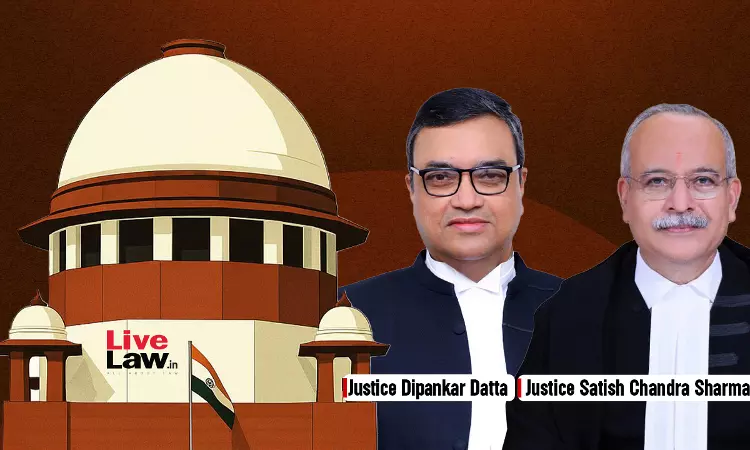
The Court noted that the laws were enacted to override its 2019 verdict.
The Supreme Court has struck down the Uttar Pradesh Qualifying Service for Pension and Validation Act, 2021, and the Uttar Pradesh Entitlement to Pension and Validation Act, 2025, which sought to exclude service rendered by work-charged, temporary, daily-wage and muster-roll employees from qualifying service for pension computation even after their regularisation.
The Court held that once an employee is regularised in public service under a duly formulated scheme, the nature of their initial appointment cannot be resurrected to deny them pensionary benefits. It observed that regularisation obliterates the “birthmark” of the initial appointment and integrates the employee into the regular establishment.
“…the character of service rendered antecedent to regularisation cannot be taken as a determinant to decide upon the entitlement of service and retiral benefits of the employees, since the act of regularisation obliterates the source or birthmark of the appointment simpliciter.”, observed a bench of Justice Dipankar Datta and Justice Satish Chandra Sharma, while holding that the two State enactments failed to remove the constitutional defect identified by the Supreme Court in its 2019 judgment in Prem Singh v. State of Uttar Pradesh, which had held that service rendered in a work-charged establishment must be counted as qualifying service for pension.


Retired employees covered by the judgment may approach the competent authority with details of their service. The Court directed that claims be decided within six months and that any pensionary benefits found due be released.
The Court also laid down directions for calculating arrears, including restrictions on the period for which monetary benefits would be payable. It directed that delayed payments beyond the stipulated timelines would attract interest at 9% per annum.
The State was further granted a final six-month period to comply with the directions in Prem Singh in the pending contempt matters. The Court cautioned that continued non-compliance may amount to aggravated contempt.
What Was The Defect In Prem Singh?
In Prem Singh (2019), the Supreme Court held that the relevant period of service rendered in a work-charged establishment must be counted towards qualifying service for pension, particularly where employees were subsequently regularised. It accordingly read down Rule 3(8) of the Uttar Pradesh Retirement Benefits Rules, 1961.
Test to identify whether the defect is removed
The judgment authored by Justice Datta explained that the real inquiry to see whether the legal defect in an earlier judgment is removed via a subsequent legislation would be to identify, first, “whether the legislature possesses legislative competence over the subject-matter; and, secondly, and more importantly for the present purpose, whether the defect identified by the Court has in fact been removed by the validating enactment.”
“What is the test for determining the legality / validity of a validating enactment? The test of a validating enactment is more peculiar vis-àvis the test of an ordinary legislation. The former has to be gauged alongside the defect which was identified in the earlier judgment, in addition to its general adherence to the provisions of the Constitution, whereas the latter is not exposed to the rigour of an additional test of “removal of defect” in the rung of scrutiny. The test for the validating legislations impugned before us, therefore, is not whether it has supplied a new verbal formula for an old exclusion; but whether it has removed the infirmity which rendered the exclusion constitutionally unsustainable. Tested on that touchstone, the legislative response before us does seem to fall short of the threshold.”, the Court said.
Had the defect been removed?
No, the Court said that the as state enactments had sought to reintroduce the very exclusion of work-charged service from pension computation that the Court had earlier found impermissible, merely by adopting new statutory definitions and giving them retrospective effect.
“…here, the foundation is left substantially undisturbed, and the consequence is attempted to be rescued through a deeming fiction, i.e., pensionary entitlement contingent upon the introduction of the words “substantive appointee”. Section 4 read with Section 3, changes the statutory label, but not the identified legal vice. On the whole, the learned Attorney's submission that the newly enacted 2021 and 2025 Validating Acts effectively cured the defect identified in Prem Singh (supra) is untenable, and the conditions for the validity of validating enactments are not fully complied with.”, the Court said.
According to the Court, the 2021 Act redefined "qualifying service" by linking it to appointments against temporary or permanent posts made under applicable service rules. It also retrospectively validated actions under Rule 3(8), including past pension denials, from April 1, 1961.
The Court held that the new definition did not address the defect identified in Prem Singh, as it continued to exclude the relevant work-charged service.
"The existence of a new definition does not, by itself, establish that the defect identified by Prem Singh (supra) has been cured.", the Court observed.
The 2025 Act introduced the expression "substantive appointee" and restricted pension entitlement based on that classification. It also excluded certain persons who were or had been subscribers to the Contributory Provident Fund or Employees' Provident Fund, while retrospectively validating past pension denials.
The Court held that this enactment, too, merely reintroduced the exclusion by redefining the class of employees eligible for pension rather than removing the underlying defect.
Relying on its earlier decisions, including Prithvi Cotton Mills v. Broach Borough Municipality, Indian Aluminium Co. v. State of Kerala and Madan Mohan Pathak v. Union of India, the Court reiterated that the legislature can retrospectively validate past actions only by removing the defect that formed the basis of the judicial decision.
The following conclusions were drawn from the judgment:
"a. The Uttar Pradesh Qualifying Service for Pension and Validation Act, 2021, and the Uttar Pradesh Entitlement to Pension and Validation Act, 2025, are declared ultra vires the Constitution of India in exercise of the power of judicial review of this Court;
b. The rights and claims of eligible work-charged employees for pension shall be considered in light of the decision in Prem Singh (supra) and the law made applicable thereby;
c. Every retired Government employee, falling within the ambit of this judgment, may approach the competent authority with his claim for pension and other retiral benefits with full particulars of service rendered over the years.
d. As and when a claim is received, the competent authority shall consider and determine the same in accordance with law within a period of 6 (six) months of receipt thereof and extend the benefits, wherever found due.
e. The benefits towards pension shall be calculated for each employee, including employees who have passed away after the decision in Prem Singh (supra), bearing in mind the restriction of monetary benefits to a period of three years preceding institution of the writ petition by Prem Singh.
f. However, the above restriction will not apply in case any claim is lodged by the heir(s) / legal representative(s) of an employee who, upon retirement, passed away prior to the decision in Prem Singh (supra) being delivered by this Court. In such case, the claimant(s) will be under an obligation to produce unimpeachable proof to succeed in any claim as heir / legal representative of the deceased employee, as the case may be.
g. Should any claim prima facie seem unacceptable, an opportunity of hearing must precede final rejection of claim; and, needless to mention, such rejection must be by a reasoned order.
h. While disposing of each claim favourably, the competent authority shall furnish to the employee concerned a chart of all payments made towards settlement thereof including the head under which each payment was made.
i. The State is not saddled with any interest in view of the law it enacted which, for the conclusions reached, would henceforth have no existence and effect. But, if payment is not released to the eligible employee within the time frame(s) given above, the State shall be liable to bear simple interest @ 9% per annum till such time payment is finally released.
j. The judgments and orders of the High Court, under challenge in the civil appeals filed by the employees, shall stand set aside."
Appearance:
For Petitioner(s) Mr. Pallav Shishodia, Sr. Adv. Mr. Vijay Hansaria, Sr. Adv. Mr. SR Singh, Sr. Adv. Mr. Pankaj Sharma, Adv. Ms. Rashmi Singh, AOR Mr. Mukesh Kumar Sharma, AOR Mr. Kartik Devansh, Adv. Mr. Manoj K. Mishra, AOR Mr. Umesh Dubey, Adv. Ms. Madhulika, Adv. Mr. Radeesh Kumar Mt, Adv. Mr. Amulya Dev Mishra, Adv. Mr. Brahma Singh, Adv. Mr. Rohit Vidhudi, Adv. Mr. N.S. Vidhudi, Adv. Mr. Anantha Narayana M.g., AOR Mr. Prabhsimar Singh, Adv. Mr. Ramprasad Alwa, Adv. Mr. Ganesh Kamath, Adv. Mr. D.K Garg, Adv. Mr. Abhishek Garg, Adv. Mr. Dhananjay Garg, AOR Mr. Shashi Kant Sharma, Adv. Mr. Manzoor Ali Khan Kacho, Adv. Mr. Harsh Kumar Agarwal, Adv. Mr. Natwar Rai, Adv. Ms. Nandani Gupta, Adv. Mr. Krishna Kumar, Adv. Dr. Mrs. Vipin Gupta, AOR Mr. Kamlendra Mishra, AOR Mr. Adarsh Upadhyay, AOR Mr. Divyanshu Sahay, Adv. Ms. Pallavi Kumari, Adv. Mr. Shashank Pachauri, Adv. Mr. Md. Anas Chaudhary, Adv. Mr. Ansar Ahmad Chaudhary, AOR Ms. Shehla Chaudhary, Adv. Mr. Mohd. Sharyab Ali, Adv. Ms. Alia Bano Zaidi, Adv. Mr. Yashpal, Adv. Mr. T. Mahipal, AOR Mr. Daleep Dhyani, Adv. Mr. Ankur Prakash, AOR Mr. Subhasish Mohanty, AOR Mr. Mata Prasad Singh, Adv. Ms. Gitesh Kumari, Adv. Mr. Ankit Bhatnagar, Adv. Mr. Sanjay Mani Tripathi, Adv. Mr. Kamal Kant Tripathi, Adv. Ms. Nirmal Tiwari, Adv. Mr. Suraj Kumar Singh, Adv. Mr. Ram Kisan, Adv. Mr. Kamal Kishor, Adv. Mr. Rameshwar Prasad Goyal, AOR Mr. Ajit Pandey, Adv. Mr. Danish Zubair Khan, AOR Dr. Lokendra Malik, Adv. Ms. Swati Yadav, Adv. Mr. Tanmaya Agarwal, AOR Mr. Wrick Chatterjee, Adv. Mrs. Aditi Agarwal, Adv. Mr. Udit Bhardwaj, Adv. Mrs. Rachna Gupta, AOR Mr. Anil Kumar Sinha, Adv. Ms. Manju Jetley, AOR Mr. Y S Lohit, Sr. Adv. Mr. Ankit Kumar Chaudhary, Adv. Mr. Amol Chitravanshi, AOR Mr. Kranti Pratap Singh, Adv. Mr. Manohar Pratap, AOR Mr. Vikrant Baniwal, Adv.
For Respondent(s) Mr. R. Venkataramani, Attorney General for India Ms. Aishwarya Bhati, ASG Mr. Rana Mukherjee, Sr. Adv. Mr. Vijay Hansaria, Sr. Adv. Mr. Kamlendra Mishra, AOR Mr. Ruchir Ranjan Rai, Adv. Mr. Ashiwan Mishra, Adv. Ms. Vaidruti Misra, Adv. Ms. Aditi Mishra, Adv. Mr. Suraj, Adv. Mr. Anurag Singh, Adv. Ms. Neelakshi, Adv. Mr. Anil Kumar Mishra, AOR Ms. Ruchira Goel, AOR Mr. SR Singh, Sr. Adv. Mr. Ankur Prakash, AOR Mr. Ajit Sharma, AOR Mr. Kanchan Kumar, Adv. Mr. Yuvaraj Sinh Solanki, Adv. Mr. Anant Ram Mishra, Adv. Mr. Lareb Habib Ansari, Adv. Mr. Ashutosh Senger, Adv. Ms. Shweta Jain, Adv. Mr. Sashwat Kaushik, Adv. Mr. Tanmaya Agarwal, AOR Mr. Wrick Chatterjee, Adv. Mrs. Aditi Agarwal, Adv. Mr. Udit Bhardwaj, Adv. Mr. R. Venkataramani, Attorney General for India Mr. Adarsh Upadhyay, AOR Ms. Pallavi Kumari, Adv. Mr. Divyanshu Sahay, Adv. Mr. Shashank Pachauri, Adv. Mr. Ankur Agnihotri, Adv. Mr. Girish Chand Tyagi, Adv. Mr. Anurag Tyagi, Adv. Mr. Hemant Singh, Adv. Mr. Kailash Prashad Pandey, AOR Mr. Aaditya Aniruddha Pande, AOR Mr. Sourav Singh, Adv. Mr. Dushyant Parashar, AOR Mr. Manu Parashar, Adv. Mr. Dinesh Pandey, Adv. Mr. Amit Pratap Shaunak, Adv. Mr. Praduman Kumar Agarwal, Adv. Mr. Sanjay Agarwal, Adv. Mr. Chandrika Prasad Mishra, Adv. Mr. Ankit Pandey, Adv. Mr. Vinayak Tyagi, Adv. Mr. Akshay Saxena, Adv. Mr. Prateek Khandelwal, Adv. Mr. Siddharth Srivastava, Adv. Mr. Harsh Pratap Sahi, Adv. Ms. Prashashti Singh, Adv. M/S Viadroit, AOR Mr. Sanjay Jain, AOR Mr. Sunny Sachin Rawat, Adv. Mr. Amber Jain, Adv. Mr. Anoop Prakash Awasthi, AOR Mr. Shubham Dubey, Adv. Mr. Rushikanta Dash, Adv. Ms. Jasleen Kaur, Adv. Mr. Pradeep Kumar Yadav, Adv. Ms. Anjale Kumari, Adv. Ms. Chhaya, Adv. Mr. Aditya Yadav, Adv. Ms. Sangita Mishra, Adv. Mr. Tota Ram, Adv. Mr. Sanjeev Malhotra, AOR Ms. Saroj Tripathi, AOR Mr. Shail Kumar Dwivedi, AOR Mr. Siddharth Krishna Dwivedi, Adv. Ms. Ayushi, Adv. Mr. Satyajeet Kumar, AOR Mr. Prashant Shukla, Adv. Mr. Abhishek Tiwari, Adv. Mr. Suyash Srivastava, Adv. Mr. Vinayak Sharma, Adv. Ms. Priya, Adv. Ms. Savita Singh, Adv. Mr. Aman Malik, AOR Dr. Alakh Alok Srivastava, AOR Ms. Bharti Tyagi, AOR Mr. Vikash Kumar, Adv. Mr. Pawan Mishra, Adv. Mr. Manoj Kumar Rai, Adv. Mr. Krishna Dev Pandey, AOR Mr. Raja Ram Tripathi, Adv. Mr. Maruti Nandan, Adv. Mr. Om Prakash Mishra, Adv. Mr. Y.S.Lohit, Sr. Adv. Dr. Sumant Bharadwaj, Adv. Mr. Ankit Kumar Chaudhary, Adv. Ms. Shivani Maurya, Adv. Dr. Vedant Bharadwaj, Adv. 8 Ms. Mridula Ray Bharadwaj, AOR Mrs. Amrita Behera, Adv. Mr. D.M. Sharma, Adv. Mr. Shailendra Kumar Mishra, Adv. Mr. Sharad Prakash Pandey, Adv. Mr. Vinod Kumar, Adv. Mr. Rajesh Kumar, AOR Mr. Yash Vardhan Singh, Adv. Mr. Prakash Kumar, Adv. Ms. Deepti Ahuja, Adv. Mrs. Ankur Gulyani Panda, Adv. Mr. Lokesh Kumar Choudhary, AOR Mr. Prabhat Chowdhary, Adv. Mr. Sri Srirama Chandra Sahu, Adv. Mr. Abdul Qadir Abbasi, AOR Mr. K.B. Upadhyay, Adv. Mr. Manoj Kumar Rai, Adv. Mr. Raja Ram Tripathi, Adv. Mr. Pushkar Anand, AOR Mr. Harshvardhan Mall Vishen, Adv. Mr. Rohit Kumar-i, AOR Mr. Shailendra Singh, Adv. Mr. D. P. Singh Yadav, Adv. Ms. Aneeta Yadav, Adv. Ms. Aakanksha Tiwari, Adv. Mr. Shiv Sagar Tiwari, AOR Mr. B.K. Gautam, Adv. Mr. R.K. Shukla, Adv. Mr. Rajender Kumar, Adv. Ms. Nisha Maurya, Adv. Dr. Sudheer Ranga, Adv. Mr. Sunny Verma, Adv. Mr. Pramod Kant Saxena, Adv. Mr. Himanshi Bagre, Adv. Mr. Chaman Prakas, Adv. Mr. Girdhari Lal Gupta, Adv. Mr. Salman Khan, Adv. Mr. Mayank Gupta, Adv. Mr. Rameshwar Prasad Goyal, AOR Mr. Nitin Singh, AOR Mr. Krishnam Mishra, AOR Mr. Param Kumar Mishra, Adv. Mr. Jagjeet Kumar Bhatt, Adv. Ms. Nisha Thakur, Adv. Mr. Ayush Mishra, Adv. Mr. Amitabh Pandey, Adv. M/S. Gorkela Law Office, AOR Mr. B.K. Mishra, Adv. Mr. Bijender Chaudhary, Adv. Mr. Hitesh Kumar Sharma, Adv. Mr. Akhileshwar Jha, Adv. Mr. Anupam Kumar, Adv. Ms. Priyanka, Adv. Ms. Asmita Mishra, Adv.