


Tax
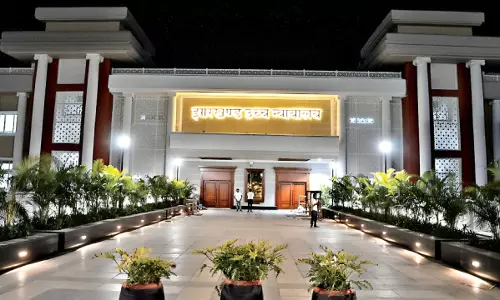
Department Retaining Balance Amount After Tax Demand Is Reduced Violates Article 14 & Article 265 Of Constitution: Jharkhand High Court
The Jharkhand High Court stated that retaining balance amount by department after the tax demand is reduced is violative of Article 14 & Article 265 of the constitution. The Division Bench of Chief Justice M.S. Ramachandra Rao and Justice Deepak Roshan observed that the department cannot retain the amounts deposited by the assessee pursuant to condition imposed by...
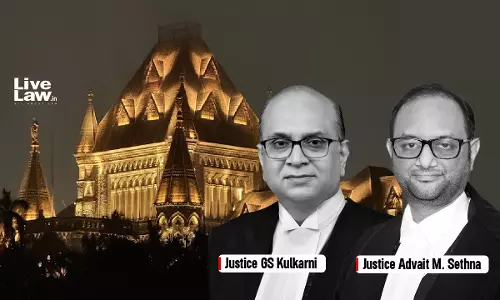
ITAT Cannot Perpetuate Ex-Parte Order: Bombay High Court Orders Tribunal To Grant Opportunity Of Hearing To Assessee Before Proceeding On Merits
The Bombay High Court has disapproved of the Income Tax Appellate Tribunal dismissing the appeal against an ex-parte order passed against a former employee of Pfizer Healthcare without providing him an opportunity of hearing.Stating that ITAT cannot “perpetuate” the ex-parte order, a division bench of Justices GS Kulkarni and Advait M. Sethna directed the Tribunal to hear the employee...
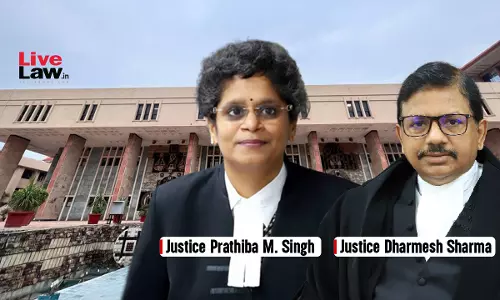
Can't Presume Pending Investigation For Disqualification Under 'Sabka Vishwas Scheme' When Proof Of Service Of Notice Not Available: Delhi HC
The Delhi High Court recently granted relief to a trader whose application for availing the Sabka Vishwas (Legacy Dispute Resolution) Scheme, 2019 over service tax dues was declined by the GST Department “without providing any reason”.A division bench of Justices Prathiba M. Singh and Dharmesh Sharma observed that in the absence of proof of service of notice upon the trader, prior to...
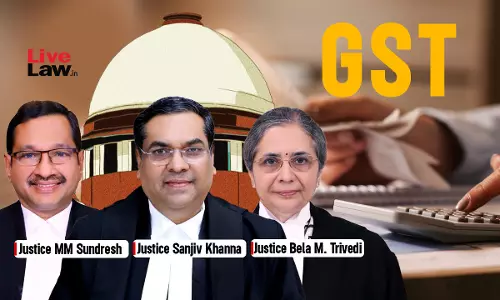
Anticipatory Bail Application Maintainable Against Arrest Under GST Act : Supreme Court Overrules Its Previous Judgments
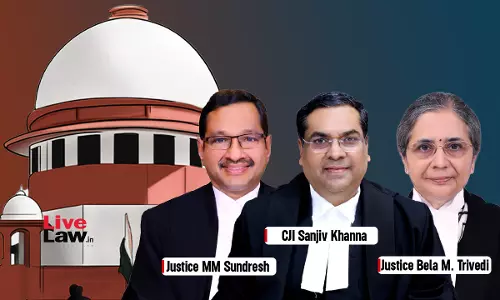
The Supreme Court has overruled its previous decisions which held that anticipatory bail applications were not maintainable with respect to offences under the Goods and Services Tax Act.A three-judge bench comprising Chief Justice of India Sanjiv Khanna, Justice MM Sundresh and Justice Bela Trivedi overruled the two-judge bench judgments in State of Gujarat v. Choodamani Parmeshwaran Iyer...
Assessee Not Eligible To Avail CENVAT Credit On Invoices Not In Their Name: CESTAT
The New Delhi Bench of Customs, Excise, and Service Tax Appellate Tribunal (CESTAT) has stated that the assessee is not eligible to avail the CENVAT Credit on the basis of the invoices which were not in their name. The Bench of Binu Tamta (Judicial Member) and Hemambika R. Priya (Technical Member) has observed that “it is necessary that the document contains all particulars...
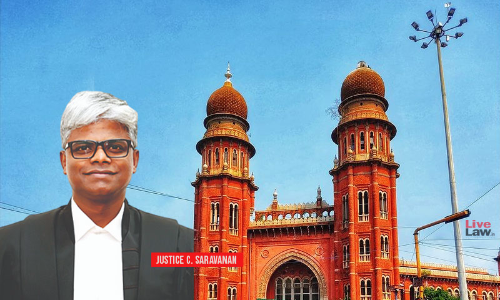
Supply Of Holographic Stickers By Prohibition & Excise Dept For Affixing On Alcohol Bottles Is Supply Of “Goods”, Not Taxable: Madras High Court
The Madras High Court has recently observed that the supply of holographic stickers or excise labels by the Prohibition and Excise Department which is to be affixed on manufactured and bottles alcoholic liquor is a supply of “goods” simplicitor and not a supply of “service”. The court thus ruled that such supply of holographic stickers would not be taxable under the...
Obligation Under CENVAT Credit Rules, 2004, Cannot Be Transferred To Recipient Of Credit: CESTAT
The Mumbai Bench of Customs, Excise, and Service Tax Appellate Tribunal (CESTAT) has stated that the obligation under rule 3(1) of CENVAT Credit Rules, 2004 cannot be transferred to the recipient of credit under rule 7 of CENVAT Credit Rules, 2004. The Bench of C J Mathew (Technical) has observed that, “the mechanism provided in rule 7 of CENVAT Credit Rules, 2004, governing...
Some Merit In Allegations That GST Officials Coerce Assesses To Pay Tax With Threat Of Arrest; It's Impermissible: Supreme Court
The Supreme Court on Thursday (February 27) observed that there was some merit in the allegation that tax officials coerce assesses to pay the Goods and Services Tax with the threat of arrest. This observation was made by the Court on the basis of data.The Court said that if any person is feeling coerced to pay GST, they can approach the writ court for refund of the tax paid by them...
DTAA | Subsidiary Of A Company Does Not Ipso Facto Constitute Its Permanent Establishment: Delhi High Court
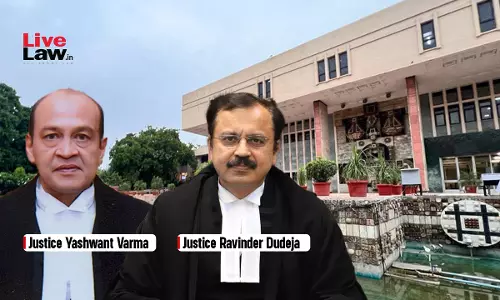
The Delhi High Court has held that a subsidiary or an entity which is substantially controlled by another entity in a contracting State does not by itself become a Permanent Establishment (PE) of that other entity.Citing Article 5 of the India-Finland Double Taxation Treaty, a division bench of Justices Yashwant Varma and Ravinder Dudeja observed,“There is no general presumption in law that...
CBDT Cannot Impose Limitations To Extinguish Rights Granted Under Income Tax Act: Delhi High Court
Recently, the Delhi High Court held that Central Board of Direct Taxes (CBDT) cannot impose limitations to extinguish rights granted under Income Tax Act, 1961. The Court held that the wide powers granted to the CBDT are not for extinguishing a right that is conferred by the Act. Accordingly, the Court Circular No. 07/2007 dated 23 October 2007 issued by the CBDT to the be ultra vires the...