


Tax
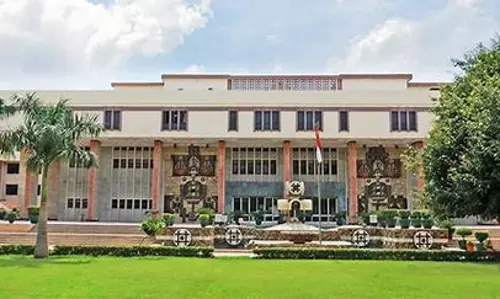
Central Govt Employee Cannot Change Destination Midway While Claiming Leave Travel Concession: Delhi High Court
The Delhi High Court has made it clear that in terms of the Central Civil Services (Leave Travel Concession) Rules, 1988 an employee cannot change travel destination midway through the journey and if due to some unavoidable circumstance it has been changed, the same has to be a destination which is en route.In the case at hand, LTC was originally sought for travel to Trivandrum, which...
Article 226 Can't Be Invoked Against An SCN Issued U/S 74 Of CGST Act At Preliminary Stage: Kerala High Court
The Kerala High Court stated that Article 226 cannot be invoked against a show cause notice issued under Section 74 of the CGST Act at preliminary stage. “Article 226 of the Constitution of India is not meant to be used to break the resistance of the Revenue in this fashion. In exercise of such jurisdiction, the High Court is required to refrain from issuing directions...
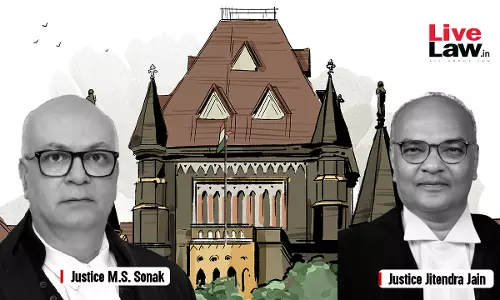
ITAT Cannot Overstep Its Authority By Deciding On Merits When It Had Already Concluded Appeal Was Not Maintainable: Bombay High Court
The Bombay High Court stated that ITAT cannot overstep its authority by deciding on merits when it has already concluded an appeal was not maintainable. The Division Bench of Justices M.S. Sonak and Jitendra Jain observed that “Once the ITAT concluded that the Appeal before it against the impugned communication/order was not “maintainable”, there was no question of...
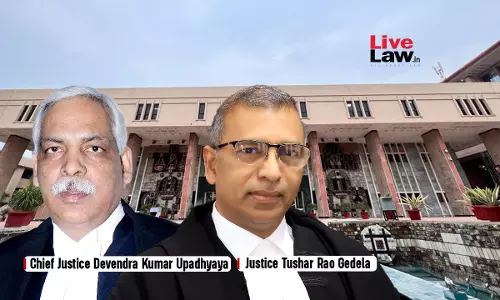
AO Becomes 'Functus Officio' After Closure Of Assessment, Must Put Relevant Incriminating Material To Assessee To Re-Confer Jurisdiction: Delhi HC
The Delhi High Court has made it clear that after the closure of assessment proceedings, the Assessing Officer becomes 'functus officio' and to re-confer jurisdiction upon the AO to initiate re-assessment proceedings, relevant incriminating material ought to be put to the assessee.A division bench of Chief Justice Devendra Kumar Upadhyaya and Justice Tushar Rao Gedela made the observation...
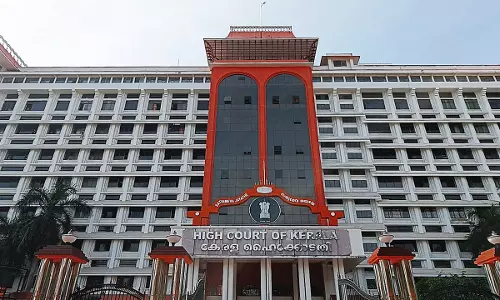
Consolidated SCN Involving Multiple Assessment Years Can Be Issued Only When Common Period Of Adjudication Exists: Kerala High Court
The Kerala High Court stated that consolidated show cause notice involving multiple assessment years can be issued when common period of adjudication exists. “Issuing a consolidated show cause notice covering various financial/assessment years would cause prejudice to an assessee who would not get the full period envisaged for adjudication under the Statute, if that period...
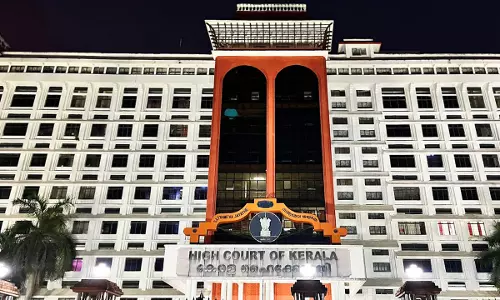
Cash Seized From Assessee Cannot Be Retained By GST Dept Or IT Dept Prior To Finalisation Of Proceedings: Kerala High Court
The Kerala High Court stated that illegal cash seizure by GST Department and handing over to Income Tax Department is illegal under Section 132A of the Income Tax Act. The Division Bench of Justices A.K. Jyasankaran Nambiar and Easwaran S. held that “Cash amount seized from the premises of the assessee cannot be retained either by the GST Department of the State or the...
Benefit Of Input Tax Credit Can't Be Reduced Without Statutory Sanction : Supreme Court
The Supreme Court recently held that Rule 21(8) of the Punjab Value Added Tax Rules, 2005, which was notified on January 25, 2014, could not be applied to transactions before April 1, 2014, as the enabling amendment to Section 13 of the parent statute, the Punjab Value Added Tax Act, 2005, was effective from that date.This means businesses that bought goods at a higher tax rate before this...
Delay Of Two Days In Issuing GST Notice Can't Be Condoned: Andhra Pradesh High Court
The Andhra Pradesh High Court stated that delay of two days in issuing the GST notice cannot be condoned. The Division Bench of Justices R. Raghunandan Rao and Harinath N. observed that “the time permit set out under 73(2) of the Act is mandatory and any violation of that time period cannot be condoned, and would render the show cause notice otiose.” In this case,...
Income Tax Act | 'Fee For Technical Services' Means Transfer Of 'Specialised'/ 'Distinctive' Knowledge Or Skill By Service Provider: Delhi HC
The Delhi High Court has held that Fee for Technical Services (FTS) as contained under Section 9(1)(vii) of the Income Tax Act, 1961 is concerned with the transfer of 'distinctive', 'specialized' knowledge, skill, expertise and know-how by a service provider.A division bench of Justices Yashwant Varma and Harish Vaidyanathan Shankar thus observed that assistance provided by...
Transaction Value Is Not The Only Basis For Assessment Of Duty: CESTAT
The New Delhi Bench of Customs, Excise, and Service Tax Appellate Tribunal (CESTAT) has stated that the transaction value is not the only basis for assessment of the duty. The Bench of Dilip Gupta (President) and P. V. Subba Rao (Technical) has observed that, “transaction value is not the only basis for assessment of the duty. The Valuation Rules and Section 14 of the Act provide...
Two Or More Bills Of Entry Or Shipping Bills Cannot Be Taken Together And Assessed: CESTAT
The New Delhi Bench of Customs, Excise, and Service Tax Appellate Tribunal (CESTAT) has stated that two or more bills of entry or shipping bills cannot be taken together and assessed. The Bench of Dilip Gupta (President) and P. V. Subba Rao (Technical) has observed that, “Two or more Bills of Entry or Shipping Bills cannot be taken together and assessed. The only exception made in...
Quashing Of Show Cause Notice On One Issue Doesn't Mean Other Demands Are Not Liable To Be Adjudicated: Delhi High Court
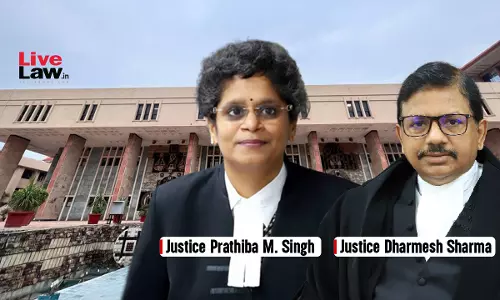
The Delhi High Court has made it clear that if a show cause notice is quashed by a higher authority on one issue, it doesn't mean that other issues raised in the SCN are not liable to be adjudicated.The observation was made by the bench of Justices Prathiba M. Singh and Dharmesh Sharma in a case where the SCN was quashed by another division bench of the High Court so far as the issue relating...