


Tax
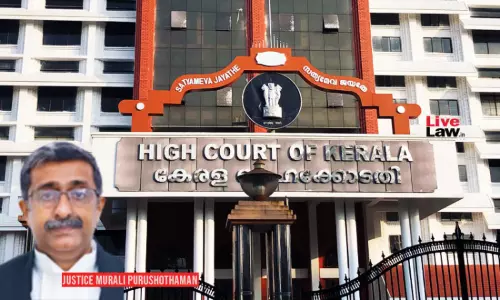
Interim Release Of Goods Can Be Ordered Pending Adjudication Of Notice U/S 130 GST Act In Lieu Of Fine: Kerala High Court
The Kerala High Court has held that interim release of goods can be ordered pending adjudication of notice under section 130 GST Act in lieu of fine.The Bench of Justice Murali Purushothaman observed that “….the adjudication can be proceeded even if the goods are released pending adjudication. Even if confiscation is ordered, there is an option to the owner of the goods to pay fine...
Subsidiary Supplying To Parent Company In Independent Capacity Cannot Be Considered 'Intermediary Service' U/S 2(13) IGST Act: Gujarat HC
The Gujarat High Court has made it clear that where a subsidiary company provides goods or services to its parent company in its independent capacity, it cannot be said that such services fall under 'intermediary service' under Section 2(13) of the Integrated Goods and Service Tax Act, 2017. The provision defines “intermediary” as a broker, an agent or any other person who arranges...
![[Municipal Corporation Act] Writ Petition Against District Judges Order Upholding Imposition Of Property Tax Not Maintainable: Chhattisgarh HC](https://www.livelaw.in/h-upload/2023/01/30/500x300_456306-chhattisgarh-high-court-.webp "[Municipal Corporation Act] Writ Petition Against District Judges Order Upholding Imposition Of Property Tax Not Maintainable: Chhattisgarh HC")
[Municipal Corporation Act] Writ Petition Against District Judge's Order Upholding Imposition Of Property Tax Not Maintainable: Chhattisgarh HC
The Chhattisgarh High Court has held that it cannot exercise writ jurisdiction against an order by the District Judge, which is the Appellate Authority under the Municipal Corporation Act 1956, upholding imposition of property tax. In doing so, single judge Justice Narendra Kumar Vyas cited Section 149 of the Act which prescribes that the Appellate Authority is amenable to...

Seized Gold Cannot Be Confiscated Just For Having An Invalid Letter Of Approval: CESTAT
The Allahabad Bench of Customs, Excise, and Service Tax Appellate Tribunal (CESTAT) has stated that seized gold cannot be confiscated just for having an invalid letter of approval. There was a difference in the opinion between the P.K. Choudhary (Judicial Member) and Sanjiv Srivastava (Technical Member) on the issues involved in the case. Therefore, the matter was place before...
![[Income Tax] Allahabad HC To Examine Whether Proceedings U/S 148A(b) Initiated Prior To 01.09.2024 Would Be Saved After Enforcement Of The Finance (No.2) Act, 2024](https://www.livelaw.in/h-upload/2021/07/29/500x300_397576-lucknow-bench-03.jpg "[Income Tax] Allahabad HC To Examine Whether Proceedings U/S 148A(b) Initiated Prior To 01.09.2024 Would Be Saved After Enforcement Of The Finance (No.2) Act, 2024")
[Income Tax] Allahabad HC To Examine Whether Proceedings U/S 148A(b) Initiated Prior To 01.09.2024 Would Be Saved After Enforcement Of The Finance (No.2) Act, 2024
The Lucknow Bench of the Allahabad High Court has sought state response on the question of maintainability of proceedings under Section 148A(b) of the Income Tax Act initiated prior to 01.09.2024, if at all, would be saved after enforcement of the Finance (No.2) Act, 2024 w.e.f. 01.09.2024 especially in view of sub-Section- (4) of Section 152 of the Income Tax Act, 1961 which has...
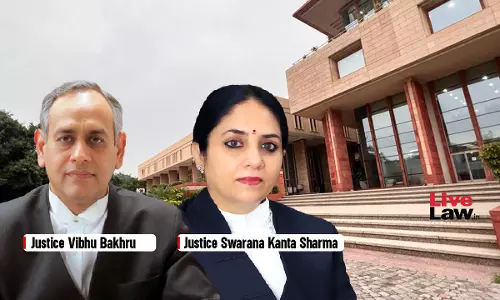
If Assessee Produces Accounts, AO Must Be Satisfied That Accommodation Entries Exist Before Proceeding U/S 148 Of Income Tax Act: Delhi HC
The Delhi High Court has held that an Assessing Officer is required to be satisfied that accommodation entries as alleged in show cause notice under Section 148A(b) of the Income Tax Act 1961 exist, particularly where the assessee produces its accounts. In doing so, a division bench of Acting Chief Justice Vibhu Bakhru and Justice Swarana Kanta Sharma heavily relied on its...
Investigation Report Is Not An Appealable Order; No Statutory Right For Hearing At Stage Of Preparation Of Investigation Report: CESTAT
The Chennai Bench of Customs, Excise, and Service Tax Appellate Tribunal (CESTAT) has stated that investigation report is not an appealable order and there is no statutory right for a hearing at the stage of preparation of investigation report. The Bench of P. Dinesha (Judicial Member) and M. Ajit Kumar (Technical Member) has observed that “the assessee has also not...
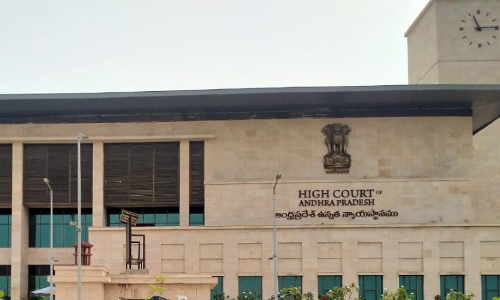
Supply Of Solar Generating Power Station Is A Composite Supply, Would Not Amount To Works Contract; Attracts 5% GST: Andhra Pradesh High Court
The Andhra Pradesh High Court stated that the supply of solar generating power station is a composite supply and it would not amount to a works contract. Also, it is a moveable property and attracted 5% GST. The Division Bench of Justices R Raghunandan Rao and Maheswara Rao Kuncheam observed that “a 'works contract' is also a composite supply. However, there could be a...
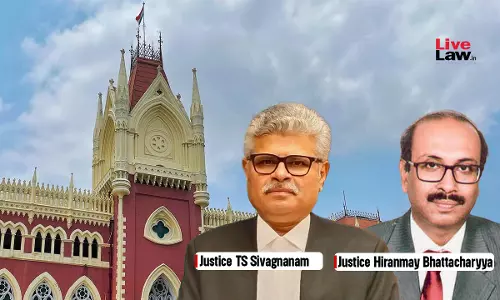
Service Tax Liability Cannot Be Fastened On Implementation Of Govt Projects: Calcutta High Court
The Calcutta High Court has held that construction of canals/ pipelines/ conduits to support irrigation, water supply or for sewerage disposal, when provided to the Government, cannot be exigible to service tax. A division bench of Chief Justice TS Sivagnanam and Justice Hiranmay Bhattacharyya relied on two Circulars issued by the Central Board of Indirect Taxes and Customs...

Tax Weekly Round-Up: 6th January - 12th January 2025
SUPREME COURT Reduction In Share Capital Amounts To Transfer Of Capital Asset Under Income Tax Act : Supreme Court Case Name: PRINCIPAL COMMISSIONER OF INCOME TAX-4 & ANR v. M/S. JUPITER CAPITAL PVT. LTD. Case no.: SPECIAL LEAVE PETITION NO. 63 OF 2025 The Supreme Court (recently on January 02) reiterated that reduction in share capital is covered under Section 2(47) of...
Excise Duty Not Payable On 'Bagasse' Which Emerges As A Waste Product During Sugar Crushing: CESTAT
The Chennai Bench of Customs, Excise, and Service Tax Appellate Tribunal (CESTAT) has stated that excise duty is not payable on the Bagasse emerged as waste product during sugar crushing. The Bench of Ajayan T.V. (Judicial Member) and Vasa Seshagiri Rao (Technical Member) has observed that Bagasse emerged only as a waste product during crushing of sugarcane during the...
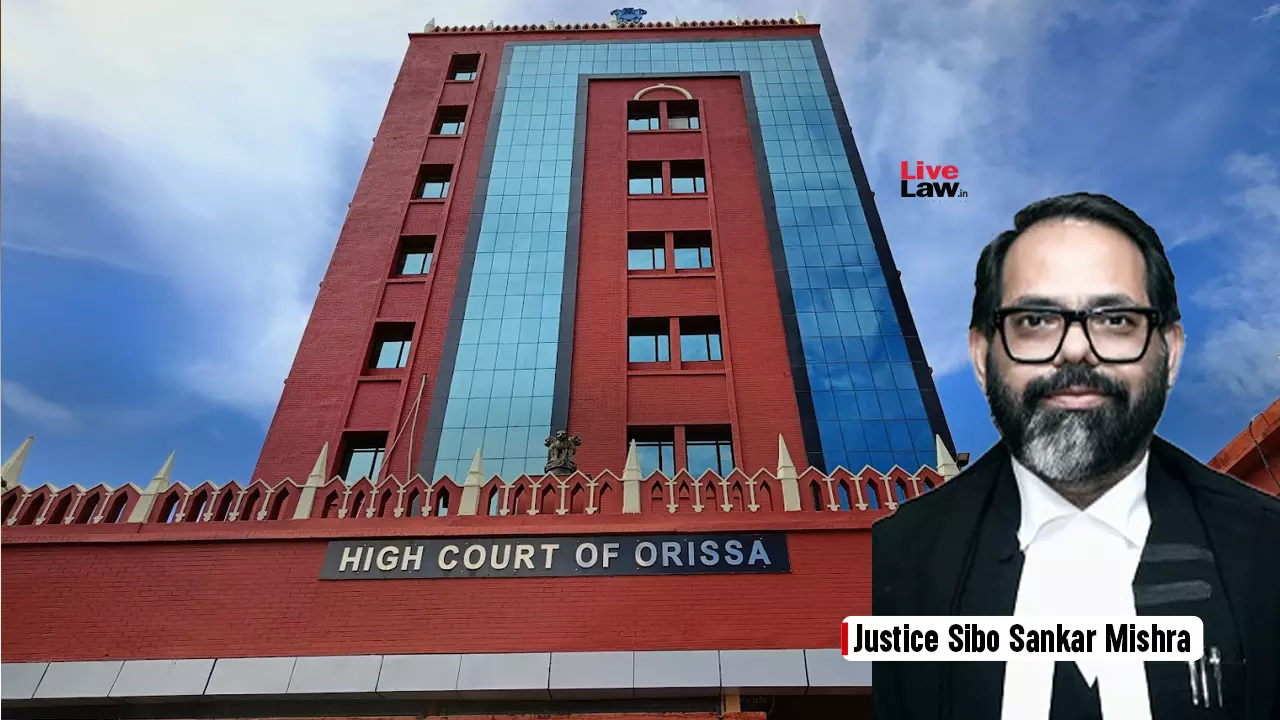
Compounding Of Offences Allowed Under IT Act, HC's Inherent Jurisdiction U/S 482 CrPC Cannot Be Invoked For Quashing: Orissa HC
The Orissa High Court has refused to entertain a petition filed for quashing the offence under Sections 276(B) of the Income Tax Act, 1961, stating that the Petitioner-accused should have sought compounding of the offence. Justice Sibo Sankar Mishra observed, “In the present regime, where the compounding of the offence is permissible, the jurisdiction of this Court under...