


Tax
Income Derived By Foreign Entity For Rendering Technical Assessment Services Doesn't Constitute FTS: Delhi ITAT
The Delhi ITAT held that income derived by foreign entity for rendering technical assessment services will not constitute as Fees for Technical Services (FTS) under Article 12(4)(b) of India-Singapore DTAA. The ITAT held so after finding that income was derived by Respondent/ Assessee (a Singapore based company) on account of services rendered towards technical integrity...
Bharti Airtel Not Liable To Pay TDS Towards Remittance Of Bandwidth Charges And Agency Fees: Delhi ITAT
The Delhi ITAT held that the bandwidth charges remitted by the Appellant/ assessee (Bharti Airtel) to the non-resident service providers cannot be treated as royalty either under the applicable treaty provisions or u/s 9(1)(vi). Since bandwidth charges are not royalty, the ITAT held that assessee was not required to deduct tax at source on such receipts. Where the payment for use...
Capital Reserve Created On Amalgamation Is Not Taxable As Perquisite U/S 28(iv) Of IT Act: Mumbai ITAT
The Mumbai ITAT held that capital reserve arising on account of amalgamation is a capital receipt and hence cannot be taxed as a benefit or perquisite arising from business u/s 28(iv). Section 28(iv) of Income tax Act provides that any value of benefit or perquisite, whether convertible in money or not, arising from business or exercise of a profession would be considered as income...
Explained| Why Supreme Court Allowed Benefit Of TOLA In Extending Timelimits For Issuing Income Tax Reassessment Notices
The Supreme Court in its recent decision allowed the revenue authorities to issue notices for reassessment under the Income Tax Act for the period between 01.04.2021 and 30.06.2021 by granting the benefit of time extensions under Taxation and Other Laws (Relaxation and Amendment of Certain Provisions Act) (TOLA) 2021. Here is a detailed breakdown of the key issue involved and the analysis of...
No Service Tax Can Be Levied On Rental Agreements In Name Of Individual Partners For Jointly Owned Property: CESTAT
The New Delhi Bench of Customs, Excise, and Service Tax Appellate Tribunal (CESTAT) has stated that rental agreements in the name of an individual partner regarding property jointly held by them are not liable to service tax. The Bench of Dr. Rachna Gupta (Judicial Member) and Hemambika R. Priya (Technical Member) has observed that “………post 01.07.2012, the firm was...
Section 74 Of CGST Act Can Be Invoked If Assessee Fails To Report Actual Sales To Evade Tax: Kerala High Court
The Kerala High Court stated that provisions of section 74 of CGST Act can be invoked if assessee fails to report actual sales to evade tax. The Bench of Justice Gopinath P. observed that “It is for the assessee to get his claim adjudicated by the statutory authorities under the CGST / SGST Acts. The procedure under Article 226 of the Constitution of India cannot be invoked...
![[S.74 GST Act] Adjudicating Authority Must Record Prima Facie Satisfaction Regarding Assessee Wrongfully Obtaining Input Tax Credit: Allahabad HC](https://www.livelaw.in/h-upload/2024/09/10/500x300_560291-justice-shekhar-b-saraf-and-justice-manjive-shukla-allahabad-high-court.webp "[S.74 GST Act] Adjudicating Authority Must Record Prima Facie Satisfaction Regarding Assessee Wrongfully Obtaining Input Tax Credit: Allahabad HC")
[S.74 GST Act] Adjudicating Authority Must Record Prima Facie Satisfaction Regarding Assessee Wrongfully Obtaining Input Tax Credit: Allahabad HC
The Allahabad High Court has held that for initiating proceedings under Section 74 of the Goods and Service Tax Act, 2017, it is necessary for the adjudicating authority to record prima facie satisfaction regarding the assessee having wrongfully availed input tax credit (ITC) by fraud, willful misstatement or suppression of facts. The Court held that once the proceedings under Section...
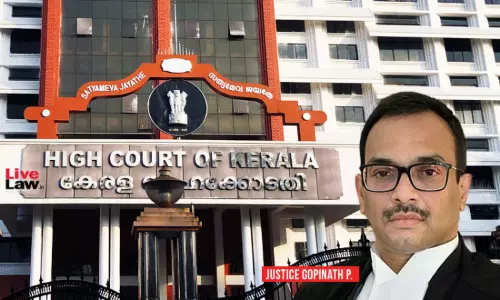
Reassessment Proceedings Can't Be Initiated Against Deceased Assessee: Kerala High Court Directs Fresh Proceedings Against Legal Heir
Kerala High Court ruled that reassessment proceedings cannot be initiated against a deceased taxpayer (assessee). The Bench of Justice Gopinath P. observed that “the procedure contemplated by Section 148A of the Income Tax Act, 1961 contemplates the issuance of a show cause notice etc., before reassessment proceedings are commenced. This cannot be a mere...
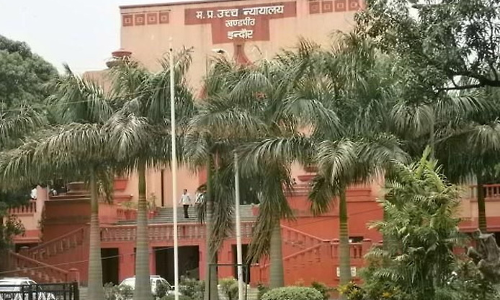
Deferred Payment Of Works Contract In 'Recovery Mode' Doesn't Exempt Dealer From Levy Under Commercial Tax Act And Entry Tax Act: Madhya Pradesh HC
The Madhya Pradesh High Court has held that merely because payment is deferred by the State in terms of the works contract, the same cannot be grounds for a dealer to seek exemption from payment of taxes under the MP Commercial Tax Act, 1994 and MP Entry Tax Act, 1976. In the case at hand, the Petitioner-company had entered into Build, Operate and Transfer (BOT) contract with...
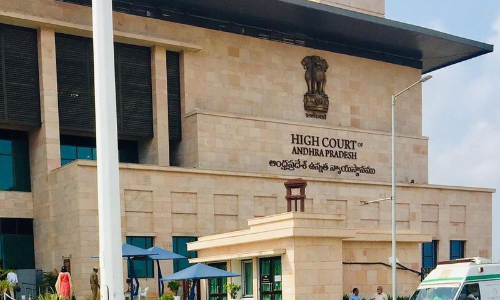
S.81 CGST Act Can't Be Invoked To Declare Transfer Of Property Void Without Determining 'Nature Of Transaction' As Being Sham: Andhra Pradesh HC
The Andhra Pradesh High Court has prima facie held that Section 81 of the Central Goods and Services Tax Act, 2017 cannot be invoked to declare transfer of property void, unless there is a specific finding regarding sham nature of transaction.Section 81 provides that where a person parts with his/her property after any amount has become due from him under the Act, with the intention of...
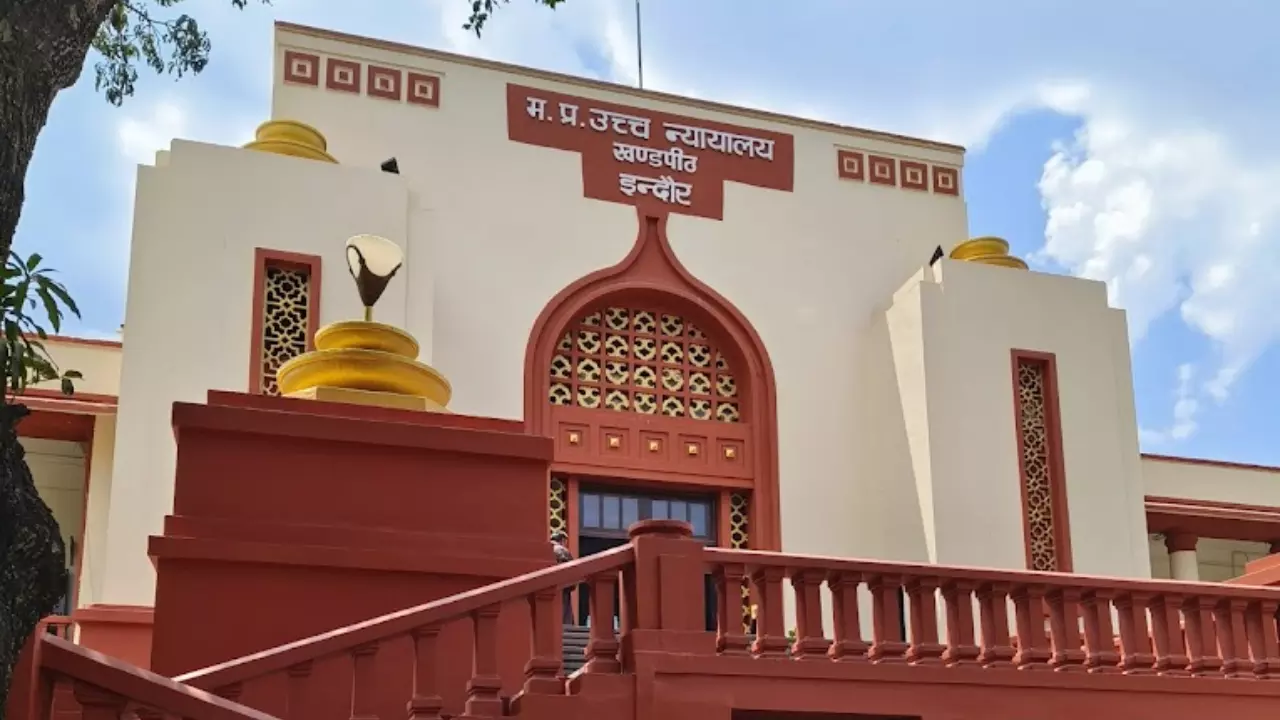
Customs Can't Claim Priority Over Bank For Recovery Of Dues From Assessee's Property: Madhya Pradesh High Court
The Madhya Pradesh High Court has dismissed a petition moved by the Customs and Central Excise Department seeking priority over other secured creditors, for recovery of dues from an assessee's property. Justices Vivek Rusia and Binod Kumar Dwivedi relied on Punjab National Bank V/s Union of India and others (2022) where the Top Court had held that SARFAESI Act will have an...
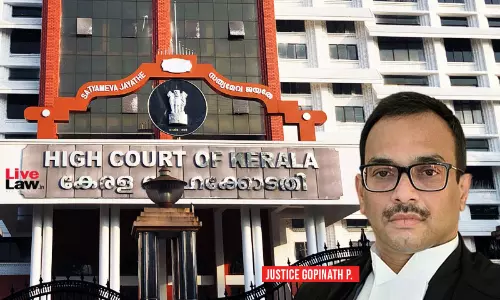
“Only Three Days Were Given To Assessee To Respond To Show Cause Notice”: Kerala High Court Sets Aside Reassessment Order
The Kerala High Court set aside an order in reassessment proceedings that was issued without providing the assessee an opportunity to respond to the show cause notice. The Bench of Justice Gopinath P. observed that “the show cause notice was issued on 12-03-2024, giving only three days' time to the assessee to respond, and the order was issued on 20-03-2024………...