


Tax

Sikh People Usually Wear 'Kada', Personal Effect: Delhi High Court Sets Aside Detention By Customs
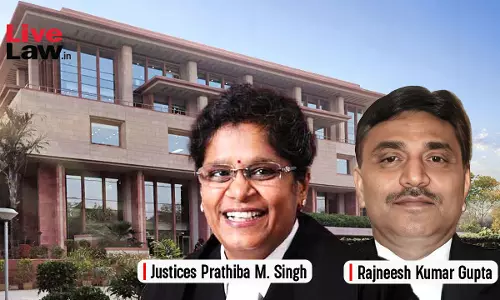
Observing that Sikh persons usually wear kada as part of their religious practice, the Delhi High Court set aside the detention of a Dubai resident's gold kada by the Customs Department.A division bench of Justices Prathiba M. Singh and Rajneesh Kumar Gupta observed, “Clearly, a perusal of the photographs and the fact that it is one Kada which is usually worn by persons like the Petitioner...
Assessee's Business Cannot Be Prejudiced By Complete Attachment Of Bank Accounts Pending Adjudication By GST Authority: Delhi HC
The Delhi High Court has asked the GST authority not to prejudice the business of an assessee, involved in manufacturing of mild steel products, by attaching its complete bank account pending adjudication of ₹15.09 crores tax evasion proceedings.A division bench of Justices Prathiba M. Singh and Rajneesh Kumar Gupta noted that one year had elapsed since the provisional attachment order...
GST Demand Of Over ₹10 Crores Raised Without Considering Assessee's Stand: Delhi High Court Orders Fresh Adjudication
The Delhi High Court has asked the Adjudicating Authority under Central Goods and Service Tax Act 2017 to undertake fresh adjudication of the show cause notice issued to an assessee, raising demand of more than ₹10 crores.A division bench of Justices Prathiba M. Singh and Rajneesh Kumar Gupta did so after noting that such a “substantial” demand was made without even considering...
Restriction On Levy Of Differential Rates Under Article 304 Of Constitution Doesn't Apply To Goods Imported From Outside India: Madras HC
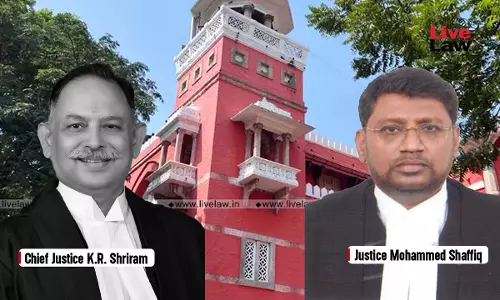
The Madras High Court stated that Article 304 of the Constitution applies only to goods imported from other states or union territories and not to goods imported from outside India.The Division Bench consists of Chief Justice K.R. Shriram and Justice Mohammed Shaffiq looked into the case of State of Kerala and others v. Fr. William Fernandez and other, (2021) 11 SCC 705 and observed that...
Finance Act, 1994 | Mere Non-Registration Under Service Tax Isn't Fraud Or Suppression To Justify 5 Year Limitation: Patna High Court
The Patna High Court has recently quashed a service tax demand raised against a government contractor, ruling that merely not registering for service tax could not be equated with fraud or suppression of facts warranting the application of the five-year extended limitation period under the Finance Act, 1994.The Division Bench comprising Justice Rajeev Ranjan Prasad and Justice Sourendra...
Whether Roof-Mounted Air Conditioners For Trains Attract 18% GST Or 28% GST? Delhi High Court To Decide
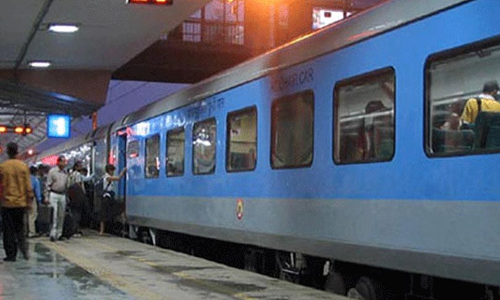
The Delhi High Court will soon decide the GST rate applicable to roof-mounted air conditioners of specific designs manufactured for the railways.A division bench of Justices Prathiba M. Singh and Rajneesh Kumar Gupta are seized with a petition filed by railways and aerospace technology company StesaLIT Limited, challenging a Circular issued by the Union Finance Ministry in 2024, stipulating...
Delhi HC Sets Aside ₹12 Crore GST Demand On Exide Industries But Imposes ₹1 Lakh Cost For Laxity In Responding To Hearing Notices
The Delhi High Court has set aside a GST demand of over ₹12 crores raised on storage battery manufacturer Exide Industries, for wrongful availment of Input Tax Credit.A division bench of Justices Prathiba M. Singh and Rajneesh Kumar Gupta however imposed a cost of ₹1 lakh on the Indian multinational for “laxity” in responding to the repeated hearing notices issued by the...
S.13 Income Tax Act | Charitable Trust's Status Not Affected For Making Reasonable Payments On Services Rendered By Related Party: Delhi HC
The Delhi High Court has held that a Charitable Trust's status cannot be taken away citing violation of Section 13 of the Income Tax Act, 1961 merely because it made reasonable payment for services rendered by a related party.Ordinarily, Charitable Trusts are not allowed to make payments for the benefit of 'prohibited parties'.Section 13 states that exemptions to Charitable Trust under...
S.107(6) Of CGST Act Does Not Grant Discretion To Court For Waiving Pre-Deposit At Time Of Filing Appeal: Delhi High Court
The Delhi High Court has made it clear that it has no discretion to allow a prayer seeking waiver of pre-deposit condition prescribed under Section 107(6) of the Central Goods and Services Tax Act, 2017 for preferring an appeal under the statute.In terms of Section 107(6), insofar as the admitted tax, interest or penalty is concerned, the entire amount would have to be deposited. In so far as...

Send RPAD Reminders If No Reply Received After Repeated Uploading Of Notices In GST Portal: Madras High Court Tells Revenue
The Madras High Court stated that if the taxpayer is not at all participating in the proceedings, even after repeated uploading of notices and reminders in GST portal, the Department should have resorted to other mode of service, viz., Registered Post with Acknowledgement Due (RPAD), so that considerable time of officers, assessee and the Court could be saved. The court...

Amalgamated Company Can Adjust Written Down Assets Of Constituent Companies & Claim Depreciation Without Central Govt Approval: Bombay HC
The Bombay High Court stated that amalgamated company can adjust written down of assets of amalgamating companies and claim depreciation without central government's approval. The Division Bench of Chief Justice Alok Aradhe and Justice M.S. Karnik stated that “The Tribunal was not justified in law in holding that in view of insertion of Section 72A in the Income Tax Act,...
Service Of Notices & Orders Through Common Portal Is A Valid Mode Of Service U/S 169 Of GST Act: Madras High Court
In a recent ruling, the Madras High Court held that service of notices and orders through Common portal is a valid mode of service in terms of Section 149 of the GST Act. The bench rejected the argument that the GST portal is not a “designated computer resource of the assessee” and hence as per Sec. 13 (2) (a) (ii) of the Information Technology Act, receipt occurs only when...