




Top Stories
Article 311 Bar Not Attracted If Officer Removing Employee Is Equal In Status To Appointing Authority : Supreme Court
The Supreme Court today (24 September) has held that the constitutional protection under Article 311(1) of the Constitution is attracted only when the removing authority is subordinate in rank to the authority that made the appointment. It was also held that mere delegation of disciplinary powers to a subordinate officer under statutory rules does not trigger the constitutional bar. For...
Supreme Court Seeks Data On Insurance Policies Issued To Persons With Autism, Cerebral Palsy, Multiple Disabilities
The Supreme Court on Wednesday directed the Insurance Regulatory and Development Authority of India (IRDAI) to place on record data on the number of insurance policies issued by public and private sector insurers to persons with Autism, Cerebral Palsy, Intellectual Disability and Multiple Disabilities.A bench of Justice B.V. Nagarathna and Justice R. Mahadevan passed the order in a PIL...

LiveLaw Editorial Guidelines For Article Submissions
LiveLaw publishes original, timely legal article that offers clear value to practitioners, academics, students and litigants. Owing to the volume of submissions, articles are assessed against the following editorial standards. I. Submission Categories a) General Articles Legal developments, legislation, policy and other areas of law. b) Law Firm Articles Contributions by law firm partners, associates, general counsel and other legal professionals. c) Law School Articles Contributions by...
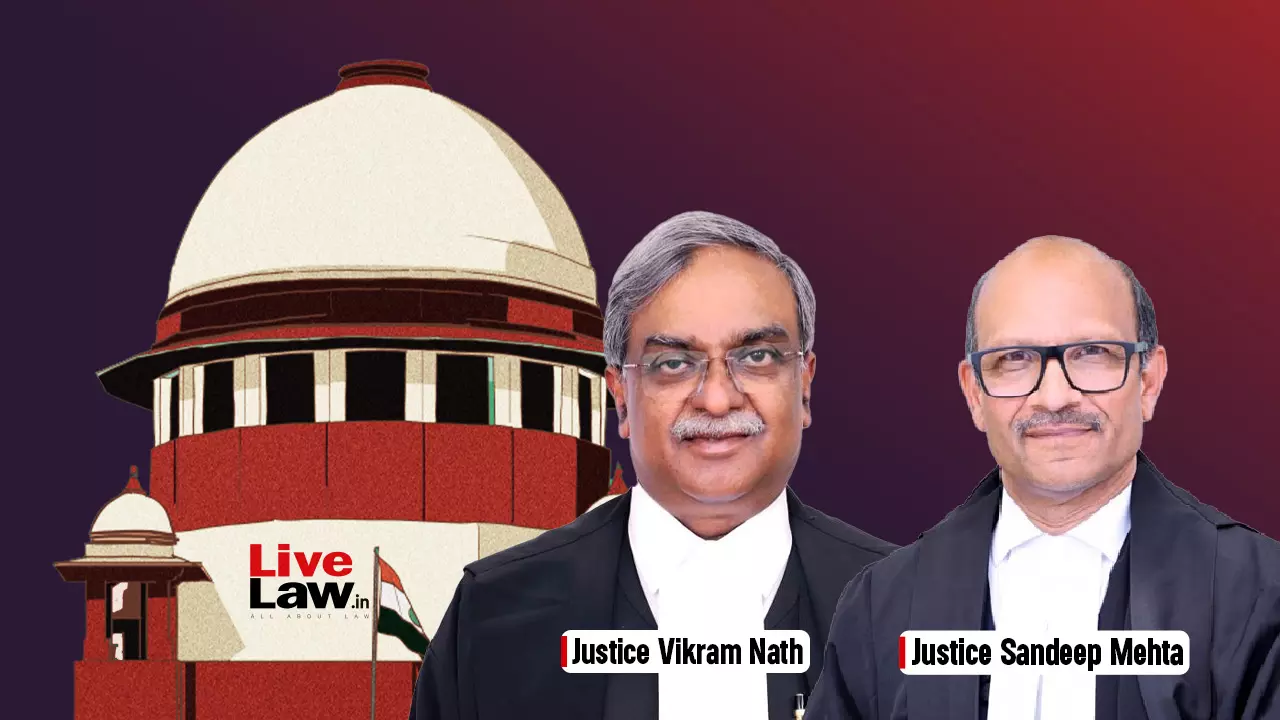
S 156(3) CrPC Order Is Pre-Cognizance Step, Sanction Under S 197 CrPC Not Required At That Stage: Supreme Court
The Supreme Court has recently held that a Magistrate's direction under Section 156(3) of the Code of Criminal Procedure, 1973 (CrPC, now Section 175(3) of the Bharatiya Nagarik Suraksha Sanhita, 2023) directing registration of an FIR and investigation is a pre-cognizance step, and the requirement of prior sanction under Section 197 CrPC (now Section 218 of the Bharatiya Nagarik Suraksha...
Include Rules For Execution Of Commercial Suits In Commercial Courts Act Schedule : Supreme Court Suggests
The Supreme Court today(September 24) suggested that the government can bring an amendment to the Commercial Courts Act, 2015, to state the execution in commercial suits will be as per the Commercial Court Rules, which have remained unnotified since 2021. The Court proposed that the Rules can be made part of the Act by inserting a Schedule.The draft Commercial Court Rules were not...

'Parent Facing POCSO Prosecution Cannot Be Granted Custody', Supreme Court Permits Mother To Relocate Children To UK
The Supreme Court on Wednesday (September 23) permitted a mother to relocate her two minor children to the United Kingdom, while denying custody to the father who is facing prosecution under the Protection of Children from Sexual Offences Act, 2012 (POCSO Act). The Court held that a parent facing prosecution under the POCSO Act cannot be considered entitled to custody of the children.The...

Journalist Ravi Nair Moves Supreme Court For Release From Custody In Adani Defamation Case
Journalist Ravi Nair has approached the Supreme Court seeking release in the Adani defamation case, after he was taken into custody in furtherance of a Gujarat Court's non-bailable warrant. He has filed a Special Leave Petition challenging the Gujarat High Court order, which denied him interim relief. Advocate Abhik Chimni mentioned the matter before the Chief Justice of India at 2 PM...

Supreme Court Revises Order In Noida DM Medha Roopam's Case; Specifies Stay Is Only On HC's Strictures & Compensation Direction
The High Court's quashing of the NSA detention has not been stayed.

Delhi High Court Denies Anticipatory Bail To Ajeet Bharti In SC/ST Act Case
The Delhi High Court on Thursday denied anticipatory bail to commentator Ajeet Bharti in a case under Scheduled Caste Scheduled Tribes (Prevention of Atrocities) Act. Justice Saurabh Banerjee while pronouncing the verdict, said that the offence under SC/ST Act was prima facie made out against Bharti.It dismissed the anticipatory bail plea as being not maintainable. It cited the statutory bar...

Supreme Court Commutes Death Sentence Awarded To Man Convicted For Rape- Murder Of 6-Year-Old Stepdaughter
The Supreme Court today commuted the death sentence imposed on a man convicted for raping and murdering his six-year-old step-daughter in Madhya Pradesh.A bench of Justice Vikram Nath, Justice Sandeep Mehta and Justice Vijay Bishnoi upheld his conviction but commuted the death sentence to life imprisonment.The appellant, one Waris, was convicted by the Special Court under the Protection...
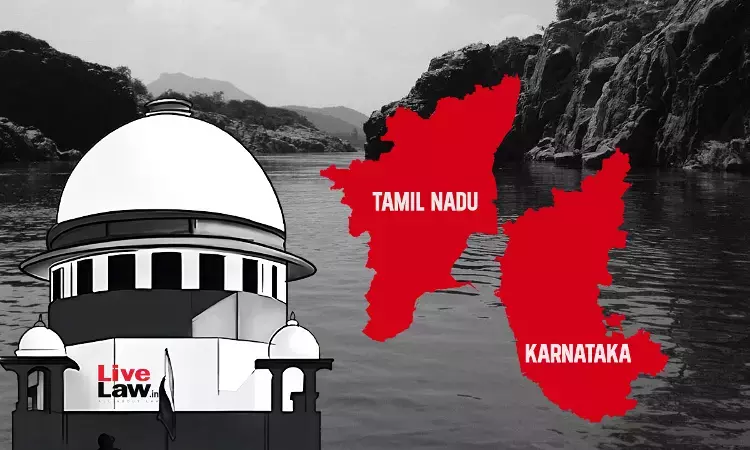
Cauvery Water Dispute | Supreme Court Seeks Karnataka's Response To TN Plea For Making Good Past Shortfall
The Supreme Court on Thursday sought the response of Karnataka to Tamil Nadu's application seeking directions for release of water to make good the alleged shortfall in Karnataka's supply of Cauvery water to the neighbouring State.A bench of Justice Vikram Nath, Justice Sandeep Mehta and Justice Vijay Bishnoi directed the respondents to file their response within a week and posted the matter...