


Top Stories
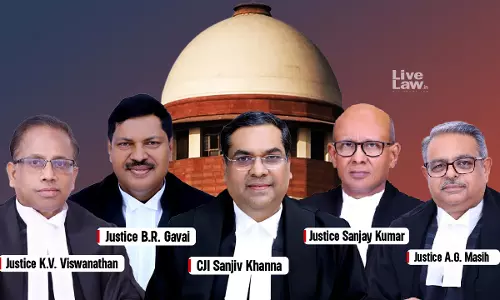
Can Courts Modify Arbitral Award Under S.34/ 37 Of Arbitration Act? Supreme Court Constitution Bench Begins Hearing
The Supreme Court Constitution Bench today (February 13) began the hearing on the issue of whether Courts have the power to modify an arbitral award under S. 34 and 37 of the Arbitration and Conciliation Act, 1996.S. 34 provides the outline for applying to set aside an arbitral award. S. 37 of the Act states the instances where an appeal may lie against orders relating to arbitral...
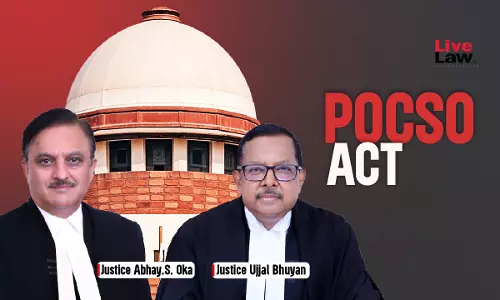
Supreme Court Explores Sentencing Options In Case Where Minor Victim Married POCSO Convict; Flags Systemic Failures In Protecting Girl
Dealing with a case where a minor girl victim of sexual assault eloped with and married the man facing charges under POCSO Act, the Supreme Court today called for the suggestions of Amici Curiae appointed by it for the prevention of suffering of adolescent girls and their families."These are some of the issues very difficult for Court to resolve. When we see such matters, we realize that...
Draft Advocates Amendment Bill Proposes Court Boycotts' Ban, Centre's Nominees In BCI, Rules On Foreign Firms Etc.
Today, the Draft Advocates (Amendment) Bill, 2025, has been published by the Ministry of Law and Justice, which seeks to amend the Advocates Act, 1961. Public comments have been invited on the draft.It is stated: "These amendments aim to align the legal profession and legal education with global best practices. The reforms will focus on improving legal education, equipping lawyers to meet...
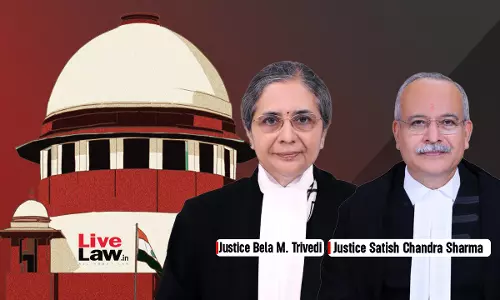
If Advocate-on-Record Can Authorise A Non-AoR To Appear, What Is AoR Exam's Significance? Supreme Court Asks
The Supreme Court on Thursday (February 13) again questioned how Advocates-on-Record (AoRs) can authorise another advocate, who is not an AoR, to appear in a case on their behalf.A bench comprising Justices Bela M. Trivedi and Satish Chandra Sharma was hearing a miscellaneous application filed by the Supreme Court Bar Association and the Supreme Court Advocates-on-Record Association seeking...
2020 Bengaluru Riots: Supreme Court Denies Bail To Accused, Directs Karnataka Govt To Establish Additional NIA Court For UAPA Offences
The Supreme Court today(February 13) declined to grant bail to Shabbar Khan, charge-sheeted in a Unlawful Activities (Prevention) Act, 1967 case related to the riots which happened in Bengaluru on August 11, 2020. The riots reportedly happened over a Facebook post where derogatory comments were allegedly made about Prophet Muhammad.In the present case, the allegation against the petitioner...
Execution Of Decree Granting Perpetual Injunction Not Subject To Any Period Of Limitation : Supreme Court
In a recent judgment, the Supreme Court stated that the execution of a decree granting a perpetual injunction is not subject to any period of limitation. This is in view of Article 136 of the Limitation Act which states that "an application for the enforcement or execution of a decree granting a perpetual injunction shall not be subject to any period of limitation."The Court made this...
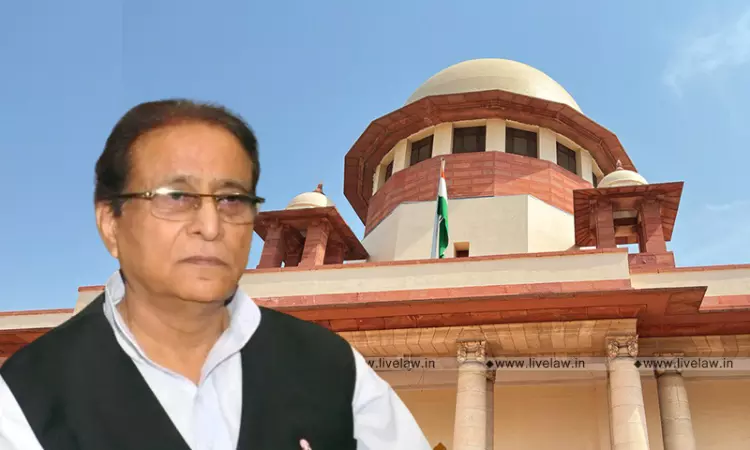
Supreme Court Grants Bail To SP Leader Mohammad Azam Khan And His Son In Stolen Machinery Case
The Supreme Court on February 10 granted bail to Samajwadi Party leader Mohammad Azam Khan, a former member of the Uttar Pradesh Legislative Assembly from Rampur and his son Mohammed Abdullah Azam Khan, former member of the Legislative Assembly from Suar constituency in the stolen machinery case. A Special Leave Petition was filed by them challenging the January 29 order of the Allahabad...

Order XXII Rule 4 CPC | Supreme Court Explains Correct Procedure To File Applications To Substitute Legal Heirs, Set Aside Abatement & Condone Delay
The Supreme Court has issued a clarification regarding the substitution of legal heirs in ongoing litigation, addressing a frequent procedural misstep by lawyers. The Court emphasized the crucial distinction between abatement of a suit or appeal and the process of setting aside that abatement, particularly in cases where substitution applications are filed beyond the initial 90-day...
UP Gangsters Act | Strict Scrutiny Essential When FIR Registered Under Stringent Laws : Supreme Court
The Supreme Court on Wednesday (February 12) ruled that strict scrutiny of the FIR is required registered under stringent laws like the Uttar Pradesh Gangsters Act to prevent its misuse in property or financial disputes. The Court emphasized that Article 21 of the Constitution cannot be disregarded solely based on the registration of a criminal offense. Furthermore, it ruled that...

Supreme Court Seeks Maharashtra Govt's Response On Whether Sahara's Versova Plot Is Within Mangrove Forest
While hearing the SEBI v. Sahara matter, the Supreme Court on Wednesday (February 12) issued notice to the Department of Forest and Urban Development and the Chief Secretary, State of Maharashtra to give clarity on whether developing Sahara's Vervosa Plot to pay back its creditors would end up intruding into reserved mangrove forest area. The bench of CJI Sanjiv Khanna, Justices MM Sundresh...

'Mystery' : Supreme Court Puzzled Over Anonymous Filings In Chhatisgarh NAN Scam Case; ED, Accused & State Deny Filing
While hearing the ED's plea for cancellation of bail to the accused in the Chhattisgarh NAN Scam, the Supreme Court expressed concern over certain 'confidential notes' filed anonymously in a sealed cover before the bench. The Court directed the Registrar(Judicial) to inspect, along with the Advocates from both sides.The bench of Justice Abhay S Oka and Justice Ujjal Bhuuyan was hearing a...