


Top Stories
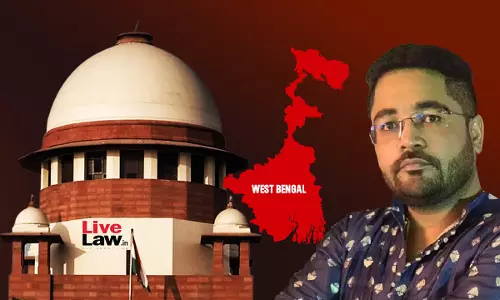
West Bengal Cash-For-Jobs Scam : Supreme Court Grants TMC Youth Leader Kuntal Ghosh Liberty To Approach HC For Bail In PMLA Case
The Supreme Court today granted Trinamool Congress youth leader Kuntal Ghosh liberty to approach the High Court for bail in a money laundering case arising out of the alleged cash-for-jobs scam in West Bengal.A bench of Justices Surya Kant, CT Ravikumar and Ujjal Bhuyan passed the order in a writ petition filed by Ghosh, assailing fresh bail hearing by a new judge, after significant hearing...
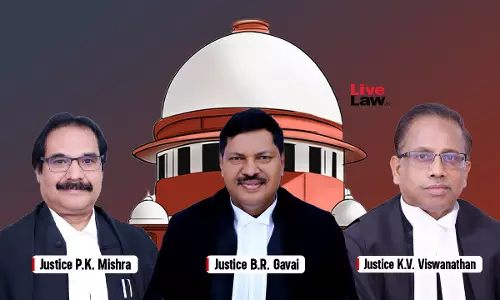
Supreme Court Acquits Man Sentenced To Death For Alleged Murder Of Mother, Wife & 2-Yr-Old Daughter
The Supreme Court today set aside the conviction and the death sentence of a man for the alleged murder of his mother, wife and two-year-old daughter noting that the prosecution was unable to prove an unbroken chain of events.A bench of Justices BR Gavai, Prashant Kumar Mishra and KV Viswanathan delivered the verdict. Pronouncing the decision, Justice Gavai said:"We have found that...
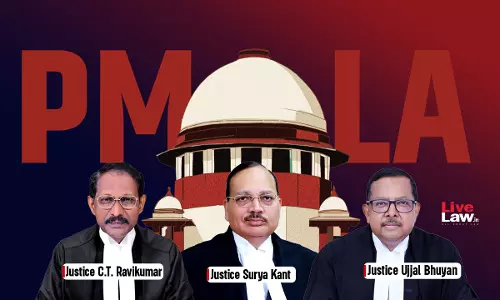
PMLA Review | Supreme Court Adjourns Hearing At Request Of Parties, Lists Matter On Nov 27
The Supreme Court today adjourned the review petitions filed against the Vijay Madanlal Choudhary judgement, which upheld various provisions of the Prevention of Money Laundering Act (PMLA). Next date given in the matter is November 27.A bench of Justices Surya Kant, CT Ravikumar and Ujjal Bhuyan passed the order, at a request made by the parties. While the petitioners submitted that...
Pleas Challenging Marital Rape Exception : Live Updates From Supreme Court
The Supreme Court is hearing today a batch of petitions seeking the criminalisation of marital rape.The petitioners challenge the constitutional validity of the exception of Section 375 of the Indian Penal Code which hold that sexual intercourse between a husband and wife will not come within the ambit of the offence of rape. The same provision is found in Section 63 of the Bharatiya...
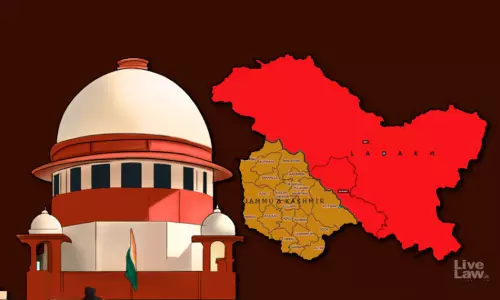
Application Seeking Statehood For Jammu & Kashmir Mentioned In Supreme Court For Listing
An application seeking directions to restore the statehood of Jammu and Kashmir in a time-bound manner within two months was mentioned in the Supreme Court on Thursday for listing.Senior Advocate Gopal Sankaranarayanan mentioned the matter before Chief Justice of India DY Chandrachud seeking a listing of the application. "There is an MA in the Article 370 matter, the implementation...
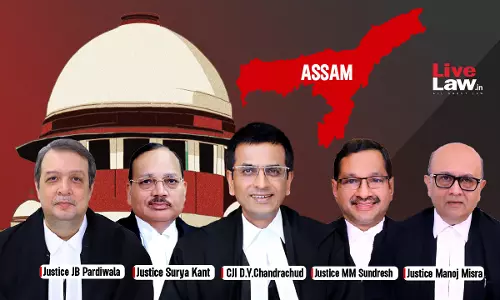
Supreme Court Upholds Validity Of S.6A Of Citizenship Act Recognizing Assam Accord By 4:1 Majority
The Supreme Court today (October 17) upheld the constitutional validity of Section 6A of the Citizenship Act 1955, which recognized the Assam Accord, by 4:1 majority.The 5-Judge Constitution Bench comprising Chief Justice of India DY Chandrachud, Justices Surya Kant, MM Sundresh, JB Pardiwala, and Manoj Misra delivered the judgment.Justice Pardiwala gave a dissenting judgment to hold Section...
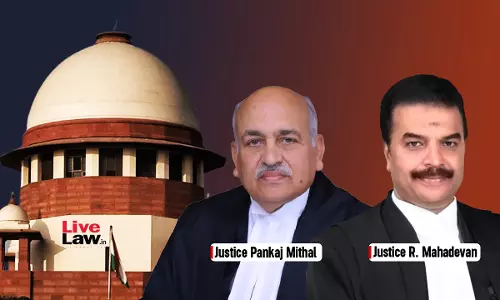
SARFAESI | Auction Sale Can Be Cancelled Only If Purchaser Defaults In Payment Of Balance Amount : Supreme Court
In a matter arising out of IDBI Bank's cancellation of an auction purchase, the Supreme Court recently held that an auctioneer cannot refuse to issue sale certificate if the auction purchaser has not defaulted in offering to deposit the balance auction amount. “reason for the non-issuance of the sale certificate is solely attributable to the appellant-Bank and that there were no...
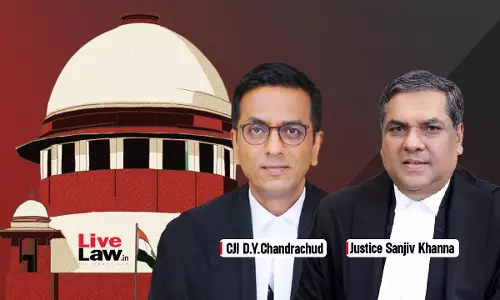
CJI DY Chandrachud Recommends Justice Sanjiv Khanna As Next Chief Justice Of India
As per convention, the Chief Justice of India DY Chandrachud, who is on the verge of retirement, has recommended the name of the second senior judge of the Supreme Court, Justice Sanjiv Khanna, as the next Chief Justice of India.CJI has written to the Union Government proposing Justice Khanna's name.CJI Chandracuhd is demitting office on November 10, 2024. If the Union Government accepts...
'Royalty' Imposed By Municipal Corporation For Putting Hoardings/Advertisement Can't Be Termed 'Tax' : Supreme Court
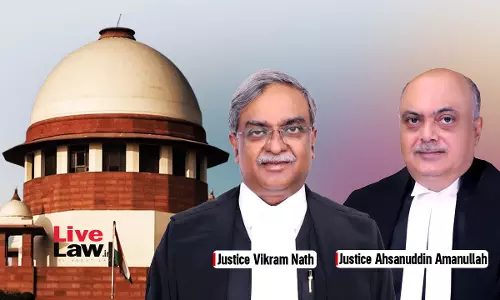
The Supreme Court today (Oct. 16) observed that the 'royalty' imposed by the Municipal Corporation on the advertising companies for putting up hoardings/advertisements could not be termed as 'tax'. The bench comprising Justices Vikram Nath and Ahsanuddin Amanullah set aside the Patna High Court's Division Bench decision which directed the Patna Municipal Corporation to refund the...
Jet Airways Insolvency : Supreme Court Reserves Judgement On SBI Plea Against Transfer Of Ownership To Jalan KalRock Consortium
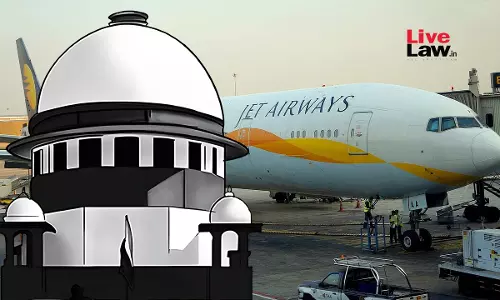
The Supreme Court on Wednesday (October 16) reserved its decision on the challenge by lenders of the cash-strapped Jet Airways to the NCLAT Order which allowed the Airlines' ownership transfer to the Successful Resolution Applicant (SRA). The bench of CJI DY Chandrachud and Justices JB Pardiwala and Manoj Misra heard the matter.Additional Solicitor General (ASG) N Venkataraman appeared for...
Supreme Court To Pronounce Judgment Tomorrow On Pleas Challenging S.6A Of Citizenship Act Recognizing Assam Accord
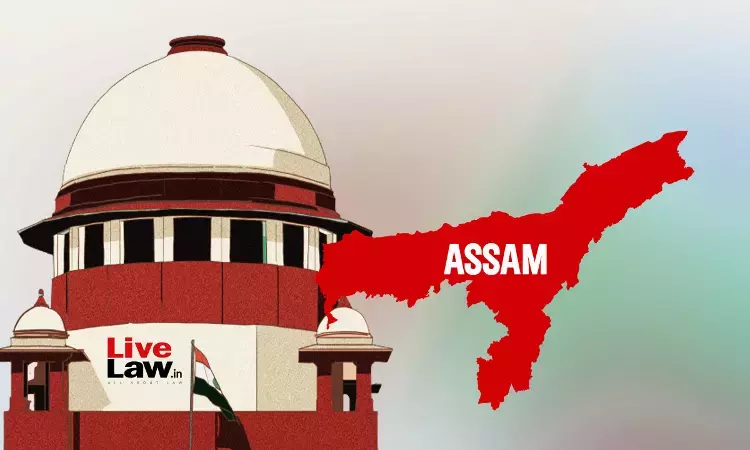
A Constitution Bench of the Supreme Court will pronounce its judgement tomorrow in the batch of petitions challenging Section 6A of the Citizenship Act 1955 . The bench comprising CJI DY Chandrachud,Justices Surya Kant, MM Sundresh, JB Pardiwala, and Manoj Misra heard the matter for four days before reserving the judgement on December 12, 2023. Section 6A of the Citizenship Act 1955...