



- Home
- /
- Top Stories
- /
- 'Child Should Not Be Treated As...
'Child Should Not Be Treated As Criminal': Supreme Court Sets Aside Conviction On Juvenility Claim After 21 Years
Saima Anjum
3 Sept 2026 4:02 PM IST
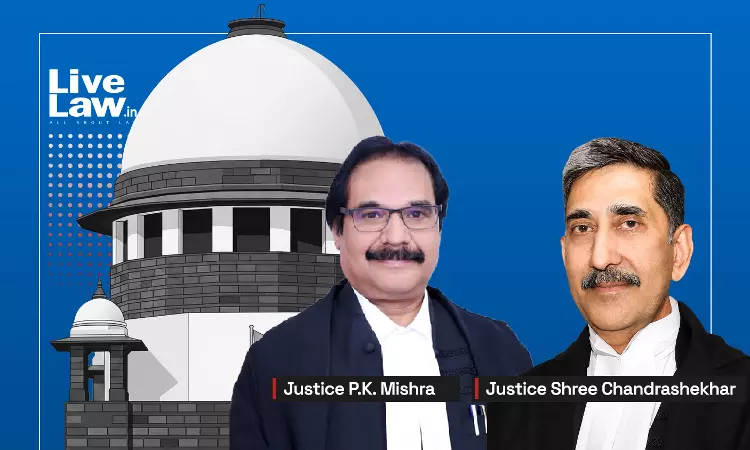
The Supreme Court on Wednesday (02.09.2026) has set aside the 21-year old conviction of a man who was found to be a juvenile on the date of the offence, holding that a High Court's inherent power under Section 482 of the Code of Criminal Procedure, 1973 (CrPC, now Section 528 of the Bharatiya Nagarik Suraksha Sanhita, 2023) can be exercised to recall its own final judgment where a mistake by...
This is a premium content
Available exclusively to
Our subscribers
Subscribe Premium 
INR 1099+GST
Your support helps us to bring you more content at
an affordable subscription scheme !!!
All payment options available
The Supreme Court on Wednesday (02.09.2026) has set aside the 21-year old conviction of a man who was found to be a juvenile on the date of the offence, holding that a High Court's inherent power under Section 482 of the Code of Criminal Procedure, 1973 (CrPC, now Section 528 of the Bharatiya Nagarik Suraksha Sanhita, 2023) can be exercised to recall its own final judgment where a mistake by the court has caused grave prejudice to a party, even after the Special Leave Petition (SLP) for the same has been dismissed by the Supreme Court.
A bench of Justice Prashant Kumar Mishra and Justice Shree Chandrashekhar has overturned a 2018 order of the Madhya Pradesh High Court (Gwalior Bench) which had declined to reopen his conviction under Section 201 Part II of the Indian Penal Code, 1860 (IPC, now Section 238 of the Bharatiya Nyaya Sanhita, 2023), on the ground that the judgment had attained finality and could not be revisited under Section 482.
The case arose out of the death of one Bhuri and her infant daughter, whose bodies were found on a railway track in Morena, in 2004. An FIR was registered against Bhuri's husband, in-laws, and brothers-in-law (including the appellant), under Sections 302, 304B, and 201 read with Section 34 of the IPC (now Section 103, 80, 238, and 3(5) of the Bharatiya Nyaya Sanhita, 2023). Allegations of dowry harassment, murder, and destruction of evidence were put against the accused persons.
The appellant Mahavir was the brother-in-law of the deceased.
During the trial, most of the prosecution witnesses (including Bhuri's own brothers and mother) turned hostile and did not support the allegations of dowry demand or harassment. The trial court relied on the testimony of a Railway Gangman who had first seen the bodies, and acquitted the accused of murder and dowry death. However, they were convicted under Section 201 Part II of IPC for causing disappearance of evidence, and were sentenced to three years' rigorous imprisonment. The conviction was upheld by the High Court in 2017, and the appellant's SLP against the conviction order was dismissed in 2018.
Thereafter, the appellant approached the High Court under Section 482 read with Section 362 of CrPC, seeking recall of its 2017 judgment, claiming that he was a juvenile (of 17 years and 2 months) on the date of the offence. It is to note that this claim was made for the first time. The High Court directed an inquiry. Based on school marksheets and a birth certificate, the Juvenile Justice Board (Morena) found that the appellant;s date of birth was 01.07.1987, which confirmed his juvenility on the date of the offence (13.09.2004).
Despite this finding, the High Court dismissed the recall petition, holding that while Section 7A of the Juvenile Justice Act, 2000 casts a mandatory obligation on courts to inquire into a claim of juvenility raised at any stage, its inherent jurisdiction under Section 482 CrPC was “preventive and corrective” and not “substitutive or appellate”. It also distinguished its power against the Supreme Court's power under Article 142 of the Constitution to hold that, “once the matter has travelled up to the Hon'ble Supreme Court and has been disposed of, this Court cannot sit in appeal over the same by invoking inherent powers even on equitable considerations.”
It further noted that the appellant had withdrawn his SLP before the Supreme Court without raising the plea of juvenility and concluded that the conviction had attained finality which could not be disturbed under Section 482 of the CrPC.
Aggrieved by the High Court's finding, the appellant approached the Supreme Court.
The Supreme Court first pointed out that the High Court had committed “an error of record” in treating the appellant's conviction as having attained finality up to the Supreme Court. It perused the 2018 order that showed that only the SLPs of the appellant's parents were heard and disposed of on merits with reduction of their sentence, while the appellant's SLP was simply dismissed as withdrawn, without any adjudication on merits. The Court also observed that it did not “appeal to common sense” that the appellant would have withdrawn his petition without reason while his parents secured relief on sentence. This made his claim credible, that he withdrew the SLP only to pursue the plea of juvenility before the High Court.
Tracing the precedents Sankatha Singh & Ors v. State of UP, Hari Singh Mann v Harbhajan Singh Bajwa & Ors, and State of Karnataka v M Devendrappa & Anr., the Supreme Court reaffirmed that Section 482 CrPC does not confer new powers but merely preserves the High Court's pre-existing inherent power to prevent abuse of process and secure the ends of justice.
Referring to AR Antulay v RS Nayak, the bench stated that, “no man should suffer a wrong by technical procedure of irregularities. Rules or procedures are the handmaids of justice and not the mistress of the justice. Ex debito justitiae, we must do justice to him. If a man has been wronged so long as it lies within the human machinery of administration of justice that wrong must be remedied.”
The evolution of juvenile justice jurisprudence in India was also traced, from Geneva Declaration (1924) and the UN Convention on the Rights of the Child (1989), through the Juvenile Justice Act (1986), the Juvenile Justice Act (2000), and the Juvenile Justice Act (2015). It reiterated the doctrine of parens patriae, under which the state assumes responsibility for the welfare of children who cannot protect themselves.
Relying on Umesh Chandra v State of Rajasthan, Gopinath Ghosh v State of West Bengal, Bhola Bhagat v State of Bihar, Pratap Singh v State of Jharkhand & Anr, Hari Ram v State of Rajasthan & Anr, Dharambir v State (NCT of Delhi) & Anr, and Jitendra Singh alias Babboo Singh & Anr v State of Uttar Pradesh, the bench reaffirmed the settled position that the relevant date for determining juvenility is the date of commission of the offence, not the date of trial or production before the court. It also affirmed that a claim of juvenility can be raised at any stage, including after final disposal of the case. It further affirmed that delay in raising such a claim is not fatal, provided credible material is placed before the court.
The bench held that the High Court, having itself directed the inquiry and received an unchallenged finding of juvenility from the JJ Board, was “bound duty” to give effect to it in accordance with the applicable juvenile justice laws, and that it had erred in treating itself as powerless merely because the matter had earlier reached the Supreme Court.
The Court also noted that the appellant had already been acquitted of the charges of murder and dowry death. Since a conviction under Section 201 Part II of IPC requires a finding that an offence was committed and that the accused caused evidence of that offence to disappear with intent to screen the offender, the Court held that in the absence of a finding of the underlying offence, the appellant's conviction under Section 201 Part II of IPC “must be held illegal.”
“The crime of murder and dowry death having not been proved by the prosecution, the appellant could not have been convicted under section 201 Part II of the Indian Penal Code. His conviction under section 201 Part II can be recorded only upon a finding that a crime was committed and he was knowing or having reason to believe that such an offence was committed, and with the intent to screen the offender from legal punishment, caused the evidence thereof to disappear Therefore, the conviction of the appellant under section 201 Part II of the Indian Penal Code must be held illegal,” the bench held.
In the light of the above, the Supreme Court has set aside the High Court's order as well as the conviction order. The appellant was, thus, discharged from his bail bonds.
Additionally, the Court expressed concern over the recurring pattern of pleas of juvenility being raised for the first time before the Supreme Court, which it called a huge gap in the understanding of law by the stakeholders. “A child should not be treated as a criminal. He is a victim of the circumstances. Sometimes he is drawn to the crime world due to socio-economic or emotional and psychological reasons. The State owes a responsibility to reintegrate the juveniles in society, rather than permanently stigmatizing them,” it observed.
Headnote
Code of Criminal Procedure, 1973 (CrPC) – Section 482 & Section 362 – Inherent Powers of the High Court – Bar under Section 362 – Scope of Recall vs. Substantive Review – Claim of Juvenility – Recall of earlier order dismissing appeal – Permissibility where order suffered from inherent lack of jurisdiction or mistake by Court resulting in grave injustice - The High Court has inherent jurisdiction under Section 482 CrPC to recall its previous order or judgment where an accused/convict was a juvenile on the date of occurrence and was deprived of statutory benefits due to a mistake committed by the Court - The bar enacted under Section 362 CrPC against altering or reviewing a judgment does not extinguish or curtail the inherent powers of the High Court to correct palpable mistakes, procedural irregularities, or orders passed under a misconception of law that result in a failure of justice - The principle actus curiae neminem gravabit (no person should suffer on account of a mistake of the Court) applies squarely - A petition seeking recall of an order on the ground of an inherent lack of jurisdiction (such as lack of trial jurisdiction over a juvenile) is in the nature of a procedural review, which is not barred by Section 362 CrPC. [Relied on A.R. Antulay v. R.S. Nayak & Anr., (1988) 2 SCC 602; Ganesh Patel v. Umakant Rajoria, 2022 SCC OnLine SC 2050; Asit Kumar Kar v. State of West Bengal & Ors., (2009) 2 SCC 703; P. Ramachandra Rao v. State of Karnataka, (2002) 4 SCC 578; Paras 27–33].
Juvenile Justice (Care and Protection of Children) Act, 2000 – Section 7A & Proviso – Plea of Juvenility – Stage at which it can be raised – Effect of earlier dismissal of Special Leave Petition as withdrawn - The plea of juvenility goes to the root of the jurisdiction of the trial Court and constitutes a jurisdictional fact - Under the Proviso to Section 7A of the Juvenile Justice Act, 2000, a claim of juvenility can be raised before any Court at any stage, even after the final disposal of the case - The dismissal of a Special Leave Petition as "withdrawn" does not constitute an adjudication on merits and does not operate as an irrevocable bar of finality preventing the High Court from entertaining an application under Section 482 CrPC to give effect to an inquiry report of the Juvenile Justice Board declaring the convict to have been a juvenile on the date of the offence - The beneficial and remedial provisions of the Juvenile Justice legislations must receive a purposive and wide interpretation. [Relied on Pratap Singh v. State of Jharkhand & Anr., (2005) 3 SCC 551; Jitendra Singh alias Babboo Singh & Anr. v. State of Uttar Pradesh, (2013) 11 SCC 193; Ashwani Kumar Saxena v. State of Madhya Pradesh, (2012) 9 SCC 750; Paras 19–33].
Indian Penal Code, 1860 – Section 201 Part II – Causing disappearance of evidence of offence – Essential Ingredients – Acquittal of main offence – Legality of conviction - A conviction under Section 201 Part II IPC cannot be sustained in the absence of proof that the main crime was committed, that the accused knew or had reason to believe that such offence had been committed, and that the accused caused evidence thereof to disappear with the specific intention of screening the offender from legal punishment - Where the prosecution fails to establish the offences of dowry death and murder under Sections 302 and 304B IPC, resulting in an unassailed acquittal of the accused for those substantive offences, an isolated conviction under Section 201 IPC cannot be maintained and must be set aside.
Case: Mahavir @ Avnish v State of Madhya Pradesh
Citation : 2026 LiveLaw (SC) 892
Appearance:
For Appellant: Mr Prashant Shukla, Adv.
For Respondent: Mr Surjeet Singh, Adv. and Mr Aditya Vaibhav Singh, Adv.
Tags


