



CJI Chandrachud Used To Seek Government's Pre-Approval Before Collegium Discussed Names For Judicial Appointments : Justice Kaul
LIVELAW NEWS NETWORK
25 Oct 2026 9:19 AM IST
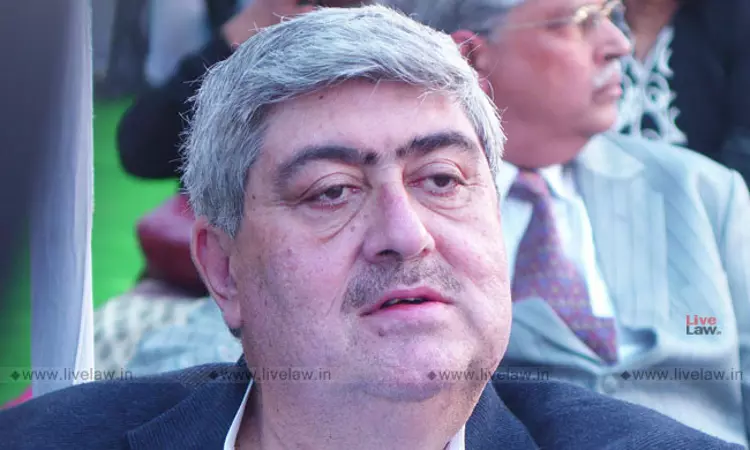
Justice Kaul said CJI Chandrachud was too deferential to the Government in appointment matters.
Former Supreme Court judge Justice Sanjay Kishan Kaul made a startling revelation that former Chief Justice of India, Justice DY Chandrachud, was in the practice of discussing names proposed for judicial appointments with the Government before the Supreme Court Collegium formally deliberated on them, a practice he disapproved of as amounting to seeking the Government's "pre-approval".
In an interview with journalist Karan Thapar for The Wire, Justice Kaul recounted an incident detailed in his forthcoming memoir, Without Fear Or Favour, in which CJI Chandrachud took him aside to a separate meeting during a Collegium meeting and asked whether he should telephone the Government to ascertain its views on the proposed appointments.
Justice Kaul said he told CJI Chandrachud that such a step should not be taken while the Collegium was deliberating on the names.
Justice Kaul said that the Collegium had agreed on five names, and CJI Chandrachud wanted a sixth name - which was propped up at the last minute- also to be approved, which was not acceptable to Justice Kaul or the other members of the Collegium.
"Maybe he had already taken some kind of approval [from the Government] for the other names, including the sixth name," Justice Kaul said.


When the interviewer asked if CJI Chandrachud had taken approval from the Government in advance even before the Collegium decided, Justice Kaul replied :
"This has become unfortunately a practice of names being discussed, and some kind of previous discussion with the Government. That used to happen. It has been happening, I think, before [CJI Chandrachud] and after. That is why it troubles me."
Disapproving of the concept of 'pre-approval' from the Government, Justice Kaul said that it was different from the consultations with the Government after the Collegium's decision.
During the interview, Thapar quoted a passage from Justice Kaul's forthcoming memoir, which states: "There is a difference between consultation and what I came to regard as pre-approval - seeking the Government's nod before the Collegium had even formally deliberated. That sends a wrong signal."
Thapar also referred to Justice Kaul's observation in the book that "Chandrachud was too deferential to the Government in appointment matters."
On being asked if CJI Chandrachud's approach was undermining the Collegium system, Justice Kaul said :
"He believed that this was how it has been happening. I was of the view that a Chief Justice like you, with a two-year tenure, if you do this, the successors will have a problem in not following this practice. Because they have shorter tenures, and the Government will get used to a particular methodology before appointments to the Supreme Court are made. That is why I discouraged him from discussing everything [with the Government] beforehand."
"If you discuss the whole list beforehand, it creates its own problems," Justice Kaul added. He clarified that he was not opposed to discussions with the Government but it should not happen before the Collegium's meeting. "I don't think the concept of discussions is bad, but at what stage and in what manner it takes place is the problem," he said.
Justice Kaul said that he felt CJI Chandrachud was bothered by the fact that the sixth name was not getting approved by the Collegium. "I think that was troubling him," he said.
To a question if he considered Justice Chandrachud a weak Chief Justice, Justice Kaul said :
"There is a judicial side and an administrative side to a Chief Justice. I would not be concerned with the judicial side. I believe he had the intellectual heft, capacity and the hard work to do so. But in consultation with the Government, I felt he was too deferential [to the Government] than necessary. On administrative issues, there was too much of a discussion with the Government."
In the interview, the former judge also revealed that CJI Chandrachud had taken away the judges' appointment matter from his bench, and had advised him to take a "middle path" in the PMLA judgment reconsideration matter.


