



- Home
- /
- Top Stories
- /
- CJI Surya Kant Calls Mediation A...
CJI Surya Kant Calls Mediation A 'Psychological' Process, Says India Can Emerge As Global Centre For Dispute Resolution
Nupur Thapliyal
7 Aug 2026 9:19 PM IST
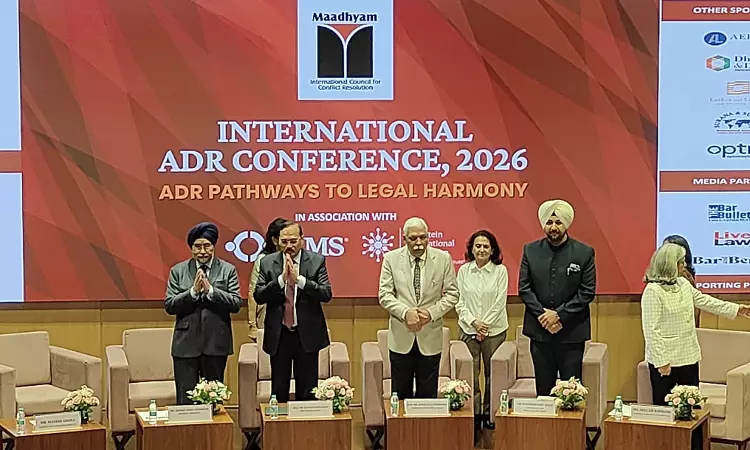
Chief Justice of India, Justice Surya Kant on Friday said that the sine qua non of mediation is “deeply psychological” in nature and that there is no reason why India cannot establish itself as a genuine centre of mediation for the global community.He said that it is not enough to merely have adequate dispute resolution infrastructure but it is essential that India develops itself into...
This is a premium content
Available exclusively to
Our subscribers
Subscribe Premium 
INR 1099+GST
Your support helps us to bring you more content at
an affordable subscription scheme !!!
All payment options available
Chief Justice of India, Justice Surya Kant on Friday said that the sine qua non of mediation is “deeply psychological” in nature and that there is no reason why India cannot establish itself as a genuine centre of mediation for the global community.
He said that it is not enough to merely have adequate dispute resolution infrastructure but it is essential that India develops itself into a state-of-the-art framework that keeps pace with the country's astronomical growth.
CJI was speaking at the International ADR Conference, 2026, organized by Maadhyam International Council for Conflict Resolution. The function was held at S Block building of the Delhi High Court.
Justice Kant said that research across jurisdictions consistently showed that people are more likely to honour agreements that they have helped formulate.
He said that mediation in India has undergone a significant transformation over the past two decades. CJI added that institutional mediation centres today function with trained professionals, case managers, secure digital systems and online dispute resolution platforms that enable parties in different countries to resolve disputes efficiently.
“Most notably, hybrid processes are emerging, exemplified by practices such as med-arb-med. This approach begins with mediation, allowing parties to find common ground. If a deadlock persists on a specific issue, an arbitrator intervenes briefly to resolve it,” CJI said.
He added: “Afterwards, the parties return to mediation, integrating that decision into a more comprehensive and lasting settlement. This method combines arbitration's rigor with mediation's sense of ownership, showing that the field is evolving not as a competition between techniques but as a careful integration of both.”
Further, CJI said that the Mediation Act, 2023 gave India, for the first time, a standalone statutory architecture for mediation, recognising party autonomy in the choice of mediator and procedure, granting mediated settlement agreements a status close to that of a decree and building in timelines that honour both thoroughness and urgency.
He said that it is heartening that the institutions in India are already beginning to take shape, and there is every reason to believe they can facilitate complex, cross-border mediations with the same confidence that international parties employ in commercial dispute resolution worldwide.
“I truly hope that in the future, our fraternity, as one body, can carry this vision forward together: to strengthen the ADR framework we already have, to build upon it something that lasts, and to help India take her place among the true frontrunners of this field, worldwide,” he said.

Nupur Thapliyal
Nupur Thapliyal is a Principal Correspondent with LiveLaw, based in New Delhi. She reports from the Delhi High Court and trial courts in the national capital

