



- Home
- /
- Top Stories
- /
- There Are Instances Of Collegium...
There Are Instances Of Collegium Failing To Protect Righteous Judges : Justice Dipankar Datta
Gursimran Kaur Bakshi
21 March 2026 3:23 PM IST
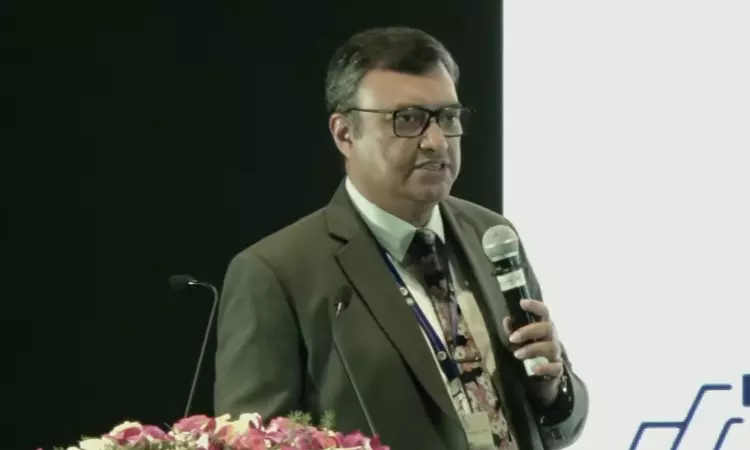
Collegium must stand by and protect judges who walk the path of righteousness, Justice Datta said.
Justice Dipankar Datta of the Supreme Court on Saturday remarked that the Supreme Court Collegium has, in the past, failed to protect judges who displayed courage and righteousness, warning that such instances may discourage judges from prioritising ethics over career advancement."Many judges have had the mental courage and conviction to take the hit for the greater good. However, how many...
This is a premium content
Available exclusively to
Our subscribers
Subscribe Premium 
INR 1099+GST
Your support helps us to bring you more content at
an affordable subscription scheme !!!
All payment options available
Justice Dipankar Datta of the Supreme Court on Saturday remarked that the Supreme Court Collegium has, in the past, failed to protect judges who displayed courage and righteousness, warning that such instances may discourage judges from prioritising ethics over career advancement.
"Many judges have had the mental courage and conviction to take the hit for the greater good. However, how many judges in present times would prioritise ethics over career growth? Do you expect them to have the rectitude to practice what is preached? It is a bitter pill to swallow. There have been instances in the past where those who followed this statement were not protected by the Collegium by ensuring that they are not victimised for their righteousness."
Justice Datta was speaking at the 1st Supreme Court Bar Association National Conference' 2026 on 'Reimaging Judicial Governance'.
He urged that the Collegium members should rise to the occasion and protect their fellow judges. He appealed to Justice BV Nagarathna, who was there on the dias, and who is a member of the Collegium: "My appeal to you as a member of the Collegium is to rise to the occasion to stand by and protect these judges who act as you have stated in that particular lecture."
Justice Datta was referring to a lecture by Justice BV Nagarathna of the Supreme Court, in which she said that judges should not hesitate to make the right decision, even if it costs them their elevation or displeases those in power.
Speaking recently at the 2nd T.S. Krishnamoorthy Iyer Memorial Lecture at the Kerala High Court, Justice Nagarathna had said: "Even if judges know that unpopular decisions may cost them elevation, extension, or bring them in the bad books of the powers that be. That should not come in the way of their decisions. Ultimately, it is the conviction, courage and independence of each judge which really matters. We, as Judges, should always follow our oath of office which is our judicial Dharma and live up to it irrespective of its consequences on our career."
Justice Datta also questioned why people say the collegium system has failed. He asked: if the collegium system had been in the original Constitution from the very beginning, what would Dr BR Ambedkar have said about it?
Referring to Dr Ambedkar's quote, "However good a Constitution may be, if those who are implementing it are not good, it will prove to be bad. However bad a Constitution may be, if those implementing it are good, it will prove to be good," Justice Datta remarked that it ultimately depends on the judges to pick the best.
He suggested that judges must be picked based on merit combined with competence, integrity, temperament and industry.
"The deciding factor should be a fair and objective consideration based strictly on the materials on record. Decisions should be grounded in judgments delivered, reported cases, professional evaluations, written work and documented conduct. And last thing, the second bullet point is also very important. Personal affiliations, social proximity, lobbying, informal recommendations or perceived closeness to those in power, judicial, political or otherwise must be excluded."
In his address, Justice Datta discussed various reasons for judicial pendency, ranging from the inadequate judge-to-population ratio, the delay on the part of the executive in clearing appointments in time, and the neglect of judicial infrastructure in budgets. Since judiciary is a "soft target" it alone is often blamed for judicial backlogs, often ignoring the other systemic reasons contributing to case arrears.
He also opined that the strength of the Supreme Court should be increased to at least 40 judges, pointing out that it was last raised to 34 in 2019 and that the case filings have considerably increased thereafter.
Tags
Gursimran Kaur Bakshi
Gursimran is the Principal Correspondent with LiveLaw for the Supreme Court. She can be reached out at: simrankaurbakshi@livelaw.in

