



- Home
- /
- Top Stories
- /
- Are Our Constitutional Courts...
Are Our Constitutional Courts Protecting Citizens Fundamental Rights!
Dushyant Dave, Senior Advocate
2 Sept 2026 3:14 PM IST
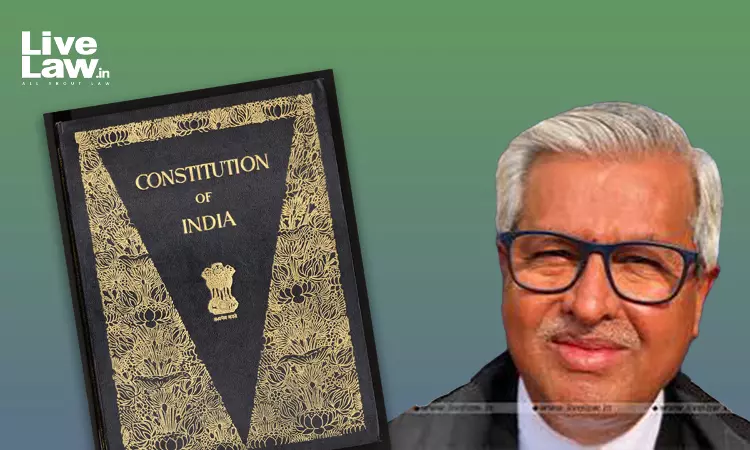
Recent protests by young Indians at Jantar Mantar followed by uncalled for and unjust Police crackdown leading to Supreme Court's intervention supposedly to find truth of that, have engaged the attention of one and all in the Country. It needs serious and deeper debate. India is the largest Democracy in the world. Its fundamental goals are Justice , Liberty , Equality and Fraternity. Its...
This is a premium content
Available exclusively to
Our subscribers
Subscribe Premium 
INR 1099+GST
Your support helps us to bring you more content at
an affordable subscription scheme !!!
All payment options available
Recent protests by young Indians at Jantar Mantar followed by uncalled for and unjust Police crackdown leading to Supreme Court's intervention supposedly to find truth of that, have engaged the attention of one and all in the Country. It needs serious and deeper debate.
India is the largest Democracy in the world. Its fundamental goals are Justice , Liberty , Equality and Fraternity. Its Constitution, finalised by the Constituent Assembly upon deliberations from December 9th, 1946, to 25th November 1949, (spent over 114 days on draft on the constitution), is the most Fundamental Document. It provides for every method of administering the Nation in a democratic way, creating the Executive to govern, the Legislature to frame the laws and the Judiciary to check them and to be a shield to protect Citizens fundamental and other rights.
India was becoming free after centuries of foreign rule. People had suffered the worst atrocities and injustices. Constitutional Framers were conscious that the Freedom achieved after a long struggle in which millions sacrificed with lives, liberties and resources should not become an illusion. They wanted Citizens at the centre of the Constitution. They were keen to establish permanently a government of the people and by the people and did not want a government "For the People".
They debated Fundamental Rights in great detail. Great Dr Ambedkar emphasised,"The object of fundamental rights is two-fold. First, that every citizen must be in a position to claim those rights. Secondly, they must be binding upon every authority..". He even gave rationale for Liberty saying," We are having this liberty in order to reform our social system, which is so full of inequities, so full of inequalities, discriminations and other things, which conflict with our fundamental rights."
Sardar Bhopinder Singh Man feared that, "if a meeting is held, then for breaking it up lathis May be used, and people May be put to jail without trial, their organisations May be banned and declared illegal". Did he visualise Jantar Mantar .
Laxminarayan Sahu wanted that, "Fundamental rights should be treated as fundamental and inviolable".
Pandit Bhargava felt, "But we must have Government which will respect the liberties of the citizens of India. "Fearing that Commissioner of Police May exercise vast powers under Public Safety Measures Acts, he said, "We know to our cost that even the Commissioner of Police does not look into these matters personally as he is expected to do and signs and issues warrants on the reports of the subordinate officers . It is better under such circumstances that there is some check upon exercise of such powers if they are arbitrarily used." Munshi 's remarks were blunt, "Our emergency at the moment has perhaps led us to forget that if we do not give the scope to individual liberty, and give it the protection of the courts, we will create a tradition which will ultimately destroy even whatever little personal liberty which exists in this country."
Framers being so conscious of the rights, gave lot of thought to creating independent judiciary.
Pandit Bhargava declared," In a Democracy, the courts are ultimate refuge of the citizens for the vindication of their rights and liberties. He said,"I want the judiciary to be exalted its right position of palladium of justice and people to be secure in their rights and liberties under its protecting wings."
Ambedkar agreed, "There can be no difference of opinion in the House that our judiciary must both be independent of the executive and must also be competent in itself." He was worried about the post of Chief Justice saying he is a very eminent person but, "after all the Chief Justice is a man with all failings, all the sentiments and all the prejudices which we as common people have". Pandit Nehru desired that, "Judges presumably in future will come very largely from the bar.... it is important that these judges should not only be first rate but should be acknowledged to be first rate in the country, and of the highest integrity, if necessary, people who can stand up against the executive government, and whoever May come in their way".
Fearing executive influence over judges, K T Shah said," By law, I think, judges should be barred from any such transition from judicial to executive offices ... lest ... they should be even indirectly influenced, and they should model their judgements, unconsciously perhaps , in the Hope of proper appreciation being shown at suitable moments by the powers be".
Kamath exclaimed, "if the judiciary is not there to protect and safeguard these rights that you May confer on the citizen, how are we going to preserve the sanctity of our Constitution?"
Nazir Uddin Ahmad felt, "All that the independence of judiciary means is that within the rules you make, the power that you give to the Courts, should be allowed to be exercised without Executive interference - that when a Magistrate exercises judicial functions, he should be above any influence. The worse thing that he can do is to refuse real justice to the people. If there is one thing which will thrill the hearts of people and will make our independence a solid achievement it is the confidence in the judiciary. The moment you let any person think that he will not have confidence in the judiciary, the stability of the Government will be undermined."
Judiciary at all levels needs introspection as to how much confidence in inspires amongst the People .
The reason for reminiscing these thoughts of our great Framers is to underscore the crying need for Judges to respect and uphold rights of citizens at every stage. Whether granting anticipatory or regular bail or hearing habeas corpus cases or hearing challenges against police brutalities, they must be conscious of Constitutional protection afforded to one and sundry and uphold and protect it zealously. Today, human rights are violated on large scale under the watchful eyes of Constitutional Courts and the National and State Human Rights Commissions. Hundreds are getting killed in fake encounters without bringing then to Justice before Courts. Homes and businesses are being bulldozed in the name of love jihad . Attacks against Dalits , Minority communities especially Muslims and Christians are going on without hindrance. Accused are being beaten up in full public glare and they are treated in inhuman ways .National Conscience is dead against these violations. We are fast becoming a lawless country. Rule of Law is under strain, if not failing. Judges must lean in favour of citizens and against the all mighty State. Freedom means absolute Freedom.
All these is happening despite Judiciary comprises of large number of outstanding and capable Judges at all levels. So why do most of them not speak up for the People? Is it the fear of transfers and other punishments that many outstanding Judges have endured in last decade? Or is it the fear of the all powerful Executive? Whatever May be the reason, one can only Hope and Pray that Judges will wake up to the plight of the Ordinary citizens and come to their aid by upholding their human, basic, legal, constitutional and fundamental rights.
Author is Senior Advocate practices Law for over four decades and was the President Supreme Court Bar Association in 2015, 2016 and 2021. Views are personal.
Tags


