



- Home
- /
- Top Stories
- /
- CPC | Defendant Cannot Retract...
CPC | Defendant Cannot Retract Pleadings By Filing Additional Written Statement : Supreme Court
LIVELAW NEWS NETWORK
1 Jun 2026 1:34 PM IST
The Supreme Court has held that a defendant cannot be permitted to radically alter her stand in a civil suit through an additional written statement after the trial has commenced, particularly when the new plea is inconsistent with the original defence. The Supreme Court has set aside a Calcutta High Court order that allowed a defendant to file an additional written statement at an advanced...
This is a premium content
Available exclusively to
Our subscribers
Subscribe Premium 
INR 1099+GST
Your support helps us to bring you more content at
an affordable subscription scheme !!!
All payment options available
The Supreme Court has held that a defendant cannot be permitted to radically alter her stand in a civil suit through an additional written statement after the trial has commenced, particularly when the new plea is inconsistent with the original defence.
The Supreme Court has set aside a Calcutta High Court order that allowed a defendant to file an additional written statement at an advanced stage of a civil suit, holding that a party cannot use such a pleading to introduce a completely contradictory case under the garb of an additional written statement after the commencement of trial.
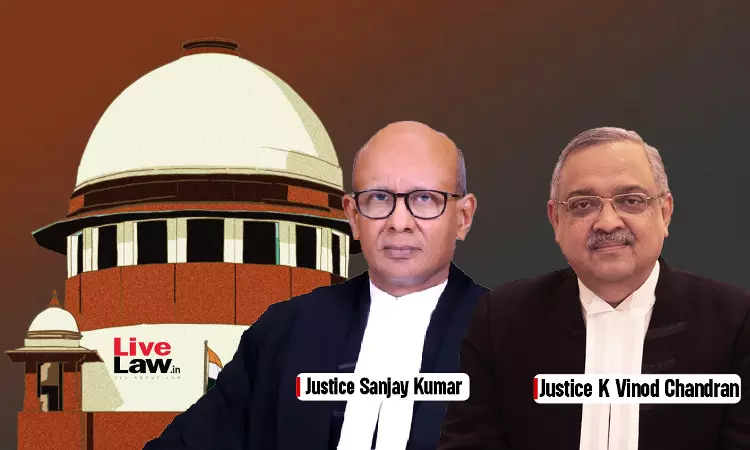
A Bench of Justice Sanjay Kumar and Justice K. Vinod Chandran restored the trial court's order rejecting the defendant's application, observing that the attempt was a clear abuse of process aimed at circumventing the restrictions on amendment of pleadings after trial has begun.
The dispute arose from a suit filed by Mondira Ghosh seeking a declaration that Chaitali Ghosh was in unlawful possession of the suit property and for her eviction. In her original written statement filed in December 2022, the defendant claimed that she was a bona fide co-sharer of the property and denied the plaintiff's claim.
After issues were framed in May 2023 and the plaintiff's witness had already been extensively cross-examined, the defendant sought permission under Order VIII Rule 9 of the Code of Civil Procedure (CPC) to file an additional written statement along with a counterclaim. Through the proposed pleading, she sought to change her stand and claim that she was a tenant under the plaintiff.
The trial court rejected the application, holding that the defendant could not retract from her earlier plea and substitute it with an altogether inconsistent case. The court relied on Order VI Rule 7 CPC, which prohibits a party from raising allegations inconsistent with previous pleadings except through amendment.
However, the Calcutta High Court partly allowed the defendant's challenge and permitted filing of the additional written statement on payment of Rs.15,000 as costs, while refusing to entertain the counterclaim.
Allowing the plaintiff's appeal, the Supreme Court held that the High Court erred in permitting the additional written statement.
"The defendant wanted to completely change her stand with regard to her status and claim for being in possession. Earlier, she had stated that she was a bonafide co-sharer of the suit premises but by way of the additional written statement, she wanted to do a complete volte-face by claiming to be the tenant of the plaintiff," the Court observed.
The Bench noted that this was not a case where certain facts had been inadvertently omitted from the original written statement. Instead, the defendant was attempting to withdraw her earlier stand and replace it with a wholly inconsistent and contradictory plea.
The Court further held that such a course was contrary to the mandate of Order VI Rule 7 CPC. It also observed that the application had been filed only to overcome the embargo contained in the proviso to Order VI Rule 17 CPC, which restricts amendment of pleadings after commencement of trial.
"Further, the very filing of such an application by the defendant, having failed to seek amendment of her written statement at the appropriate stage and after the trial in the suit had already commenced, was clearly an abuse of process," the Bench said.
Accordingly, the Supreme Court allowed the appeal, set aside the High Court's order dated September 3, 2025, and restored the trial court's order rejecting the defendant's application.
Case: Mondira Ghosh v. Chaitali Ghosh
Citation : 2026 LiveLaw (SC) 579
Click here to read the judgment


