



Delhi Protest | Supreme Court Orders No Coercive Action In SC/ST Case Against Woman Journalist Who Accused Delhi ACP Of Sexual Harassment
Amisha Shrivastava & Debby Jain
15 Oct 2026 2:00 PM IST
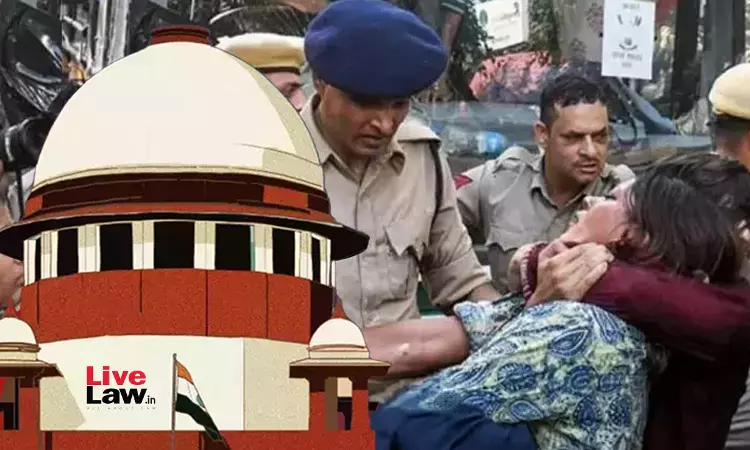
The Court indicated that it would lay down guidelines for protection of journalists covering protests.
The Supreme Court today granted interim protection to woman journalist in a case filed against her by Delhi Police's ACP Vivek Bhagat under the SC/ST Act. The case was filed after she accused the ACP of sexual harassment during the protests in Delhi against Chief Election Commissioner Gyanesh Kumar.
A bench of CJI Surya Kant and Justice Joymalya Bagchi passed the order in the petitions filed by journalist bodies to examine allegations of sexual violence against women journalists covering the protests.
The journalist has been accused of subjecting Bhagat to “public humiliation and casteist slurs” along with her colleagues while he was discharging his duties during the protest. The FIR invokes Sections 221 (obstructing a public servant), 356(2) (defamation) and 3(5) (joint liability) of the Bharatiya Nyaya Sanhita (BNS), along with provisions of the SC/ST (Prevention of Atrocities) Act.
During the hearing, Senior Advocate Indira Jaising sought the constitution of a separate committee comprising a retired woman judge and a retired IPS officer to examine allegations of sexual violence against women journalists covering the protests.


The Chief Justice said the Court was prima facie inclined to constitute a committee comprising women judges, social workers and others. He asked Jaising to provide, by the end of the day, the names of women willing to come forward with their allegations.
Jaising also alleged that a woman journalist had been molested, but no FIR had been registered on her complaint. Instead, she said, the police officer had accused the woman of making casteist remarks. The Court subsequently granted interim protection to the journalist facing the SC/ST Act case.
The controversy stems from an incident on October 3, when the woman journalist allegedly recorded the detention of an activist during the protest. She alleged that Bhagat touched her inappropriately and pushed her. No FIR has been registered on her complaint so far.
The CJI said the Court would also like to lay down guidelines for the protection of journalists. “We are prima facie agreeing that your committee will have to be of women judges, social workers, etc. We would like to lay down guidelines”, he said.
Solicitor General Tushar Mehta opposed any blanket direction concerning the treatment of women journalists. "We will not minimize allegation. But in present era of technology, any person having mobile is a journalist. Several people saying we are freelance journalists. They record and upload. Reel making going on. No lady should be inaptly dealt with. But blanket direction", he said.
Jaising argued that women journalists performing their professional duties constitutes a class requiring protection against sexual abuse, particularly by male police officers. She further said that women police officers too had pushed journalists around.
Meanwhile, the Delhi High Court today refused to urgently list the plea filed by the female journalist seeking interim protection from arrest in the case filed by ACP Bhagat.


