



- Home
- /
- Top Stories
- /
- Fill All VC, Faculty & Staff...
Fill All VC, Faculty & Staff Vacancies In Higher Educational Institutions : Supreme Court
LIVELAW NEWS NETWORK
16 Jan 2026 6:25 PM IST
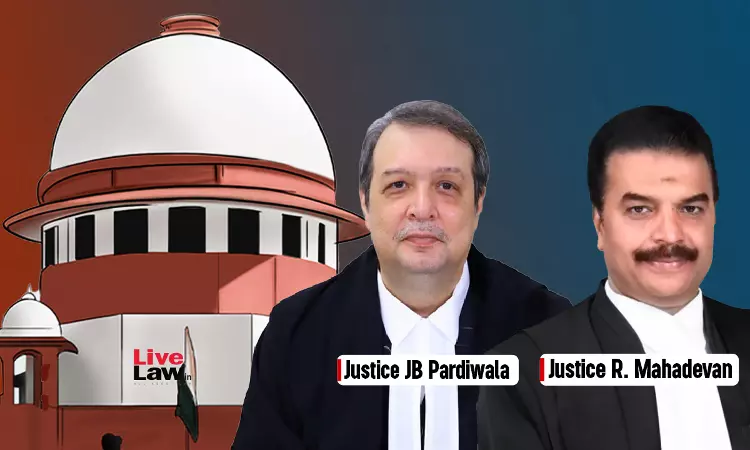
The Court set timelines for the filling up of the vacancies.
Holding that chronic faculty shortages and prolonged vacancies in institutional leadership directly contribute to academic pressure, poor mentorship and student distress, the Supreme Court has issued a firm direction that all vacant teaching and non-teaching posts in Higher Educational Institutions (HEIs) be filled within four months, and that key administrative posts such as Vice-Chancellors...
This is a premium content
Available exclusively to
Our subscribers
Subscribe Premium 
INR 1099+GST
Your support helps us to bring you more content at
an affordable subscription scheme !!!
All payment options available
Holding that chronic faculty shortages and prolonged vacancies in institutional leadership directly contribute to academic pressure, poor mentorship and student distress, the Supreme Court has issued a firm direction that all vacant teaching and non-teaching posts in Higher Educational Institutions (HEIs) be filled within four months, and that key administrative posts such as Vice-Chancellors and Registrars be filled within one month of arising.
A Bench of Justice JB Pardiwala and Justice R Mahadevan made it clear that retirement dates are known well in advance and that leadership and faculty voids cannot be allowed to persist at the cost of student well-being. The Court further directed that priority be given to filling posts reserved for marginalised and underrepresented communities, including persons with disabilities, and permitted special recruitment drives to clear long-standing backlogs.
The directions were issued after considering an interim report submitted by a National Task Force constituted by the Court to examine the alarming rise in student suicides across the country.
Background
The proceedings arose from Amit Kumar and others v. Union of India and others, in which the Supreme Court had earlier, by a judgment dated March 24, 2025, clarified the law on mandatory registration of FIRs upon disclosure of a cognizable offence and reminded educational institutions of their legal and moral obligation to lodge FIRs in cases of student suicides on campus.
Taking note of repeated reports of student suicides from across the country, the Court decided that the issue required a systemic response rather than a case-by-case approach. It accordingly constituted a National Task Force with a broad mandate to identify predominant causes of student suicides, analyse existing legal and institutional frameworks, and recommend preventive, remedial and reformative measures to ensure mental well-being in HEIs.
The interim report of the Task Force, now considered by the Court, painted a grim picture of student distress and identified structural deficiencies within institutions as key contributors.
Vacancies as a structural stressor
One of the recurring themes emerging from the Task Force's surveys, institutional visits and stakeholder consultations was the acute shortage of faculty and administrative staff across public and private HEIs.
The Court noted that students repeatedly flagged excessive academic pressure arising from faculty shortages, overburdened teachers, vacant teaching posts, and heavy reliance on inexperienced guest faculty. In research-intensive institutions, particularly those offering PhD programmes, students spoke of burnout, financial stress and uneven supervisory relationships aggravated by lack of adequate faculty strength. Medical students highlighted exploitative academic cultures and on-call hours stretching far beyond prescribed limits, while engineering students pointed to intense placement-driven academic pressure.
The Bench observed that prolonged vacancies in leadership posts such as Vice-Chancellors and Registrars further weaken institutional governance, grievance redressal and accountability. It therefore directed that such posts must ordinarily be filled within one month of falling vacant, and in any event without delay, stressing that advance planning is both possible and necessary.
To ensure accountability, HEIs have been directed to annually report to the Central and State Governments the number of reserved posts lying vacant, posts filled, reasons for non-filling and time taken for recruitment.
"Keeping in mind the faculty shortages which have been reported in several HEIs, both public and private, it must be ensured that all vacant faculty positions (both teaching and non-teaching) be filled within a period of four months, with priority given to posts reserved for candidates from marginalized and underrepresented communities including those posts reserved for PwDs. Special recruitment drives may be held for faculty recruitment that come under various forms of reservations as per central and state government rules.
Appointment and filling of vacancies of the post of Vice- Chancellor, Registrars, and other key institutional/administrative positions, must also be made within a period of four months. Moreover, it must be ensured as a matter of practice that, these positions are filled within a period of one month from the date on which the vacancy arises, in order to ensure the smooth functioning of HEIs. Since the date of retirement is known much ahead in time, recruitment processes must begin well in advance to ensure that such posts do not remain vacant for more than a month. All HEIs must report on an annual basis to the Central and relevant State Governments, as to how many reserved posts are vacant, how many are filled, reasons for non-filling, time taken, etc., so that periodic accountability is ensured."
Student suicides as a systemic issue
Beyond vacancies, the Court placed the problem of student suicides in a broader social and institutional context. Referring to data analysed by the Task Force, the Bench noted that suicides are among the leading causes of death in the 15–29 age group in India, with student suicides numbering around 13,000 cases in 2022 alone.
The Court underlined that student suicides represent only the visible tip of a much larger iceberg of student distress, which also manifests in dropouts, poor academic outcomes and social isolation. It cautioned against a tendency to individualise blame by attributing suicides solely to personal shortcomings or autonomy, and stressed that HEIs cannot abdicate their fundamental duty to provide safe, inclusive and nurturing spaces of learning.
Mandatory reporting and data reforms
Reiterating its earlier stance, the Court directed that all HEIs must report any incident of student suicide or unnatural death to the police immediately upon coming to know of it, regardless of whether the incident occurred on campus, in hostels, private accommodation or elsewhere, and irrespective of the mode of study.
In addition, institutions have been directed to submit annual reports of such incidents to the University Grants Commission and other relevant regulatory bodies. Central Universities and Institutes of National Importance are required to report to the Department of Higher Education.
The Court also ordered reforms in suicide data collection, directing that Sample Registration System data relating to suicides in the 15–29 age group be centrally maintained, and that the National Crime Records Bureau distinguish between school-level and higher education student suicides in its annual reports.
Scholarships and financial stress
Recognising financial stress as a major contributor to student distress, the Bench directed that all pending scholarship disbursements be cleared within four months. It held that even in cases of administrative delay, HEIs must not make students accountable for fee payments.
“No student should be prevented from appearing in an examination, removed from hostels, barred from attending classes, or have their mark sheets or degrees withheld because of delays in disbursal of scholarships,” the Court ordered, warning that such institutional policies would be viewed strictly.
The Court put all HEIs on strict notice to ensure full compliance with binding regulations, including those relating to anti-ragging, promotion of equity, prevention of sexual harassment, and student grievance redressal. It expressed disappointment at the apathetic attitude of many institutions, noting that a majority had failed to even respond to the Task Force's survey despite repeated reminders.
Equal Opportunity Cells and Internal Complaints Committees, the Court observed, often exist only on paper or lack independence and authority, discouraging students from seeking redress due to fear of backlash.
While appreciating the work of the National Task Force, the Court sought further assistance in framing model standard operating procedures for well-being audits, faculty sensitisation and campus mental health services, with clear implementation mechanisms and consequences for non-compliance. It indicated that the outcomes of such audits could be linked to accreditation processes.
The Union of India and State Governments have been directed to circulate the Court's directions to all HEIs and ensure that prompt and effective action is taken.
The order marks one of the most comprehensive judicial interventions linking institutional capacity, staffing and governance failures with the mental well-being of students, and signals that persistent vacancies in higher education will no longer be treated as a routine administrative lapse but as a serious systemic issue with constitutional implications.
Headnote
Campus Suicide – Mandatory registration of FIR – Higher Educational Institutions (HEIs) - Institutional Responsibility vs. Student Autonomy - Mandatory Directions under Article 142 - The Supreme Court addressed the alarming rise in student suicides across Higher Educational Institutions (HEIs) in India - Recognized student suicide as the "visible tip of a much larger iceberg of student distress," Supreme Court noted that the legal and moral obligation of educational authorities to create safe, inclusive, and nurturing environments - Supreme Court reviewed an interim report by a National Task Force (NTF) and issued several mandatory directions under Article 142 of the Constitution to address structural, social, and academic stressors - Key Legal Issues & Rulings held – i. Mandatory Registration of F.I.R. for Campus Suicides – Noted that educational institutions have an unequivocal legal obligation to promptly lodge an F.I.R. with appropriate authorities if an incident of suicide occurs on campus - This follows the clarification of law regarding mandatory registration of F.I.R.s in the event of disclosure of a cognizable offence; ii. Institutional Responsibility vs. Student Autonomy - Supreme Court criticized the tendency of HEIs to "shift the blame" onto the individual autonomy of the deceased student to avoid institutional responsibility - held that HEIs cannot shirk their fundamental duty to ensure institutions are safe and conducive spaces for learning; iii. Mandatory Directions under Article 142 - Data Maintenance: SRS data on suicides for the 15-29 age group must be centrally maintained - The NCRB must distinguish between school-going and higher education students in its reports; iv. Reporting Protocol - HEIs must report all student suicides or unnatural deaths (on or off-campus) to police immediately - Annual reports of such incidents must be submitted to regulatory bodies like UGC, NMC, BCI, etc; v. Faculty Vacancies - All vacant faculty positions, with priority to reserved categories (SC/ST/OBC/PwD), must be filled within four months; vi. Scholarship Disbursements: Pending scholarship backlogs must be cleared within four months - HEIs are strictly prohibited from barring students from exams or hostels due to administrative delays in scholarship disbursals; vii. Regulatory Compliance - HEIs must strictly adhere to UGC regulations concerning Ragging (2009), Equity (2012), Sexual Harassment (2016), and Grievance Redressal (2023); viii. Accessibility and Mental Health - Supreme Court mandated accessibility audits for marginalized groups (PwDs and Transgender students) and emphasized the need for student-friendly mental health services provided by qualified professionals rather than untrained faculty members. [Relied on Sukdeb Saha v. The State of Andhra Pradesh, 2025 SCC OnLine SC 1515; Paras 19-39; 44, 45]
Case : Amit Kumar v Union of India and others
Citation : 2026 LiveLaw (SC) 56
Click here to read the judgment


