



- Home
- /
- Top Stories
- /
- Fix Timelines For Governors,...
Fix Timelines For Governors, Abandon 'One Nation, One Language': Kurian Joseph Committee Suggests Federal Reforms
LIVELAW NEWS NETWORK
19 Feb 2026 3:50 PM IST
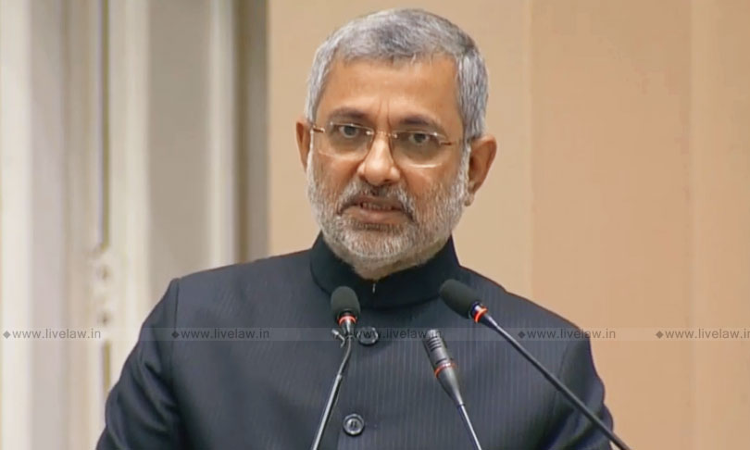
The panel suggested a freeze on delimitation till 2126.
The High-Level Committee on Union–State Relations headed by Justice Kurian Joseph, formed by the Tamil Nadu Government, has submitted its report, proposing wide-ranging constitutional and institutional reforms aimed at correcting what it describes as a steady erosion of State autonomy.Among its main recommendations are mandatory timelines for Governors to act on State Bills and a...
This is a premium content
Available exclusively to
Our subscribers
Subscribe Premium 
INR 1099+GST
Your support helps us to bring you more content at
an affordable subscription scheme !!!
All payment options available
The High-Level Committee on Union–State Relations headed by Justice Kurian Joseph, formed by the Tamil Nadu Government, has submitted its report, proposing wide-ranging constitutional and institutional reforms aimed at correcting what it describes as a steady erosion of State autonomy.
Among its main recommendations are mandatory timelines for Governors to act on State Bills and a categorical rejection of the “One Nation, One Language” approach. However, the report goes much further, proposing structural changes across constitutional amendments, territorial reorganisation, elections, education, health, delimitation and the GST regime.
It was in April 2025 that the Tamil Nadu Government formed this committee to study the principles related to State autonomy.
M. Ashok Vardhan Shetty, retired IAS officer; and Professor M. Naganathan, former Vice Chairman of the State Planning Commission were the other members of the committee led by Justice Joseph. Justice Joseph accepted the position without taking any remuneration.
Creeping centralisation
The Justice Kurian Joseph Committee has raised serious concerns about what it describes as a sustained and creeping centralisation of power in India's constitutional framework. In its report on Union–State relations, the Committee argues that federalism in India is being gradually weakened not through dramatic constitutional rupture, but through incremental institutional, legislative and administrative shifts that cumulatively erode State autonomy.
The Committee emphasises that federalism is not merely an abstract division of legislative lists but a lived constitutional reality affecting language, public services, healthcare, taxation and democratic representation. It recalls that in S.R. Bommai v. Union of India, the Supreme Court declared federalism part of the Basic Structure of the Constitution. Despite this, it observes that constitutional practice has increasingly treated federalism as a matter of administrative convenience rather than principle.
A major structural concern identified by the Committee is the flexibility of the constitutional amendment process under Article 368, which, it argues, allows significant alterations to the federal balance without robust State ratification or public consultation. It also flags Parliament's unilateral power under Article 3 to reorganise State boundaries as inconsistent with the idea of States as secure constitutional units in a federation.
The Committee expresses concern over gubernatorial overreach, including delays in assent to State Bills and intervention in government formation, as well as the push toward linguistic homogenisation under the “One Nation, One Language” narrative. It warns that centralisation in education, health policy and the GST framework has constrained State fiscal and administrative space.
Citing Union of India v. Mohit Minerals Pvt. Ltd., it reiterates that GST Council recommendations are advisory, yet argues that fiscal practice has tilted towards Union dominance.
The major recommendation are as follows :
Time-Bound Assent To State Bills
A central focus of the report is reform of the Governor's office.
The Committee recommends amending Articles 200 and 201 to impose strict timelines on gubernatorial action:
Governors must act on State Bills within 15 days.
If a Bill is re-passed, assent must be granted within a further 15 days.
Deemed assent should operate if these timelines are not complied with.
Reservation of Bills for the President should be confined to limited cases of repugnancy.
Before reserving a Bill, the Governor must obtain a written legal opinion and communicate reasons within 60 days.
Neither the Governor nor the President should exercise an executive veto over duly enacted State legislation.
The recommendations draw from the Supreme Court's ruling in State of Tamil Nadu v. Governor of Tamil Nadu.
Curb on Governor's powers
The Committee raised concerns over the abuse of the office of the Governor. It observed :
"The office of the Governor, conceived as a neutral constitutional link between the Union and the States, has increasingly departed from its intended role. Each episode of gubernatorial overreach—manipulating government formation or collapse, refusing to summon the Assembly, withholding or indefinitely delaying assent, publicly criticising an elected government, or turning Raj Bhavan into a partisan outpost of the ruling dispensation at the Union—erodes confidence in the institution."
The Committee proposes:
- Appointment of Governors from a panel of three names approved by the State Legislative Assembly.
- A single, fixed, non-renewable five-year term.
- Removal only through a resolution of the State Assembly.
- A new Thirteenth Schedule laying down binding instructions to limit discretionary powers.
- Clear norms for government formation, mandatory floor tests within seven days, and prohibition on delaying or manipulating Assembly sessions.
- Deletion of Article 176 relating to the Governor's special address.
- Divesting Governors of the statutory role as Chancellor of State universities.
Abandon 'One Nation, One Language'
The Committee calls for a fundamental overhaul of the constitutional language framework.
It recommends:
- Amending Article 343 to permanently entrench English as the official language of the Union.
- Declaring all Eighth Schedule languages as official Union languages.
- Guaranteeing English as the permanent link language under Article 346.
- Expanding the Eighth Schedule to include all languages with more than one million native speakers and vulnerable tribal languages.
- Including English in the Eighth Schedule.
- Correcting Census classifications that treat several independent languages as dialects of Hindi.
- Omitting Articles 344 and 347.
- Amending Article 351 to replace exclusive promotion of Hindi with a commitment to preserve and revitalise all Indian languages.
- Abolishing the permission to speak rule in Parliament and State Legislatures.
- The Committee also recommends replacing the Three-Language Formula with high proficiency bilingualism centred on English and the regional language.
Constitutional Amendment Process
The report seeks to substantially alter Article 368:
- All constitutional amendments should require a two-thirds majority of the total membership of each House of Parliament.
- Most amendments should require ratification by two-thirds of States representing two-thirds of India's population.
- Amendments affecting particular States should require ratification by those States alone.
- The Basic Structure doctrine should be codified in the Constitution.
- Mandatory public consultation of three months should precede introduction of amendment Bills.
- Certain constitutional provisions should be subject to periodic sunset review.
Curtailing Parliament's Power Over State Boundaries
The Committee proposes major changes to Articles 2 and 3:
- Territorial reorganisation should operate as State-specific constitutional amendments requiring consent of affected States.
- Creation of a new State should require State consent or, failing that, a referendum in the affected area.
- No territorial reorganisation should be undertaken when a State is under President's Rule.
- A new Article 3A should prohibit creation of new Union Territories and mandate periodic referendums for existing ones.
Freeze Delimitation Till 2126
The Committee recommends extending the inter-State seat allocation freeze based on the 1971 Census until 2126 or until Total Fertility Rates converge.
It also proposes:
- Legislative scrutiny of delimitation orders before they take effect.
- Separate Union and State Delimitation Commissions.
- Decadal rotation of SC-reserved constituencies.
- Equal representation of States in the Rajya Sabha, with six seats per State.
- Abolition of nominated members.
- Mandatory domicile requirements for Rajya Sabha members.
Separate Election Commissions And Scrap One Nation One Election
The Committee recommends limiting the Election Commission of India to Union elections and entrusting State Legislature elections to independent State Election Commissions.
It calls for withdrawal of the Constitution One Hundred and Twenty-ninth Amendment Bill, 2024, which proposes simultaneous elections, terming it harmful to federal balance and legislative accountability.
On anti-defection law, it proposes:
A six-year electoral ban for defectors.
Deletion of the merger exception.
Treating strategic resignations as defections.
Transferring adjudication from the Speaker to High Courts with strict time limits.
Criminalising inducements for defection.
Recognising the Right to Vote as a Fundamental Right and including a Fundamental Duty to Vote.
Extending voting rights to undertrials and certain convicts.
Education And Health Back To States
The Committee recommends reversing the 42nd Constitutional Amendment and moving education, including medical education, back to the State List.
It further proposes:
Freeing top universities from central regulatory control.
Limiting the Union's Entry 66 power strictly to academic standards.
Disbanding the National Testing Agency.
Abolishing NEET and NExT by amending the National Medical Commission Act, 2019.
Replacing the All-India Quota with a voluntary State-determined quota.
In health financing, it recommends that the Union bear at least 80 percent of the cost of Centrally Sponsored Schemes or provide untied block grants, while limiting intrusion into State domains.
GST Council Reforms And Fiscal Autonomy
The Committee proposes structural reforms to Article 279A:
Rebalancing quorum and voting to curb Union dominance.
Reducing or eliminating the Union's veto power.
Clarifying that GST Council recommendations are advisory in line with Union of India v. Mohit Minerals Pvt. Ltd..
Allowing States to vary SGST rates within a limited band.
Establishing an independent GST Council Secretariat.
Creating a statutory GST Dispute Settlement Authority chaired by a retired Supreme Court judge.
Instituting an Annual GST Rate Calendar and enforcing a One Product One Rate principle.
Transitioning GSTN to a federated digital architecture.
Deferring inclusion of petroleum products under GST until structural reforms are completed.


