



- Home
- /
- Top Stories
- /
- Half Of Civil Litigation Can Be...
Half Of Civil Litigation Can Be Shifted To Mediation In 25 Years With Right Strategies: Sriram Panchu
LIVELAW NEWS NETWORK
22 March 2026 8:59 PM IST
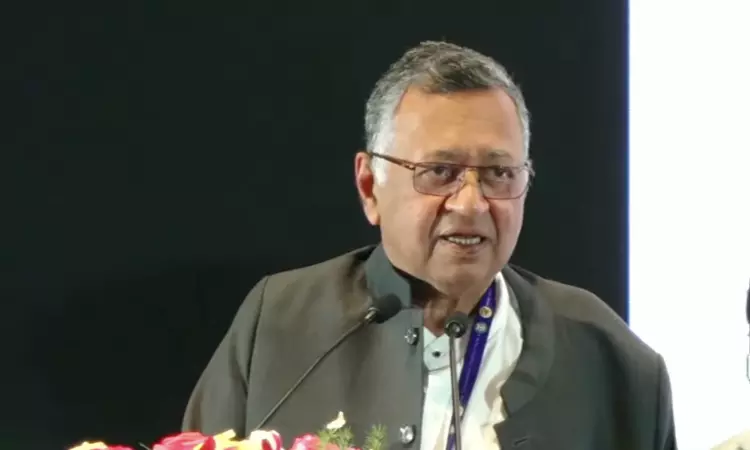
Panchu outlined strategies to make mediation a more effective and attractive dispute resolution mechanism.
Senior Advocate and renowned mediator Sriram Panchu expressed confidence that a significant portion of India's civil disputes can be diverted away from courts if sustained institutional reforms are implemented, stating that mediation has the potential to fundamentally reshape the dispute resolution landscape.Speaking at the Supreme Court Bar Association Conference in Bengaluru on March 21,...
This is a premium content
Available exclusively to
Our subscribers
Subscribe Premium 
INR 1099+GST
Your support helps us to bring you more content at
an affordable subscription scheme !!!
All payment options available
Senior Advocate and renowned mediator Sriram Panchu expressed confidence that a significant portion of India's civil disputes can be diverted away from courts if sustained institutional reforms are implemented, stating that mediation has the potential to fundamentally reshape the dispute resolution landscape.
Speaking at the Supreme Court Bar Association Conference in Bengaluru on March 21, Panchu said that with the right strategies and political will, mediation could absorb a substantial share of litigation currently burdening courts.
"In twenty five years, if we adopt the right strategies, with the will that carves the way, half of India's civil, commercial and property litigation should shift from court dockets to mediation tables," he said.
He stressed that mediation remains one of the most effective mechanisms for resolving disputes, but its full potential can be realized only through deliberate planning and structural reforms.
"We all want mediation to play its role for better and more wholesome resolution of disputes. In the appropriate cases. And to rid us of this perennial backlog. But that requires strategic thought, focused planning and concerted action," he said.
Court-Annexed Mediation Needs Better Funding And Case Selection
Panchu described court-annexed mediation as an important institutional mechanism but cautioned that it cannot remain the sole pillar of the mediation ecosystem.
He called for higher remuneration for mediators, noting that the current honorarium structure undermines the sustainability of mediation as a profession.
"Pay mediators better. This honorarium or just above will not do to sustain interest as a career," he said.
He also urged the government to invest more in mediation infrastructure, pointing out its economic efficiency compared to litigation.
"Government should realize that the cost of resolving a dispute through mediation is a fraction of the cost of litigating it. So it makes good economic sense to fund mediation," Panchu stated.
Further, he suggested that courts could strengthen mediation centres by encouraging voluntary contributions from parties in high value disputes that settle successfully.
"In cases where the stakes are large and the mediation is successful, all that a judge has to do is to ask parties to make a donation or payment to the court mediation centre. They will willingly pay, and pay well. I say this from experience," he said.
He also stressed the need to refer more complex disputes to mediation.
"Send mediators good cases. Not just routine transfer and matrimonial cases. I am talking about the range - civil, commercial, property, personal. Cases with complexity. Cases which challenge," he said.
Professional Mediation Must Become The Mainstay
Panchu emphasized that long-term success depends on building a professional mediation ecosystem rather than relying solely on court annexed mechanisms.
"Court-Annexed Mediation(CAM) system is not the mainstay if we want mediation to achieve its full potential across the board. CAM is a feeder and a back up. The mainstay is professional career-oriented mediation," he said.
He called for integrating mediation into legal education through practical training and mentorship, warning that delayed entry discourages young professionals.
"If you tell them to wait for ten years, they will go elsewhere. Idealism cannot be refrigerated," he observed.
He also recommended giving parties greater autonomy to select their mediators at the referral stage.
"At the time of referral, give the parties the choice and option of selecting their own mediator. This respects party autonomy. It also propels them to choose a person they trust, and that is halfway to success," he said.
Getting Govt to mediate a big challenge
Highlighting the role of government litigation in case backlogs, Panchu said officials often hesitate to settle disputes due to fear of post-settlement scrutiny.
"A big challenge is getting government to mediate. Forty eight percent of all cases involve the government," he said.
He explained that the fear of investigation over negotiated compromises acts as a powerful deterrent.
"In most settlements, there is an element of give and take. Now if that something given up can be made the focus of inquiry and punitive action, that is a real and functional deterrent for the officer," he said.
To address this concern, he proposed establishing High Level Approval Committees to vet settlements and provide institutional protection to officers.
"But once the HLAC puts its seal of approval, there should be immunity for the officers who have participated in the mediation," he said.
Calls For Financial Incentives For Lawyers And Structural Reforms
Panchu also pointed to the financial disincentives that discourage lawyers from encouraging mediation, noting that traditional billing models reward prolonged litigation.
"One impediment, though rarely mentioned, is the deterrent financial aspect that lawyers and law firms face if a big-stakes matter gets taken to mediation and gets resolved there. There is loss of anticipated income from an expectedly long-lasting litigation," he said.
He suggested introducing a mediation settlement fee to align professional incentives with dispute resolution.
"If we can find a way to financially incentivize lawyers and law firms to be pro mediation we would have overcome this hurdle," he said.
"One way out of this for the lawyer or law firm to charge a Mediation Settlement Fee if the case is successfully resolved. In India, we frown on a fee conditional on the success of the case because we think it is akin to champerty. But champerty is frowned upon because it forments litigation. That argument is not available in the case of mediation which ends litigation. If we can find a way to financially incentivise lawyers and law firms to be pro-mediation, we would have overcome this hurdle. I have seen this actually play out. This is not to deny that lawyers genuinely want to help their clients settle; indeed, I think mediation opens up the tap of humanism in my comrades at the Bar."
Proposes Grassroots Expansion And Indian Mediation Service
Looking beyond courts, Panchu advocated expanding mediation to grassroots institutions and creating a dedicated national cadre of mediators.
"We have the Indian Administrative Service, Police Service and a host of other services. We have the Judicial Service. Perhaps it is time we thought of the Indian Mediation Service," he said.
He also proposed requiring companies above a certain size to appoint in house mediators to resolve internal disputes and commercial disagreements.
"Surely, dispute resolution is as important as the keeping of accounts. It's simple, doable but has huge implications," he noted.


