



- Home
- /
- Top Stories
- /
- High Court Registrar General Cannot...
High Court Registrar General Cannot Suo Motu Initiate Disciplinary Action Against Judicial Officer : Supreme Court
Debby Jain
18 May 2026 2:44 PM IST
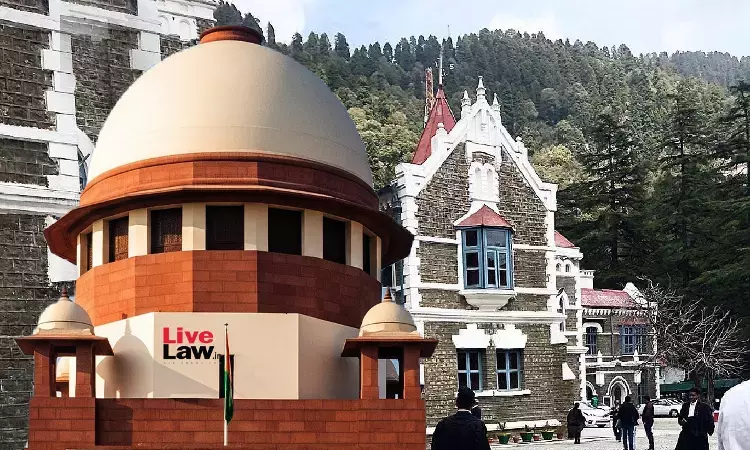
The disciplinary control is vested collectively on the High Court (Chief Justice & Judges) and the Registrar General can only act on behalf of the CJ.
The Supreme Court on Monday held that disciplinary proceedings against a judicial officer cannot be initiated unless they are authorised by the Chief Justice of the High Court or by a committee of judges constituted by the Chief Justice, ruling that the Registrar General has no independent authority to suo motu commence such action.A bench comprising Chief Justice of India Surya Kant and...
This is a premium content
Available exclusively to
Our subscribers
Subscribe Premium 
INR 1099+GST
Your support helps us to bring you more content at
an affordable subscription scheme !!!
All payment options available
The Supreme Court on Monday held that disciplinary proceedings against a judicial officer cannot be initiated unless they are authorised by the Chief Justice of the High Court or by a committee of judges constituted by the Chief Justice, ruling that the Registrar General has no independent authority to suo motu commence such action.
A bench comprising Chief Justice of India Surya Kant and Justice Joymalya Bagchi upheld the reinstatement of a Civil Judge in Uttarakhand who had been dismissed from service following departmental proceedings over allegations that she had physically abused a minor girl employed as domestic help at her residence.
The Court, however, clarified that it was not examining the merits of the allegations or the findings recorded in the departmental inquiry, instead deciding the case on the threshold issue of whether the proceedings themselves were validly initiated.
The Court was hearing a petition filed by the High Court of Uttarakhand(on its administrative side) challenging the judgment of the High Court reinstating the officer.
The Supreme Court held that the disciplinary proceedings suffered from a “jurisdictional infirmity” from the very outset.
“The power under Article 235 of the Constitution, insofar as disciplinary control over judicial officers is concerned, has been expressly vested in the High Court and the High Court collectively, which necessarily shall comprise the Hon'ble Chief Justice and his companion judges,” the Court held.
It further ruled that unless disciplinary action is approved by the Chief Justice or by a committee of judges duly constituted by him, such proceedings cannot be lawfully initiated.
"Unless the disciplinary action is approved by the Chief Justice of the High Court, or the committee comprising of judges constituted by him, as his delegatees, purported disciplinary action for all intents and purposes shall be void ab initio.
The Registrar General of the High Court has no authority, either in terms of constitutional scheme or statutory rules governing judicial officers, to suo motu initiate disciplinary action against a judicial officer. He can only act on behalf of the Chief Justice and judges. The recourse not having been followed, the very foundation of disciplinary action against R1 was non est in law," the bench observed.
Senior Advocate Madhavi Divan, appearing for the High Court, argued that the departmental inquiry had established grave misconduct by the officer. It was contended that the judicial officer had falsely victimised the minor girl, who was allegedly rescued with more than 20 injuries on her body.
Referring to these submissions, the Supreme Court noted the seriousness of the allegations but said the decisive issue before it was whether the inquiry had been initiated in accordance with law.
The Court said that once it found a foundational defect in the initiation of proceedings, it was unnecessary to enter into the factual controversy surrounding the allegations or the proportionality of punishment.
“What we find is that the inquiry proceedings in the present case, at the very inception, suffer from a jurisdictional infirmity which goes to the root of the matter,” the Court said.
The Court noted that the judicial officer, who was appointed in 2008, had already been reinstated pursuant to the High Court's judgment.
Taking note of the broader circumstances, including the officer's claim that she herself had faced harassment from certain senior judicial officers from the inception of the controversy, the Supreme Court declined to interfere with the operative direction reinstating her.
Senior Advocate Sonia Mathur appeared for the respondent.
Case : HIGH COURT OF UTTARAKHAND AT NAINITAL Vs DEEPALI SHARMA | SLP(C) No. 16520/2026
Citation : 2026 LiveLaw (SC) 623

Debby Jain
Debby Jain is a Correspondent with LiveLaw, covering the Supreme Court of India

