



- Home
- /
- Top Stories
- /
- How Much Alcohol Can You Legally...
How Much Alcohol Can You Legally Store At Home? State Excise Laws Explained
Sneha Aggarwal
3 Nov 2026 6:00 PM IST
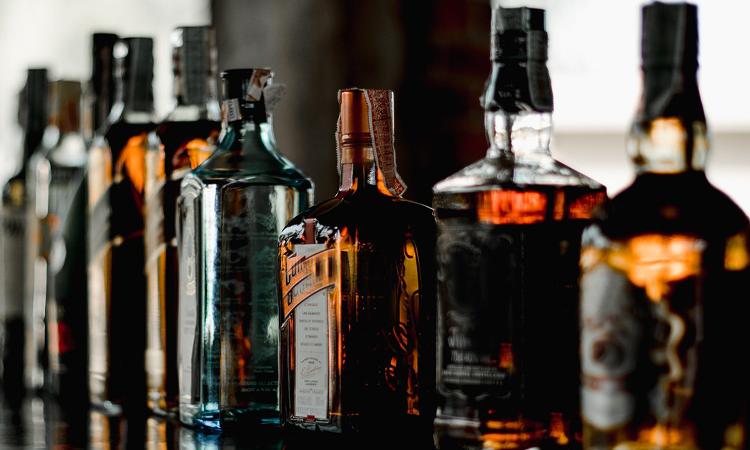
Have you ever wondered if keeping a couple of extra beer bottles at your private residence could land you in jail? In India, ignoring state-specific excise rules regarding the maximum permissible limit for home liquor storage isn't just a minor administrative lapse; it can quickly escalate into a serious criminal offense.Recently, what drew the attention of many towards the country's liquor...
This is a premium content
Available exclusively to
Our subscribers
Subscribe Premium 
INR 1099+GST
Your support helps us to bring you more content at
an affordable subscription scheme !!!
All payment options available
Have you ever wondered if keeping a couple of extra beer bottles at your private residence could land you in jail? In India, ignoring state-specific excise rules regarding the maximum permissible limit for home liquor storage isn't just a minor administrative lapse; it can quickly escalate into a serious criminal offense.
Recently, what drew the attention of many towards the country's liquor laws is the high-profile arrest of Reporter TV Managing Director Anto Augustine by excise officials in Kerala following the alleged seizure of quantities exceeding ordinary limits. While the Kerala High Court on 22 September 2026 ultimately granted bail, noting that continued detention was unnecessary given that recovery had already been affected, the case sparked a broader legal conversation: How much liquor can an Indian citizen lawfully store at home?
How much alcohol a person can lawfully possess within their private residence depends on which state or union territory they happen to live in. It derives its constitutional validity from Entry 8 of List II (State List) of the Seventh Schedule of the Constitution of India, which grants individual states exclusive power to legislate on the manufacture, production, possession, transport, purchase, and sale of intoxicating liquors. As a result, a person keeping harmless household stock in one state can easily be booked under a non-bailable criminal offense in another.
Interpretation of Statutory Possession Limits: Individual vs. Joint Possession
Over the years, a recurring question before Indian courts has been whether statutory possession limits apply strictly per individual or whether they scale up with the number of adults residing under one roof. This was addressed by the Delhi High Court in the case of Avijeet Saluja v. State of NCT of Delhi (2022). Reiterating Rule 20 of the Delhi Excise Rules, 2010, the court said in its order that an individual 25 years of age can possess 9 L of whiskey, vodka, gin, and rum, and 18 L of beer, wine, and alcopop. And in the case of a joint household with six cohabiting adults above 25 years of age, the combined permissible limit scales up proportionally to 54 liters of spirits and 108 liters of beer or wine.
A similar approach was taken by the Karnataka High Court in the case of Shri N. Nagesh Kumar v. The State of Karnataka (2025). Under Rule 21 of the Karnataka Excise Rules, 1967, the baseline permissible possession limit is 2.3 liters per adult. The High Court held that where a household consists of multiple adult members, the overall domestic stock must be evaluated against the aggregate lawful quotas of all living under that roof, rather than treating the total quantity as a single individual's possession.
While the laws drastically shift across boundaries, a review of state excise notifications reveals stark contradictions in ordinary personal possession limits without special licensing. Unlike Delhi and Karnataka, which allow home possession up to statutory limits without a license, dry states such as Gujarat, Bihar, Mizoram, and Nagaland enforce near-total prohibition on the manufacture, production, possession, transport, purchase, and sale of intoxicating liquors.
Moving Beyond the Home: Transit, Trains, and Flights
The moment alcohol leaves the private residence for transit, whether across town or across state borders, it encounters an entirely different legal framework governed by civil aviation rules, railway regulations, and motor vehicle laws.
Air Travel (Domestic Flights in India)
Under Bureau of Civil Aviation Security (BCAS) guidelines and DGCA regulations, passengers can carry up to 5 liters (5,000 ml) of alcoholic beverages per adult passenger in their checked baggage. The alcohol content must be strictly between 24% and 70% ABV (standard spirits like whiskey, rum, vodka, and gin fit comfortably here). Standard beer and wine (below 24% ABV) may face airline-specific interpretations or weight restrictions. Bottles must be in their original retail packaging, factory-sealed, with intact labels clearly indicating the manufacturer and ABV. Successfully flying with alcohol does not grant immunity upon landing. If you fly from Delhi (where limits are high) to a state with stricter personal possession limits (such as Kerala), you must still comply with the destination state's local excise caps once you exit the airport.
Train Travel (Indian Railways)
Indian Railways does not have a single, uniform nationwide quota for carrying alcohol. Permissible carriage depends heavily on the state excise laws of your boarding station, transit route, and destination. While carrying a limited quantity of sealed bottles (such as the standard 2-liter personal threshold in transit across non-prohibition states) is generally tolerated, passing through or terminating in dry states (such as Gujarat or Bihar) is a severe legal hazard. Under Section 165 of the Railways Act or state excise acts invoked at railway stations, carrying alcohol into a prohibition state can lead to seizure and criminal prosecution. Similarly, drinking alcohol inside a train compartment or station premises is strictly illegal. It invites prosecution under the Railways Act for creating a nuisance, public intoxication, or disturbing fellow passengers, independent of whether possession was initially legal.
Road Travel and Interstate Transit Laws
There is no blanket "personal transit exception" under Indian excise laws. Transporting alcohol across state boundaries technically requires an Excise Transit Pass or permit. Moving liquor from a liberal state into a neighboring state without a commercial license or permit can be treated as illicit trafficking. If transporting legal quantities of alcohol for personal use within a state, legal precedents recommend keeping bottles fully sealed and stored in the vehicle's boot (trunk). Keeping open containers or bottles in the passenger cabin can invite allegations of public drinking or consumption in a public place. Motorists driving through dry states (such as passing through Gujarat or Bihar on national highways) face extreme vulnerability. Even if the liquor was legally purchased elsewhere, transiting through a prohibition territory without an explicit transit permit can result in vehicle seizure and non-bailable arrest under stringent local excise statutes.
State-by-State Statutory Overview of Home Possession Limits
Here's a comprehensive statutory overview of the legal framework, permissible limits, and statutory penalties governing liquor possession across Indian States and Union Territories.
*IMFL: Indian Made Foreign Liquor
State | Permissible Limit | Statutory Penalty / Punishment |
|---|---|---|
Andhra Pradesh | 3 bottles - Indian made foreign Liquor (IMFL) or Foreign Liquor6 bottles of 650 ml each - Beer2 L - Toddy | Imprisonment up to 6 months to 3 years, or fine, or both under the Andhra Pradesh Excise Act. |
Arunachal Pradesh | 18 L - IMFL or Country Liquor10 L - Traditional homemade Alcohol (Apong, Ara, Bangchang, Chaa, Juoo, Kham, Singchang) | Imprisonment up to 3 years or fine up to ₹5,000, or both under the Excise Act. |
Assam | Daily Retail Limit:12 bottles of IMFL3 bottles of 750 ml - country liquor4.5 L - denatured spiritUp to 4 kg - Tari for domestic consumption | Imprisonment up to 3 years and fine up to ₹5,000 under the Assam Excise Act. |
Bihar | Prohibited | Dry State: Imprisonment from 2 to 5 years and/or fine up to ₹1,000,000 under the Bihar Prohibition and Excise Act. |
Chhattisgarh | 3 litres of liquor at a time | Imprisonment up to 3 months to 5 years, along with fine depending on quantity under the Chhattisgarh Excise Act. |
Goa | 12 quarts bottles - IMFL or Foreign Liquor24 bottles - Beer (family included)18 quarts bottles - Country Liquor (family included)6 Quarts bottles - Denatured Spirit2 quart bottles - rectified spirit or absolute alcohol | Imprisonment up to 1 year or fine up to ₹10,000 under the Goa Excise Duty Act. |
Gujarat | Prohibited | Dry State: Imprisonment from 1 to 10 years and heavy fine under the Gujarat Prohibition Act, 1949. |
Haryana | 9 Litres - Country Liquor12 bottles of 750 ml - Imported Foreign Liquor12 bottles of 750 ml - IMFL12 bottles of 650 ml - BeerTotal of 12 bottles of 750 ml - Rum/Wine/Vodka/Gin/Cider | Imprisonment up to 3 years or fine up to ₹10,000 under the Punjab Excise Act (as applicable to Haryana). |
Himachal Pradesh | 5 L - Foreign Spirit and Beer (one family)18 L - wine/cider15 L - draught beer | Imprisonment up to 3 years or fine up to ₹5,000, or both under the HP Excise Act. |
Jharkhand | As per state excise guidelines | Imprisonment up to 3 years or fine under the Bihar & Orissa Excise Act (Jharkhand Amendment). |
Karnataka | 2.5 L - Toddy18.2 L - Country Liquor9.1 L - Imported Foreign Liquor4.5 L - Fortified Wine9 L - Fruit Wine2.3 L - Brandy, Whisky, Gin, Milk-Punch, etc. manufactured in Karnataka | Imprisonment up to 5 years and fine up to ₹50,000 under Section 32/34 of the Karnataka Excise Act. |
Kerala | 1.5 L - Toddy3 L - IMFL3.5 L - Beer2.5 L - Foreign Liquor1 L - Coco Brandy | Imprisonment up to 3 to 10 years and fine up to ₹100,000 under the Kerala Abkari Act. |
Madhya Pradesh | As per state excise limits | Imprisonment up to 1 year (can extend to 3–5 years for bulk illegal stock) and fine under MP Excise Act. |
Maharashtra | 2 L - country liquor12 bottles (12 L) - Foreign Liquor and spirits (with valid permit) | Imprisonment up to 3 to 5 years and fine up to ₹50,000 under the Bombay Prohibition Act, 1949. |
Manipur | Partially lifted prohibition in 2022. Minimum age 25 yrs; maximum home possession limit for personal consumption not uniformly specified. | Partial Prohibition: Imprisonment up to 3 months or fine up to ₹10,000 under Manipur Liquor Prohibition Act. |
Meghalaya | Home Delivery Limit:3 L - IMFL4 L - Beer | Imprisonment up to 3 years or fine up to ₹5,000 under the Meghalaya Excise Act. |
Mizoram | Prohibited | Imprisonment up to 5 years or fine up to ₹100,000 under the Mizoram Liquor Prohibition Act. |
Nagaland | Prohibited | Dry State: Imprisonment up to 3 years and fine under the Nagaland Liquor Total Prohibition Act, 1989. |
Odisha | 2.5 L - IMFL5 L - Beer | Imprisonment up to 3 years or fine under the Odisha Excise Act. |
Punjab | 2 Litres - IMFL1 bottle of 650 ml - Beer2 Bottles - Foreign Liquor2 Bottles - Country Liquor1 Bottle - Brandy(L-50 permit needed for excess) | Imprisonment up to 3 years or fine up to ₹10,000 under the Punjab Excise Act. |
Rajasthan | 3 L - Country Liquor6 L - IMFL12 Bottles of 750 ml - Beer | Imprisonment up to 3 years or fine up to ₹2,000, or both under the Rajasthan Excise Act. |
Sikkim | Retail Limit:12 Bottles - Liquor5 Cases - Beer | Imprisonment up to 6 months to 3 years, or fine under the Sikkim Excise Act. |
Tamil Nadu | 4.5 L - IMFL4.5 L - Foreign Liquor7.8 L - Beer9 L - Wine | Imprisonment up to 3 to 5 years and fine up to ₹10,000 under the Tamil Nadu Prohibition Act, 1937. |
Telangana | 6 bottles of Alcohol12 bottles of Beer | Imprisonment up to 6 months to 3 years, or fine under the Telangana Excise Act. |
Tripura | 4.435 L of Liquor | Imprisonment up to 3 years or fine under the Tripura Excise Act. |
Uttar Pradesh | 1 L - Spiced Country Liquor1 L - Plain Country Liquor OR4.5 L - IMFL4.5 L - Imported Foreign Liquor2.5 L - Wine (Bottled in India)2.5 L - Wine (Bottled in Origin)12 L - Beer2 L - Other Indian/Imported6 L - Low Alcoholic Beverages | Imprisonment up to 3 to 5 years and fine equal to 10 times excise duty or ₹5,000 under UP Excise Act. |
Uttarakhand | 9 L - Foreign Liquor OR 9 L - Beer | Imprisonment up to 3 years and fine under the Uttarakhand Excise Act. |
West Bengal | 6 Bottles - IMFL18 Bottles - Beer | Imprisonment up to 3 years or fine under the Bengal Excise Act, 1909. |
Union Territories
Union Territory | Permissible Limit | Statutory Penalty / Punishment |
|---|---|---|
Andaman and Nicobar Islands | 2 bottles of 750 ml - spirits6 bottles of 650 ml - Beer(Ban on public consumption in Nicobar district and tribal-reserve zones) | Imprisonment up to 3 years or fine up to ₹10,000 under Regulation Excise Rules. |
Chandigarh | 6 Bottles of 750 ml - Country Liquor12 Bottles of 750 ml - IMFL/IFL12 Bottles of 650 ml - Beer12 Bottles of 750 ml - Wine(Without L-50 Licence) | Imprisonment up to 3 years or fine under Punjab Excise Act (as extended to Chandigarh). |
Dadra and Nagar Haveli and Daman and Diu | 6 quart bottles - IMFL12 bottles of beer (family included)6 quart bottles - Country Liquor6 quart bottles - denatured spirit2 quart bottles - rectified spirit/absolute alcohol | Imprisonment up to 1 year or fine up to ₹10,000 under Goa, Daman and Diu Excise Duty Act. |
Delhi (NCT) | 9 litres - Indian liquor and Foreign Liquor (Whisky, Rum, Gin, Vodka)18 Litres - Wine, Beer, Cider and Alcopop | Imprisonment up to 6 months or fine up to ₹100,000 under Section 33/40 of Delhi Excise Act, 2009. |
Jammu and Kashmir | 12 bottles of 750 ml - whether Imported or Made in India7.8 L - Beer | Imprisonment up to 3 years and fine under J&K Excise Act. |
Ladakh | As per applicable excise regulations | Imprisonment up to 3 to 7 years and fine under applicable Excise Regulations. |
Lakshadweep | Prohibited | Dry Territory: Imprisonment up to 3 to 5 years and fine (prohibited across all islands except Bangaram). |
Puducherry | 1 Litre - Toddy0.4 L - Molasses Arrack9 L - Country Beer4.5 L - Brandy, Whisky, Gin, Rum, Milk punch, etc.4.5 L - Foreign Liquors (Imported)0.75 L - Denatured Spirit / Methyl Alcohol | Imprisonment up to 3 years or fine up to ₹10,000 under Puducherry Excise Act. |
The safest way to avoid serious legal trouble is to always verify your respective state's volumetric quotas on permissible limits for home possession of liquor. Before stocking your home bar, make sure you know the exact limits of your local excise laws.
Views are personal.
Tags


