



- Home
- /
- Top Stories
- /
- Justice Aravind Kumar Outlines...
Justice Aravind Kumar Outlines Principles To Address Use Of Stock Witnesses In Criminal Investigations
Saima Anjum
7 Sept 2026 6:02 PM IST
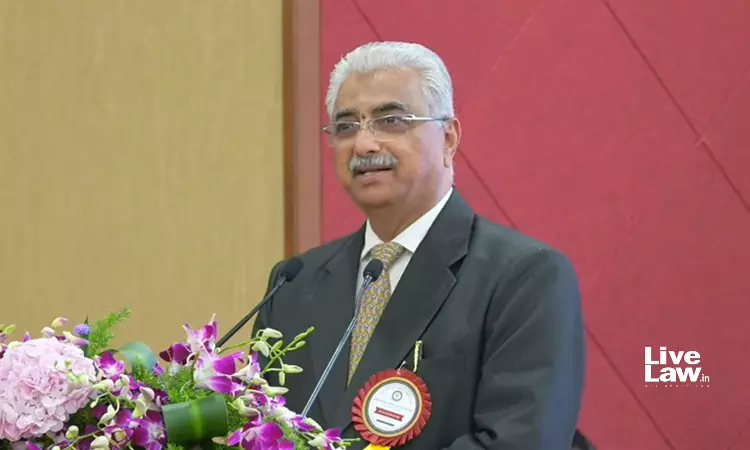
While addressing the two-day South Zone Consultation of the Stock Witnesses Reforms Committee, Justice Aravind Kumar of the Supreme Court cautioned that a witness is not a procedural ornament or a mere signature at the foot of a seizure memo, but “a human source of firsthand knowledge.” Among the other deliberations, he also laid down a set of six principles and four practical tests for the...
This is a premium content
Available exclusively to
Our subscribers
Subscribe Premium 
INR 1099+GST
Your support helps us to bring you more content at
an affordable subscription scheme !!!
All payment options available
While addressing the two-day South Zone Consultation of the Stock Witnesses Reforms Committee, Justice Aravind Kumar of the Supreme Court cautioned that a witness is not a procedural ornament or a mere signature at the foot of a seizure memo, but “a human source of firsthand knowledge.” Among the other deliberations, he also laid down a set of six principles and four practical tests for the Committee to consider while framing its recommendations on the issue of stock witnesses.
The Committee on 'Stock Witnesses Reform' was constituted by the Supreme Court as per the orders of the Supreme Court in Anwar Hussain v State of Madhya Pradesh.
On September 5, Justice Aravind Kumar inaugurated the Consultation session at the Karnataka Judicial Academy. The first day of the two-day-long session was presided over by Justice Vibhu Bakhru (Chief Justice, Karnataka High Court), and was opened by Justice Vivek Agarwal (Judge, Madhya Pradesh High Court and Chairman of the Committee). Other dignitaries present as the Guests of Honour included Dr. MA Saleem (DGIP of Police, Karnataka), and KV Sharat Chandra (ADGP and Principal Secretary, Home Department, Karnataka).
Starting the keynote address, Justice Kumar clarified the limits of his remarks, stating, “The proceedings which led to the constitution of this Committee remain subjudice before the Supreme Court. I shall, therefore, say nothing about the merits of the individual case. My remarks are confined to the larger systemic question entrusted to this consultative committee.”
He then began with a hypothetical scenario to frame the systematic issue. A search conducted late in the evening, to which a local shopkeeper is asked to stand as an independent witness and the seizure memo with his signature. Some years later, when the shopkeeper would enter the witness box, he would say, “I signed the paper but I did not see the cupboard when being opened”. Justice Kumar made a supposition that the video recording begins only after the alleged recovery already lies on the table. The court is then left with a “very basic” question, “what actually happened?”
He continued, “That question explains today's theme. A witness is not a procedural ornament and not merely a signature at the foot of a seizure memo. A witness is a human source of firsthand knowledge. The person's presence must be genuine. The source of the knowledge must be clear and the account must be capable of fair testing in court. Put simply, the credibility of the criminal process cannot rise above the integrity of the manner in which its facts are gathered.”
Referring to the Supreme Court's ruling in Anwar Hussain v State of Madhya Pradesh, Justice Kumar expressed concern that repeated use of the same witnesses may affect the fairness and impartiality of an investigation. In Anwar, the Court also drew attention to the casual manner in which a person may be named in an FIR and then carried into the charge sheet as a witness. “It called for a nationwide exercise to devise a common minimum procedure capable of immediate implementation. These three words common, minimum, and implementable should guide our work today,” he pressed.
On what does and does not amount to a stock witness, Justice Kumar gave another example: “A shopkeeper next to the police station may genuinely witness more than one search. A village officer or a local police servant may also be called on several occasions because the person is readily available. Mere repetition by itself does not establish wrongdoing. But if the same individual appears with unusual frequency in unrelated cases before different officers across different police stations, the system is entitled to ask why this person and how did this person come to the present each time.”
Justice Kumar shared a personal experience to illustrate why people resist becoming a witness. He recounted a couple who approached him after a theft had taken place at their home, and how police traced and recovered the stolen articles. Justice Kumar recalled the couple's reaction when the police officer asked them to appear as a “witness” to claim the stolen articles before the court. “The moment they said 'witness', those two persons (both husband and wife who are software engineers) said, “sorry, we do not want to come.” When Justice Kumar told them that they would not get the articles otherwise, the couple replied, “Sir, let us see. It is our luck, what to do now? But going to court as a 'witness', sorry sir, we cannot.” On this, he pressed on to create legal awareness in the mindset of the general public.
Justice Kumar referred to the precedents on the issue. “In Pritam Singh v State of Punjab, participation of recovery witnesses in several searches called for independent scrutiny which means it did not automatically exclude their evidence. In State of Punjab v Harbhajan Singh, prior appearance did not make the testimony inadmissible. Although they are justified with great caution, repetition is therefore a reason to verify, not a shortcut to either acceptance or rejection.” While extending the same reasoning to official witnesses, he said, “State (Government of NCT Delhi) v Sunil reminds us that trustworthy police testimony does not require ritual distrust. At the same time, Sahib Singh v State of Punjab shows that where independent persons were available and no real attempt was made to join them, omission may affect the weight of the official account. Hence, the purpose of reform is not to place every investigator under suspicion. It is to make an honest investigation demonstrably honest.”
To answer as to who is harmed when a witness is invented, routinely borrowed, or mechanically joined, he reiterated that the accused loses the protection of a fair investigation, as guaranteed by Article 21 of the Constitution.
He also acknowledged the practical burden on ordinary witnesses. “Imagine a daily-wage worker called for a morning search then summoned repeatedly to court only to fight the matter being adjourned. The person loses wages, prays for travel, waits without basic facilities and may also fear retaliation when the next officer seeks cooperation, reluctance is hardly surprising.”
Illustrating how hostile cross-examination can discourage even a professional witness, Justice Kumar recounted an incident when he was practicing. A senior orthopaedic surgeon, cross-examined by an insurance company's lawyer in a motor accident case, was asked, “I put it to you that you are not a doctor.” A senior doctor holding MBBS, MS, DNB, having practiced in Ireland for nine years, was taken aback by this. Justice Kumar recalled what the doctor said the moment he stepped down from the witness box, “I will never step into this building, I will never appear before any court, I will never give any disability certificate.” Justice Kumar expressed his concern over such attacks. He linked this to the findings of the Malimath Committee which had recorded the poor facilities, delayed allowances and repeated adjournments faced by witnesses, and recommended dignity, prompt reimbursement, protection, fewer unnecessary appearances of the witnesses. He emphasised that, “a system cannot make civic cooperation costly and then be surprised when citizens decline to cooperate.”
Turning to statutory safeguards and the new criminal laws, Justice Kumar outlined the sequence contemplated: “Independent and respectable inhabitants are called before a search, the search and seizure list is prepared, and signed in their presence. The occupier receives a copy. The process is audio-video recorded. The grounds and record of the investigative search reach the magistrate within the prescribed time and the police report identifies those who appear acquainted with facts.” He traced these safeguards in Sections 103, 105, 185, 193 of the Bharatiya Nagarik Suraksha Sanhita, 2023 (BNSS).
“This is not paperwork for paperwork's sake. Each step answers a practical question. Who was present? What was the place like before the search? What was discovered? How was it sealed? Who signed? Was a copy delivered? When did the Magistrate receive the record? If the file can answer these questions promptly, later controversy becomes easier to be resolved,” he continued.
On the role of technology, Justice Kumar cautioned against over-dependency, “technology is useful but not self-executive. Technology can strengthen integrity but it cannot manufacture it. A camera pointed at a ritual will only preserve the ritual. Would a recording that begins after the alleged contraband is already on the table answer the court's concern? Plainly, it would not.”
He said that in February this year, the Ministry of Home Affairs reported that e-sakshya was being used in 15,899 police stations across 35 states and union territories, which supports the capture, storage and retrieval of photographic and video evidence, and the recording of witness statements. It also includes e-summons, nyayshruti and an interoperable criminal justice system. “The task before us is to connect these capabilities to a uniform and legally meaningful workflow,” he emphasised.
Significantly, Justice Kumar placed six principles before the Committee which he said he presumed to be of some utility to deliberate upon:
One is to know the witness and explain his presence. “The record should capture verified identity and contact details, occupation, the reason for being at that location, the time and manner in which that person was joined, any known relationship with the parties or the investigating team, and prior appearances in unrelated cases, if known. A brief confirmation should be taken in a language understood by the witnesses. No signature should be obtained on an incomplete document,” he suggested.
Number two is to record honest effort, not artificial success. “Suppose an officer approaches three nearby shopkeepers and each refuses because of fear or business commitments. The answer is not to create the appearance of an independent witness. The record should say whom the officer approached, whether a return request was tendered, whether practicable and what response was received. An honestly explained absence of an independent witness is preferable to a fictitious appearance of one.”
Number three is to record the event, not merely its aftermath. “So far as practicable, recording should be continuous, timestamped, and securely uploaded without avoidable delay. The system should preserve the original, generate an integrity value, log access and retain audit trials.” He took the United Kingdom PACE Code B as a comparative example. “The lesson is not transplantation, it is a disciplined specificity,” he cautioned.
Number four is to treat recurrence as an audit trigger and not a verdict. “CCTNS or ICJS can confidentially flag unusual frequency across unrelated FIRs, Investigating officers or police stations. Such an alert should function like a smoke alarm. It calls for inspection. It does not pronounce guilt. A supervisor should seek and record an explanation,” he continued.
Fifthly, he recommended asking one simple question at each stage, “Can the investigating officer explain how the witness was found? Can the supervisor officer explain unusual recurrence or a break in recording? Can the prosecutor verify provenance and statutory compliance before presenting the final report? Can the court quickly see that the recording, seizure list, service of copies, sealing record and integrity data have been received?”
“Deliberate fabrication must invite timely departmental and where the law requires criminal consequences. An acquittal many years later is not an adequate accountability mechanism,” he continued.
Lastly, to protect and respect the genuine witnesses. He referred to Section 398 BNSS that requires every state to notify a witness protection scheme, which is built upon the witness protection scheme approved by the Supreme Court in Mahender Chawla v Union of India. “The protection must be accompanied by ordinary respect, prompt travel and daily allowances, safe waiting places, predictable scheduling, digital summons, the minimum necessary appearances and video conferencing where lawfully available for the genuine witness. Convenience is not a luxury. It is a part of the infrastructure of truth,” he pressed.
On the formulation of the Committee's recommendations, Justice Kumar said, “the common minimum procedure should remain genuinely minimum but it must also be meaningful. A one-page witness governance forum or a uniform digital data set may achieve more than an elaborate manual that cannot be followed during a night search in a remote area. It should work offline when connectivity fails and synchronized when it returns. It should be field tested, reviewed after a fixed period and improved with anonymized feedback from investigators, prosecutors, defence and trial courts.”
He proposed four tests to evaluate any proposal emerging from the consultation, “Can the investigating officer follow it on the scene? Can the witnesses understand what is being asked and why? Can the prosecutor verify compliance without reconstructing the file? Can the magistrate identify any gap at a glance? If the answer to all four is yes, the proposal is likely to be both practical and durable.”
Offering a definition of witness credibility as , “A credible witness is not a witness who invariably supports the prosecution. A credible witness is one whose connection with the event is genuine, whose account is obtained lawfully, whose circumstances are transparently recorded, and whose testimony can be fairly tested. A witness who later changes on account may still be genuine. A witness who repeats the official version perfectly may still require scrutiny. Credibility therefore is produced not by uniformity but by province, procedure, corroboration and candour,” Justice Kumar concluded the address.


