



- Home
- /
- Top Stories
- /
- 'Deep Societal Faultlines In India'...
'Deep Societal Faultlines In India' : Justice Bhuyan Cites Denial Of Home To Muslim Girl, Opposition To Dalits Making School Meals
Gursimran Kaur Bakshi
23 Feb 2026 5:09 PM IST
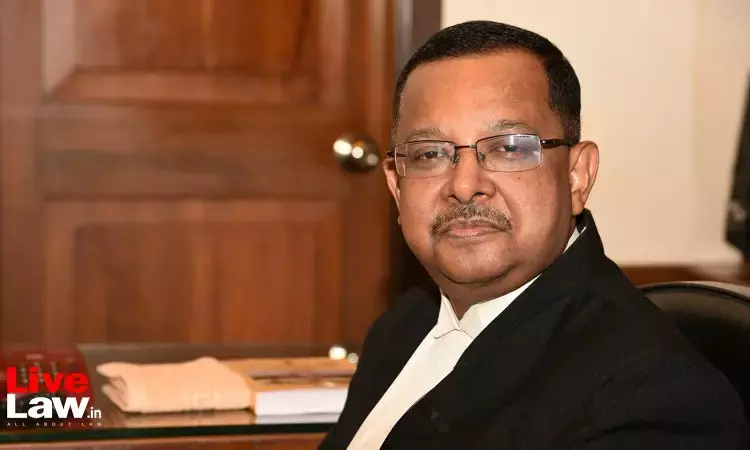
Justice Ujjal Bhuyan said that these examples showed how distant we are from the benchmark of constitutional morality even after 75 years.
Justice Ujjal Bhuyan of the Supreme Court recently said that while constitutional courts continue to advocate for constitutional morality, the reality suggests that our societal faultlines are deeply rooted even after 75 years of independence. He shared an example of how his daughter's friend was denied accommodation because of her religious identity. Another example he shared was how the...
This is a premium content
Available exclusively to
Our subscribers
Subscribe Premium 
INR 1099+GST
Your support helps us to bring you more content at
an affordable subscription scheme !!!
All payment options available
Justice Ujjal Bhuyan of the Supreme Court recently said that while constitutional courts continue to advocate for constitutional morality, the reality suggests that our societal faultlines are deeply rooted even after 75 years of independence.
He shared an example of how his daughter's friend was denied accommodation because of her religious identity. Another example he shared was how the parents refused to send their children to government schools because a Dalit woman cooked the mid-day meal.
Justice Bhuyan was speaking on the topic of 'Constitutional Morality And Role Of District Judiciary' at a seminar organised by the Telangana Judges Association and the Telangana State Judicial Academy.
"My daughter's friend is doing her PhD programme in a private university at Noida. So, she was looking for an accommodation. She approached a landlady who was running a working women's hostel in her building in South Delhi. The landlady asked her as to what her name was. When she told her name, which was quite ambivalent, the landlady queried further and asked her about her surname and when she said that, it revealed her Muslim identity. The landlady then told her quite bluntly that accommodation was not available and that she could search for some other place."
Explaining the concept of constitutional morality, Justice Bhuyan said that it is a benchmark which the Constitution expects all of us to adhere to. But the morality we practice at home or at the community level is often at variance with what the Constitution expects us to practice. It is in this context that he shared the above two examples in order to bring out the striking variance.
Another example he said was from Odisha:
"The Government is having a programme of mid-day meal in schools which has encouraged students particularly in the rural areas to go to school and avail basic education. In this context, the Government has employed several women, mostly from anganwadi centres, for cooking the mid-day meal. A hue and cry was raised by some of the parents, that too quite aggressively, that their children would not consume food prepared by dalit women."
Justice Bhuyan said that these examples show "just the tip of the iceberg revealing how deep the societal faultlines are." "Infact, this is a mirror to us showing how distant we still are from the benchmark of constitutional morality even after 75 years into our republic."
Justice Bhuyan also traced how constitutional morality evolved from Naz Foundation v UOI to Navtej Singh Johar. In Naz Foundation, the Delhi High Court had read down Section 377 of the Indian Penal Code to the extent that it criminalised homosexual relationships. The High Court had said that popular morality cannot be the basis to restrict Article 21.
This was then overturned in Suresh Kumar Kaushal v Naz Foundation by the Supreme Court. Eventually, in Navtej Singh Johar, the constitution bench of the Supreme Court upheld the principles of constitutionality and morality as guiding principles to achieve transformative constitutionalism.
Trial Judges must be respected
Justice Bhuyan also spoke about the dispensation of justice at the district level. He reminded that for most litigants, Trial Courts are the first step to justice, and it is for the litigant that the judicial system exists. Therefore, due importance must be given in recording of evidence, hearing of bail matters, etc.
At the same time, he stressed that the dignity of the Trial Judges must be acknowledged with due respect, as it is upon the factual substrate laid down by them that the Appellate Courts can refine and clarify the law. He reminded that most of the finest judges, who made their remark, began their career in the district judiciary: Justice HK Khanna, Justice A.M. Ahmadi, Justice Fathima Beevi, etc.
"The High Court is the mentor of the trial courts and, if necessary, has to do the hand-holding. The supervisory jurisdiction of the High Court under Article 227 of the Constitution is designed as a shield, not as a sword. It exists only to correct grave jurisdictional errors, not to recast factual appreciation or to substitute the discretion of the trial judge with that of the High Court."
How minimum three years of practice will affect women judicial aspirants for time to tell
Lastly, Justice Bhuyan proudly stated that Telangana has taken the lead in the country in improving the gender representation within the judiciary. "Out of the sanctioned strength of 655 in the Telangana Judicial Service, 478 officers are at present working out of which 283 are women which is well above the 50 percent mark," he said.
He added that Telangana equally has a great representation of the marginalised community. 76 judicial officers across the three cadre belongs to the Scheduled Caste, 46 belong to the Scheduled Tribes, and 25 belong to the minority community. More recently, five judicial officers with disabilities have also become a part of the system pursuant to the Supreme Court's decision in In Re: Recruitment of Visually Impaired in Judicial Services(2025).
"While language is also a barrier, constitutional or legal ignorance or illiteracy has added to it. That apart, most people cannot and do not relate to the judiciary as because they feel that they are not the stakeholders or that they have no say in the justice dispensation system. It is in this context that greater representation of women and persons from the marginalized communities as well as persons with disabilities in the judiciary is crucial. This will make the justice system more open and bring it nearer to the people. When I am speaking of adequate representation to all sections of the society, I will be more than happy to see a sexual minority or a transgender person serving the cause of justice."
"The judiciary must be an inclusive institution and must represent the diversity of India. It must have all the colours of the rainbow and in turn become a rainbow institution. It should no longer remain the preserve or bastion of one gender or certain dominant communities."
Justice Bhuyan then addressed that while the three years of practice as an advocate to apply for an entry-level judicial post in judiciary would allow practical exposure, how this would affect women is something that time will tell. It may be recalled that the Supreme Court last year restored this practice.
"The initial years at the Bar are both demanding and financially uncertain, particularly for those who do not come from established backgrounds or those who come from the mofussil. It may also have implications forwomen judicial aspirants especially those hailing from rural areas and small towns, who may face career interruptions due to societal constraints or family pressure for marriage. Therefore, what impact the three years' experience requirement may have on women aspirants, is something which we need to carefully observe; whether it will impact the significant and welcoming entry of women into judicial service is something which only future will tell.," Justice Bhuyan concluded.
Gursimran Kaur Bakshi
Gursimran is the Principal Correspondent with LiveLaw for the Supreme Court. She can be reached out at: simrankaurbakshi@livelaw.in

