Justice Yashwant Varma Case: Supreme Court Hearing- Live Updates
LIVELAW NEWS NETWORK
30 July 2025 10:23 AM IST
Live Updates
- 30 July 2025 11:57 AM IST
J Datta: this is 141 permitting inhouse procedure in 1999 for the purpose of finding out what action can be taken in certain circumstances
Sibal: it is to fill the yawning gap
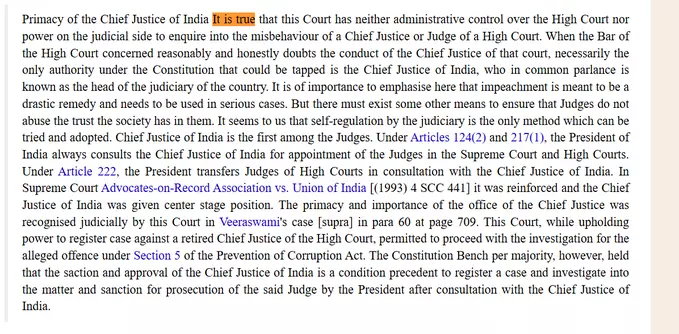
J Datta: the yawning gap is CJI is not a postoffice, if on misbehaviour it is found that the demeanor is so serious the CJI can. We would have kept mum and declared judgment but that would not be fair
Sibal: Ravichandran I have placed
J Datta: in Ravichandran, the court said despite the judge of Bombay HC had demitted office. It was not done because there was an absence of legal sanction.

- 30 July 2025 11:49 AM IST
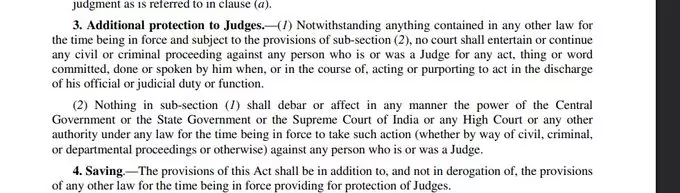
Sibal: reading 3(2) of Judges Protection Act- this power is with Central or State government. Can central gov dismiss a judge?
J Datta: no, it has to be under a law if central government is empowered then they would. let's leave central or state gov
Sibal: you cant tell me to not read when we are interpretating the law
J Datta: if there is a law and if it violates Article 124, we would test it
- 30 July 2025 11:45 AM IST
J Datta: we would have expected if we put question on removal, you would have referred to the judges protection act
Sibal: i am not saying no,
J Datta: we are not pinning down as to why you come late, as per 3.2, you know the answer about CJI recommendation
Sibal: tapes were released
J Datta: according to you, the part you are challenging, you could have challenged earlier. Are you saying the inhouse committing recommending the removal is outside the jurisdiciton of constitutional court?
Sibal: how could I have come? I dont know what the committee will hold
- 30 July 2025 11:43 AM IST
J Datta: allegation against addtional judge, in house procedure kicks in and there are evidence and committee sasy there are evidence
Sibal: and he's not confirmed
J Datta: yes, the [in house] can be put in use. If judges are given such power that they cant be dragged in courts...
- 30 July 2025 11:43 AM IST
Sibal: let's take criminal, sanction will have to be given
J Datta: if somebody proposes to register FIR against judge, he has to approach the Supreme Court
Sibal: let's take departmental
J Datta: that can't be there and then otherwise means non-punitive. Inhouse procedure is put in place by judgments and its the law of the land.
- 30 July 2025 11:41 AM IST
J Datta: "cant be questioned in any court of law". Why is inhouse procedure cant be recommended otherwise?
Sibal: once you recommend removal
J Datta: if we were to say, Iyer, Indira Jaising and X is correctly decided, that's the end of the matter. You have to accept the ruling unless you file review. This gives the power to SC to take action by way of civil, criminal and departmental. How do you get over 3(2)?