



- Home
- /
- Top Stories
- /
- 'Law Must Travel To Soldier' : CJI...
'Law Must Travel To Soldier' : CJI Surya Kant Addresses Army At Leh, Highlights Free Legal Aid Scheme For Defence Families
LIVELAW NEWS NETWORK
30 March 2026 10:36 AM IST
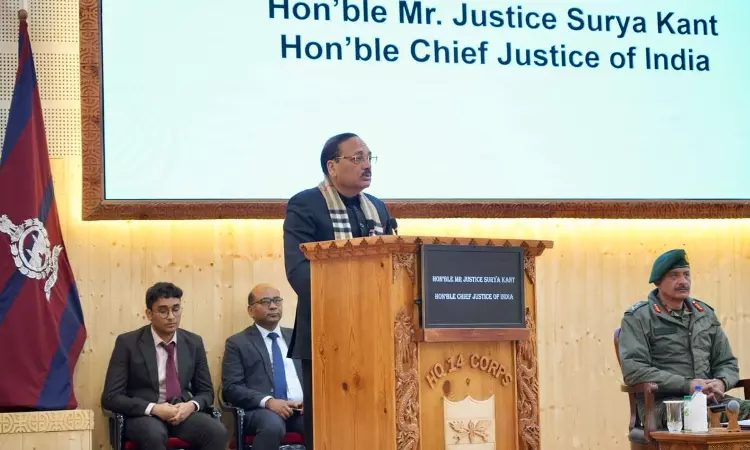
'India sleeps peacefully because someone in uniform, somewhere in conditions far harsher than words can describe, has remained vigilant,' CJI said.
In a historic first, the Chief Justice of India, Justice Surya Kant, addressed Army personnel at the Leh military camp in Ladakh, emphasising that access to justice must reach soldiers stationed in remote and operationally sensitive areas. Underscoring the judiciary's commitment to defence personnel and their families, the Chief Justice said that "the law must travel to the soldier, because...
This is a premium content
Available exclusively to
Our subscribers
Subscribe Premium 
INR 1099+GST
Your support helps us to bring you more content at
an affordable subscription scheme !!!
All payment options available
In a historic first, the Chief Justice of India, Justice Surya Kant, addressed Army personnel at the Leh military camp in Ladakh, emphasising that access to justice must reach soldiers stationed in remote and operationally sensitive areas. Underscoring the judiciary's commitment to defence personnel and their families, the Chief Justice said that "the law must travel to the soldier, because the soldier cannot always travel to the law."
This marks the first time a sitting Chief Justice of India has delivered an address to armed forces personnel from the Leh base camp.
Addressing the gathering, Chief Justice Surya Kant stressed that soldiers often face legal and personal challenges while serving in distant and inhospitable terrains, making physical access to courts and legal services difficult. He observed that while a civilian in a city may know where courts and lawyers are located, a soldier posted in a high-altitude region cannot simply leave duty to pursue litigation or manage disputes back home.
Framing the issue as a constitutional obligation rather than a matter of benevolence, the Chief Justice referred to Article 39A of the Constitution, stating that legal aid is not charity but a commitment to ensure that access to justice does not depend on wealth, geography, or social position.
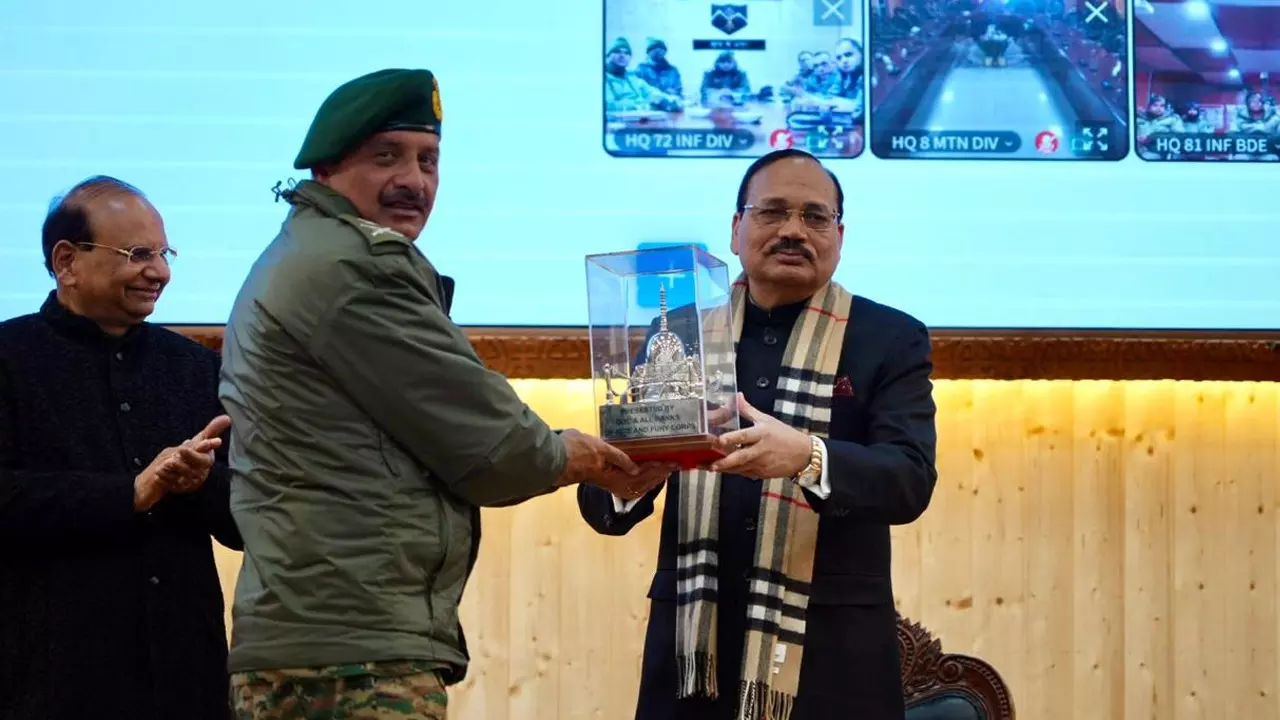
Highlighting institutional measures taken to address this concern, Chief Justice Surya Kant spoke about the Veer Parivar Sahayata Yojana, a scheme launched last year during his tenure as Executive Chairman of the National Legal Services Authority to provide free legal aid, assistance and support services to serving defence personnel, ex-servicemen, their dependent family members, and members of paramilitary forces.
Providing details on the scheme's progress, the Chief Justice stated that as of December 31, 2025, nearly 14,929 beneficiaries had been assisted under the programme. He noted that a nationwide network of 438 legal services clinics had been established, including clinics across all Rajya Sainik Boards and hundreds of district-level Sainik Boards, supported by a workforce of more than 1,100 legal aid personnel. Of the 1,123 members of the legal aid workforce, 378 are drawn from defence backgrounds, including 299 para-legal volunteers
According to the Chief Justice, the legal issues addressed under the scheme include property disputes, pension and welfare entitlements, matrimonial matters, school admissions and claims by senior citizen parents of defence personnel.
Chief Justice Surya Kant also emphasised that the work of the judiciary and the armed forces, though different in nature, is united in purpose. He observed that the Constitution's promises of liberty, dignity and justice can survive only when the nation's sovereignty and peace are secured by the vigilance and sacrifice of its soldiers.
Concluding his address, the Chief Justice assured the armed forces that while they guard the nation's frontiers, it is the duty of national institutions to safeguard their rights and interests, reiterating the judiciary's resolve to make justice accessible to every member of the defence community.
"We know also that India sleeps peacefully many nights because someone in uniform, somewhere in conditions far harsher than these words can describe, has remained earnestly vigilant.
I, therefore, conclude with this assurance. You guard the nation at her frontiers. It is the duty of the nation's institutions to ensure that they guard all your interests arduously. For your courage, for your restraint, for your endurance in these heights, and for the quiet fidelity with which you serve the nation every day, we, the Indian judiciary, offer you our unshakeable reverence and vow to make Justice reach your doorstep."
Tags


