



- Home
- /
- Top Stories
- /
- Lawyers Must Also Bring To Court's...
Lawyers Must Also Bring To Court's Notice Judgments Which Do Not Support Their Case : Supreme Court
LIVELAW NEWS NETWORK
16 May 2026 7:55 PM IST
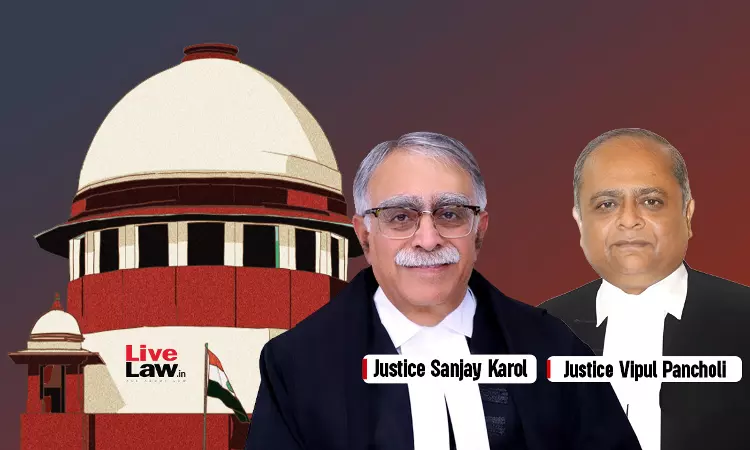
In a significant observation on professional ethics and judicial discipline, the Supreme Court has said that lawyers have a duty to bring to the court's notice not only precedents that support their case but also those that go against them, stressing that both the Bar and the Bench share responsibility for ensuring consistency in the justice delivery system. A bench of Justice Sanjay Karol...
This is a premium content
Available exclusively to
Our subscribers
Subscribe Premium 
INR 1099+GST
Your support helps us to bring you more content at
an affordable subscription scheme !!!
All payment options available
In a significant observation on professional ethics and judicial discipline, the Supreme Court has said that lawyers have a duty to bring to the court's notice not only precedents that support their case but also those that go against them, stressing that both the Bar and the Bench share responsibility for ensuring consistency in the justice delivery system.
A bench of Justice Sanjay Karol and Justice Vipul M. Pancholi made the observation while deciding a case on whether Mediclaim reimbursements can be deducted from compensation awarded under the Motor Vehicles Act.
Expressing concern over contradictory rulings by different benches of the same High Courts on the same legal issue, the Court said such inconsistencies create judicial uncertainty, complicate litigation, and burden the justice system.
“When such inconsistencies are left unaddressed, it leads to various problems, primary among them being that it leads to judicial inconsistency and uncertainty,” the Court observed.
Addressing the role of advocates, the Court said counsel appearing for parties are expected to make every legitimate effort to secure a favourable outcome for their clients, but this obligation must be balanced with ethical duties owed to the court.
“It is this duty towards the Court which requires them to bring to the Court's notice judgments both that aid their case and also those that do not,” the bench said.
The Court said a lawyer's command over the law and facts enables them to distinguish apparently adverse precedents while still effectively representing their client.
The bench noted that this responsibility has become even more significant in modern times because courts are “polyvocal,” with numerous judgments and orders being delivered daily across multiple jurisdictions, making it possible that the court hearing a matter may not be aware of the latest decisions.
“They must disclose the same to the Court ensuring consistency,” the judgment said.
At the same time, the Supreme Court clarified that the burden cannot rest solely on advocates.
“The Court itself has an independent tri-fold duty, to apply correct law even if the counsel does not cite the same, ensure consistency with precedent, and avoid per incuriam decisions,” the bench observed.
The Court acknowledged the practical pressures faced by judges, noting that courts may hear nearly a hundred matters a day across varied areas of law while also dictating orders and writing judgments.
Even so, it emphasised that both judges and lawyers are constituents of the justice delivery system and must act with a sense of service to minimise uncertainty in law and reduce pendency.
The judgment stated :
"When considering these issues, the roles both the Bar and the Bench must be addressed. Counsel appearing in Court to plead the case of a particular party making all effort possible, while balancing ethics and their duty towards the Court, to secure a victory for their clients. It is this duty towards the Court which requires them to bring to the Court's notice judgments both that aid their case and also those that do not. It is here that the counsel's awareness of law and grasp on facts are their greatest assets, enabling them to distinguish judgments that may seemingly be against them and still secure a favourable order. This duty is all the more important in the present day because all the Courts are polyvocal.
Tens of orders and judgments are pronounced every day across a range of issues and so, the Court before which they are appearing may not be aware of the latest pronouncement. They must disclose the same to the Court ensuring consistency. That being so, the entire burden cannot be placed only on counsel. The Court itself has an independent tri-fold duty, to apply correct law even if the counsel does not cite the same, ensure consistency with precedent, and avoid per incuriam decisions. While this duty is one part of reality, a Court hearing nearly hundred matters a day and in some cases across a variety of laws and jurisdictions, having to dictate daily orders, write judgments and so much more, is the other part.
So, in essence, both the Bar and the Bench are responsible for minimising the problems that arise in the face of inconsistent judicial opinion. They are both constituents of the justice delivery system, and all actions must be guided by a sense of service to the system, further facilitating reduction of pendency."
The observations came in the context of the Court noticing conflicting decisions from several High Courts, and even conflicting views within the same High Court, on whether medical insurance reimbursements should be deducted from motor accident compensation claims.
Settling the issue, the Supreme Court held that Mediclaim reimbursements are not deductible from compensation awarded under the Motor Vehicles Act.
Case : New India Assurance Company v Dolly Satish Gandhi and another
Citation : 2026 LiveLaw (SC) 504


