



- Home
- /
- Top Stories
- /
- Matters Perceived As More Important...
Matters Perceived As More Important Taking Up Entire Court Time, Smaller Litigants Left Unheard : CJI Surya Kant
Anmol Kaur Bawa
11 Dec 2025 6:06 PM IST
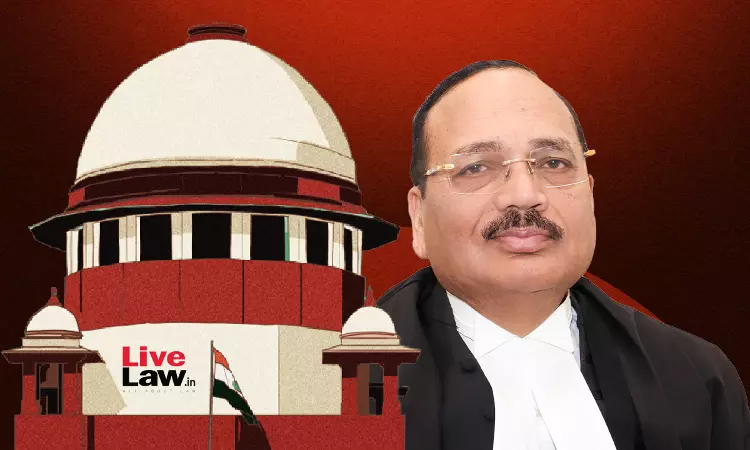
CJI said that he wanted to ensure equitalbe distribution of Court time for all matters.
The Chief Justice of India, Surya Kant, today said he wanted to ensure an “equitable distribution” of hearing time in the Supreme Court, stressing that cases "perceived to be very important" should not consume the entire day and leave little or no time for other matters on the list.Before the hearing of the cases related to the electoral rolls' Special Intensive Revision (SIR), which...
This is a premium content
Available exclusively to
Our subscribers
Subscribe Premium 
INR 1099+GST
Your support helps us to bring you more content at
an affordable subscription scheme !!!
All payment options available
The Chief Justice of India, Surya Kant, today said he wanted to ensure an “equitable distribution” of hearing time in the Supreme Court, stressing that cases "perceived to be very important" should not consume the entire day and leave little or no time for other matters on the list.
Before the hearing of the cases related to the electoral rolls' Special Intensive Revision (SIR), which the Court had been hearing for the last many days, CJI said that when big matters take the whole day, small litigants seeking motor accident compensation or bail or injunction are left out.
"What is happening is that some matters are percieved to be very important, the entire court time is taken; From a poor person who is fighting for MACT claim, to bail, or fighting for some small injuction issue, they remain seated on the last row and in the end at 4 o'clock, they leave the court, disappointed, not knowing when will the matter will be listed next," CJI said.
CJI Surya Kant made this statement when other matters, which were not taken up due to the SIR hearing, were mentioning by lawyers seeking dates.
The Chief Justice also said that it was crucial that counsel in bigger matters give an undertaking to limit themselves to an allocated time.
"I want equitable distribution and apportionment of time for all matters in this Court. That will only happen, when you give it in writing a commitment, not only to me but to every bench that you will take this much time to argue. So that bench is in a position to determine its own merits and then can allocate the case accordingly"
At this stage, Senior Advocate V. Giri referred to a recent suggestion by Justice B. V. Nagarathna at a public event, where she proposed that for constitutional cases, counsel should file detailed written submissions in advance and give an undertaking that only a fixed time, such as thirty minutes or one hour, would be required for oral submissions.
The CJI further said the Court is considering steps to ensure that adjournments are not sought in matters that have reached the stage of final disposal or have been listed for regular hearing. He recounted an instance where a man died on a railway track and his family struggled for twenty-three years to receive compensation. By the time the Supreme Court granted relief, the whereabouts of the children were unknown. “Look at the whole process. After losing faith in the system, they disappeared,” the CJI noted, adding that the children could finally be traced only due to the efforts of a young lawyer, Advocate Fauzia Shakil, working pro bono.
After these observations, the bench decided to first take up the smaller matters and then proceed with the hearing on the SIR petitions.

Anmol Kaur Bawa
Reporter

