



- Home
- /
- Top Stories
- /
- Must Ponder Why India Not Preferred...
Must Ponder Why India Not Preferred Destination For International Arbitration: CJI Surya Kant
LIVELAW NEWS NETWORK
1 March 2026 3:01 PM IST
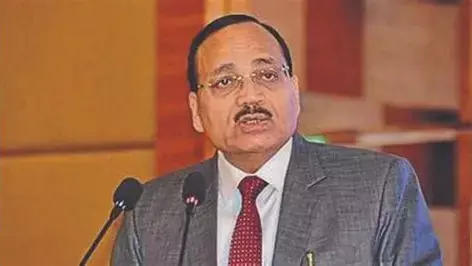
The CJI also noted that institutional arbitration occupies only a small space in the country.
Chief Justice of India Surya Kant said that India must seriously reflect on why it continues to be a less preferred destination for international arbitration, despite significant legislative and judicial reforms aimed at strengthening the arbitration ecosystem.Speaking at the inauguration of the new building of the Gujarat High Court Arbitration Centre and the inaugural session of a...
This is a premium content
Available exclusively to
Our subscribers
Subscribe Premium 
INR 1099+GST
Your support helps us to bring you more content at
an affordable subscription scheme !!!
All payment options available
Chief Justice of India Surya Kant said that India must seriously reflect on why it continues to be a less preferred destination for international arbitration, despite significant legislative and judicial reforms aimed at strengthening the arbitration ecosystem.
Speaking at the inauguration of the new building of the Gujarat High Court Arbitration Centre and the inaugural session of a two-day conference on “Institutional Arbitration at Crossroads: Challenges and Way Forward”, the Chief Justice observed that although India's arbitration framework has matured considerably, international arbitration disputes involving Indian parties continue to be resolved in foreign jurisdictions.
“Our international arbitration disputes have their preferred destinations outside India,” he said, adding that the real issue is whether Indian institutions inspire enough confidence to become the preferred choice for dispute resolution.
“The question we must confront is not whether arbitration is viable; it is whether our institutions inspire sufficient trust to become the most preferred choice,” he said.
Need To Build Institutional Trust
The Chief Justice emphasised that trust remains the foremost challenge for institutional arbitration in India. He said arbitration can succeed only if users have confidence in the neutrality of arbitrator appointments, procedural integrity and enforceability of awards.
According to him, such trust cannot be built merely through statutory rules but must be earned through consistent and transparent institutional practices over time.
He noted that arbitration institutions in India must introspect whether they have earned such confidence fully and what additional steps are needed to strengthen credibility.
Institutional Arbitration Still Limited
The Chief Justice observed that institutional arbitration in India occupies a smaller space than it should, considering the scale of commercial disputes generated in the country.
A large number of disputes, he noted, still proceed through ad hoc arbitration or traditional court litigation because institutions have not sufficiently demonstrated the value they add.
He said expansion of institutional capacity in terms of infrastructure, empanelled arbitrators, case management systems and administrative competence is essential for the growth of arbitration in India.
CJI Surya Kant stressed that arbitration must be treated as a specialised discipline requiring not only legal expertise but also case management skills and understanding of cross-border commercial realities.
He said India must invest in systematic training of arbitrators and development of professional arbitral administrators. Without such investment, he cautioned, the growth in the number of institutions may outpace improvement in quality.
Describing institutional arbitration in India as being “at the crossroads”, the Chief Justice said the country must evaluate itself against global arbitral standards and the legitimate expectations of parties who choose arbitration as a faster and more efficient alternative to litigation.
He noted that legislative amendments to the Arbitration and Conciliation Act and judicial pronouncements have strengthened party autonomy, promoted neutrality in arbitrator appointments and encouraged minimal judicial intervention. However, these reforms alone are not sufficient to establish India as a leading arbitration hub.
The Chief Justice also inaugurated the new state-of-the-art building of the Gujarat High Court Arbitration Centre, stating that physical and digital infrastructure plays a crucial role in building institutional credibility.
He said a purpose-built arbitration facility signals seriousness and professionalism, and assures parties that their disputes will be handled with procedural rigour and confidentiality.
The Chief Justice also noted the launch of the redesigned website and newsletter of the Arbitration Centre, observing that digital infrastructure such as secure online filing, virtual hearings and real-time access to information has become foundational to modern arbitration systems.
He expressed hope that the new facility and the conference deliberations would contribute to building a stronger and more trusted system of institutional arbitration in India.


