



- Home
- /
- Top Stories
- /
- NDPS | Supreme Court Issues...
NDPS | Supreme Court Issues Directions To Curb Fake Sureties In Foreigners' Bail In Drug Cases
Amisha Shrivastava
17 Aug 2026 9:24 PM IST
The Court also issued slew of directions to ensure that foreigners granted bail in NDPS cases remain traceable.
The Supreme Court today issued a set of directions governing the grant of bail to foreign nationals accused in cases involving commercial quantities of narcotic drugs under the Narcotic Drugs and Psychotropic Substances Act, 1985 (NDPS Act).A bench of Justice Sanjay Karol and Justice Augustine George Masih issued the directions while cancelling the bail granted to a Nigerian national,...
This is a premium content
Available exclusively to
Our subscribers
Subscribe Premium 
INR 1099+GST
Your support helps us to bring you more content at
an affordable subscription scheme !!!
All payment options available
The Supreme Court today issued a set of directions governing the grant of bail to foreign nationals accused in cases involving commercial quantities of narcotic drugs under the Narcotic Drugs and Psychotropic Substances Act, 1985 (NDPS Act).
A bench of Justice Sanjay Karol and Justice Augustine George Masih issued the directions while cancelling the bail granted to a Nigerian national, one Chidiebere Kingsley Nawchara, who was accused in a case involving around 5 kg of heroin.
The case assumed wider significance after the Court discovered that the surety furnished for Nawchara appeared to be fictitious. Investigations found that the address given by the surety did not exist, the employer denied ever employing him and the bank account details furnished in the surety bond could not be verified. The Court was also informed that in at least 38 cases investigated by the Narcotics Control Bureau and nine cases investigated by the Directorate of Revenue Intelligence, foreign nationals, particularly from Nigeria and Nepal,had absconded after furnishing suspected fake sureties.
Concerned with the situation, the Court undertook a comprehensive examination of the functioning of the bail-surety system. It noted that the problem of impersonation and fake sureties appeared to be rampant in some States and said the issue required a comprehensive examination.
The Court exercised its power under Article 142 of the Constitution after finding that the existing processes for verification of sureties lacked uniformity and had failed in the case before it.
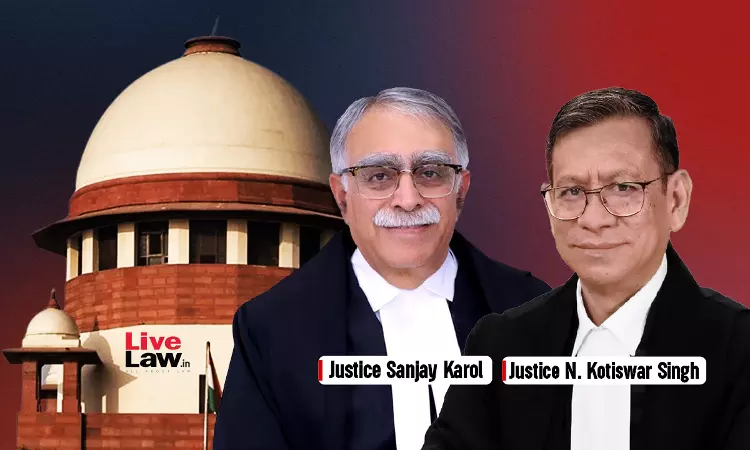
The Court passed the following directions –
- The foreign national's passport to be deposited with the jurisdictional court. The court may also restrict the accused from travelling outside India without its prior permission.
- A foreign national released on bail must register with the Foreigners Regional Registration Office (FRRO) within one week of release. The accused must inform the investigating officer and the concerned court in writing that the registration has been completed. The Court directed the FRRO, in consultation with the relevant government departments, to create and implement a portal for this registration process.
- A foreign national accused must furnish two sureties for the same amount to secure bail. However, if the court is satisfied that, despite sufficient efforts, it is difficult or impossible for the accused to secure two sureties, it may relax this requirement through a written order giving reasons.
- The verification of sureties must be completed within three days in every case. The verification report must be placed before the Trial Court before the accused is released. If the three-day timeline is not followed, the reasons must be recorded and brought to the notice of the concerned court.
- The residential address and other contact details of the foreign national in India must be physically re-verified within three days of the bail order and before the accused is released, even if the same details had already been verified during the investigation.
- The accused must file an affidavit before the concerned court disclosing the source of income or funds in India and details of all bank accounts, if any, in the country. The investigating officer must also inform the embassy of the accused's country of origin in writing about the accused's involvement in the alleged crime.
- The Ministry of Law and Justice and the National Informatics Centre (NIC) to create a centralised database containing particulars of each accused and each person standing as surety for a foreign national accused in an NDPS case.
- Where a surety who was purportedly verified is subsequently found to be fake, all officials involved in the verification process, including police, court and revenue officials, must face a departmental inquiry for dereliction of duty.
- The Ministry of Home Affairs, Government of India, and its counterparts in the States to issue necessary guidelines for proceeding against such officials.
- When a person stands as surety for a foreign national accused, a lien or charge equal to the amount of the surety bond must be created on the surety's property, including immovable property. If the bail conditions are violated, the concerned court may, depending on the facts, direct realisation of the lien.
- All High Courts to take steps to create digital portals for speedy verification and authentication of property and financial documents.
- An additional Form 47A, a new and detailed bail-bond and surety form for foreign nationals in commercial-quantity NDPS cases be inserted after Form 47 of the Bharatiya Nagarik Suraksha Sanhita, 2023 (BNSS).
The Case
Nawchara was arrested on March 16, 2023 after 4,935 grams of heroin was recovered from another person at the Chhatrapati Shivaji Maharaj International Airport in Mumbai, allegedly meant to be delivered to Nawchara. The investigation led to Nawchara's arrest and a chargesheet was filed on September 6, 2023.
The Special NDPS Court rejected his bail application on September 12, 2024. The Bombay High Court subsequently granted him bail on May 5, 2025, relying on the absence of recovery from him and his prolonged incarceration of more than two years.
Reversing the High Court's decision, the Supreme Court found that the High Court had not adequately considered the statutory requirements governing bail under Section 37 of the NDPS Act or his previous conviction.
The Supreme Court noted that Nawchara had been convicted in an earlier NDPS case. It observed that Section 31A of the NDPS Act (enhanced punishment for repeat offenders) applies in this case.
The Court further noted that it had stayed the operation of the bail order on September 19, 2025 and directed the authorities to arrest Nawchara. However, despite a Look Out Notice and other steps, he could not be arrested. The Court held that he had “jumped the bail” and consequently treated the appeal as a proceeding for cancellation of bail and cancelled the bail granted by the Bombay High Court.
The issue of sureties assumed significance after authorities attempted to verify the sureties furnished for Nawchara and found them to be fake.
The Supreme Court had earlier been informed that, in at least 38 cases investigated by the Narcotics Control Bureau and nine cases investigated by the Directorate of Revenue Intelligence, foreign nationals, particularly from Nigeria and Nepal, had absconded after furnishing sureties that were suspected to be fake.
In Nawchara's case, the DRI found that the address furnished by one surety was non-existent. The alleged employer also stated that no person by that name had ever been employed there. The DRI further found that the bank account details furnished by the surety did not exist in his name and the customer ID mentioned in the surety bond belonged to another customer of a different branch.
The Supreme Court opined that these circumstances showed that the ordinary processes of surety verification may not be sufficient in cases involving foreign offenders. It held that the lack of uniformity across jurisdictions justified the exercise of its powers under Article 142.
The Court clarified that its discussion and directions were confined to foreign nationals involved in cases concerning commercial quantities of contraband under the NDPS Act.
The Court placed on record its appreciation for Additional Solicitor General SV Raju, Senior Advocate Sidharth Luthra & AOR Sana Hashmi [amici curiae], and Senior Advocate Shadan Farasat for their suggestions.
Case Title: Union of India v. Chidiebere Kingsley Nawchara & Ors.
Citation: 2026 LiveLaw (SC) 817
Case No.: SLP (Crl.) No. 14185 of 2025
Tags

Amisha Shrivastava
Amisha Shrivastava is a Senior Correspondent with LiveLaw, covering the Supreme Court of India. She can be reached at amisha@livelaw.in

