



- Home
- /
- Top Stories
- /
- NLSIU Students' Group Postpones...
NLSIU Students' Group Postpones Screening Of Umar Khalid Documentary, Denies Bowing To Any Pressure
Sebin James
13 Sept 2026 9:36 PM IST
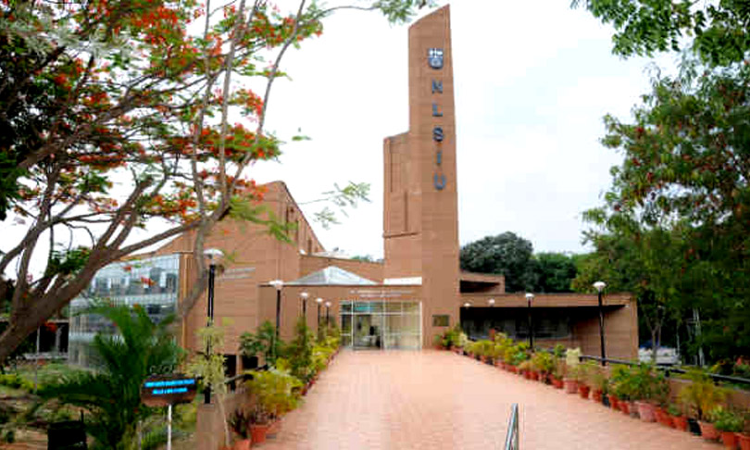
The ABVP had written to the NSLIU VC opposing the screening of the documentary,
The Law and Society Committee (LawSoc) of the National Law School of India University (NLSIU) has postponed the screening of the documentary 'Prisoner No. 626710 is Present'- a documentary by Lalit Vachani about Umar Khalid's incarceration. The event was scheduled to take place on September 14 at the University, followed by a discussion.In a late update tonight, LawSoc issued an email to...
This is a premium content
Available exclusively to
Our subscribers
Subscribe Premium 
INR 1099+GST
Your support helps us to bring you more content at
an affordable subscription scheme !!!
All payment options available
The Law and Society Committee (LawSoc) of the National Law School of India University (NLSIU) has postponed the screening of the documentary 'Prisoner No. 626710 is Present'- a documentary by Lalit Vachani about Umar Khalid's incarceration. The event was scheduled to take place on September 14 at the University, followed by a discussion.
In a late update tonight, LawSoc issued an email to the students announcing the postponement of the event, citing 'logistical and security considerations', though it has clarified that the event would be conducted this trimester itself.
LawSoc further clarified that it is not backing out of the event due to 'pressure from anyone'. The postponement is a measure to ensure that the screening is held in a 'safe and responsible manner', the email added.
The committee confirmed that they are working to put necessary arrangements in place, 'without compromising the well-being of the student community'.
The LawSoc also encouraged students interested in constitutional rights, criminal law, civil liberties, and institutional freedom to join the rescheduled event.
For context, according to the LawSoc's mail addressed to the students initially, the screening was planned to mark 'Political Prisoners Day' observed on September 13.
According to the mail, the committee intended to use the screening to foster discussions on broader legal questions such as pre-trial detention, bail, dissent, political incarceration, and the relationship between criminal law and democratic freedoms. The mail by the organiser had also noted that September marked six years of Umar Khalid's imprisonment.
The proposed event had drawn opposition from the Akhil Bharatiya Vidyarthi Parishad (ABVP), which, in a letter sent yesterday to the Vice Chancellor of NLSIU, urged the administration to prevent the misuse of academic spaces for 'political or ideological propaganda'. ABVP further demanded that the Vice Chancellor deny permission for the screening, in order to protect the university's academic environment from political polarization.
Tags
Sebin James
Sebin James is a Correspondent with LiveLaw, covering the Karnataka High Court

