



- Home
- /
- Top Stories
- /
- From Aruna Shanbaug To Harish Rana:...
From Aruna Shanbaug To Harish Rana: How India's Passive Euthanasia Law Evolved
Akshita Saxena
12 March 2026 8:36 PM IST
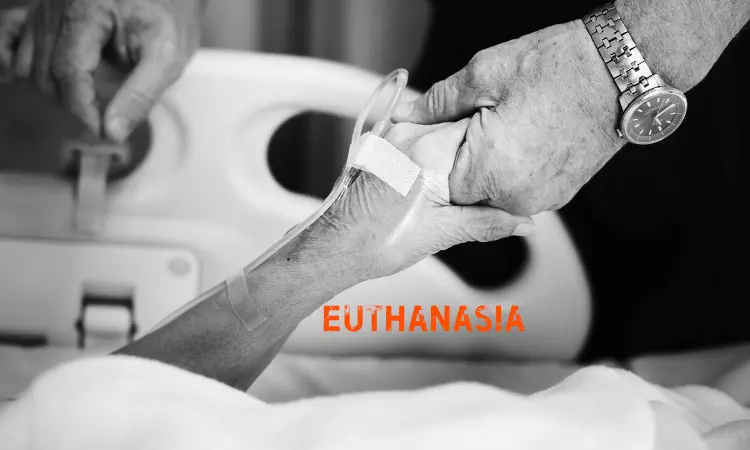
India's conversation on the right to die with dignity has evolved slowly, cautiously, and often through deeply tragic human stories. Two such stories, separated by more than a decade, mark the arch of this evolution: the case of Aruna Shanbaug, and the decision in Harish Rana allowing passive euthanasia for the first time.While the former set up the legal framework, the latter demonstrates...
This is a premium content
Available exclusively to
Our subscribers
Subscribe Premium 
INR 1099+GST
Your support helps us to bring you more content at
an affordable subscription scheme !!!
All payment options available
India's conversation on the right to die with dignity has evolved slowly, cautiously, and often through deeply tragic human stories. Two such stories, separated by more than a decade, mark the arch of this evolution: the case of Aruna Shanbaug, and the decision in Harish Rana allowing passive euthanasia for the first time.
While the former set up the legal framework, the latter demonstrates how that framework is being implemented in practice. The judgments trace India's gradual shift from 'right to life with dignity' to 'right to die with dignity' too.
Right to Die
The debate around the “right to die” began with Gian Kaur v. State of Punjab (1996), where a three-judge bench of the Supreme Court upheld the constitutional validity of the offence of abetment of suicide under the Indian Penal Code and ruled that the right to life under Article 21 does not include a right to die.
Though the Top Court did not then rule on the validity of active or passive Euthanasia, it made an important observation that later influenced euthanasia jurisprudence.
It noted that the right to live with human dignity would mean the existence of such a right upto the end of natural life. This also includes the right to a dignified life upto the point of death including a dignified procedure of death. In other words, this may include the right of a dying man to also die with dignity when his life is ebbing out.
This observation left room for future judicial recognition of passive euthanasia and end-of-life autonomy.
In 2006, the 196th Law Commission of India said that withholding life support or medical treatment of terminally ill patients does not attract criminal liability of attempt to suicide, provided it is done in the best interest of the patient.
Aruna Shanbaug Case
The debate on euthanasia in India first reached the judiciary through Aruna Shanbaug v. Union of India.
Aruna Shanbaug, a nurse at King Edward Memorial Hospital, had been in a persistent vegetative state since a brutal sexual assault in 1973 deprived oxygen supply to her brain. She remained in this condition for more than four decades.
In 2009, journalist Pinki Virani approached the Supreme Court seeking permission for euthanasia on Shanbaug's behalf.
While the Court refused euthanasia (in 2011) largely because the hospital staff caring for Shanbaug opposed withdrawing life support, it delivered a historic ruling— passive euthanasia was legalised in India, subject to prescribed safeguards and High Court approval.
At the same time, the Supreme Court had also held that passive euthanasia can be made lawful "only by legislation" and thus, the procedure prescribed by it should be followed until Parliament makes legislation on this subject.
The judgment introduced the idea that in certain circumstances, withdrawal of life-support treatment may be legally permissible when recovery is medically impossible.
Living Wills And Right To Die With Dignity
The doctrine evolved further in Common Cause v. Union of India (2018), when a Constitution Bench of the Supreme Court comprising Chief Justice of India Dipak Misra, Justice A.K. Sikri, Justice A.M. Khanwilkar, Justice D.Y. Chandrachud and Justice Ashok Bhushan recognised that the right to die with dignity forms part of Article 21 of the Constitution.
While holding that passive euthanasia is legally valid, the Top Court had said, “Though the sanctity of life has to be kept on the high pedestal yet in cases of terminally ill persons or PVS patients where there is no hope for revival, priority shall be given to the Advance Directive and the right of self-determination”.
The Court had also introduced the concept of advance medical directives or “living wills.”
A living will is a written document that allows a patient to give explicit instructions in advance about the medical treatment to be administered when he or she is terminally ill or no longer able to express informed consent.
It includes authorizing their families to switch off life support in case a medical board declared that they were beyond medical help.
The ruling significantly expanded patient autonomy by allowing individuals to retain control over end-of-life medical decisions even when they cannot communicate their wishes.
Making Passive Euthanasia Workable
Despite the progressive nature of the 2018 judgment, its procedural safeguards proved extremely complex in practice.
The 2018 judgment spelled out several safeguards relating to the competence of an individual to execute an advance directive and the procedure, its contents, how it ought to be recorded and preserved, when and by whom it could be enforced, where to prefer an appeal against a hospital medical board refusing permission, and the circumstances under which an advance directive could be revoked or would be inapplicable.
However, soon thereafter, in 2019, the Indian Council of Critical Care Medicine moved an application before the Supreme Court, highlighting the difficulties faced by families or hospitals in executing living wills.
Finally, in 2023, a Constitution Bench comprising Justices K.M. Joseph, Ajay Rastogi, Aniruddha Bose, Hrishikesh Roy, and C.T. Ravikumar modified the earlier guidelines and simplified several aspects of the procedure to make the process “workable”.
Several key changes were introduced:
Under the 2018 guidelines, a person's advance directives had to be countersigned by a Judicial Magistrate. This made the process somewhat cumbersome. In 2023, the Top Court omitted this requirement and allowed attestation of advance directives by a notary or gazetted officer.
Earlier, only one guardian or relative could be named as a surrogate decision-maker, who would, at the time of the execution of the advance directive, be informed of the nature of illness, availability of medical care, and the consequences of remaining untreated. The modified rules allowed more than one guardian or close relative to be designated as a surrogate decision-maker.
Previously, the constitution of medical boards was complex, also involving a district collector. The revised framework introduced primary and secondary medical boards, both expected to give their opinions within 48 hours.
Earlier, treatment could be withdrawn only after “approval” from a judicial magistrate. Now, hospitals only need to “convey” the medical board's opinion to the magistrate.
Law In Action
All this while, Harish Rana remained on Clinically Administered Nutrition (CAN) with no signs of recovery, after falling from a building in 2012 and sustaining severe brain injuries.
His family approached the Supreme Court in 2024, soon after the 2023 judgment, seeking permission to withdraw life-sustaining treatment of their now 32-year-old son.
The Supreme Court permitted withdrawal of life support following compliance of procedural safeguards, noting that prolonging Harish's biological life was not in his best interest as there was no improvement in his condition.
“For the past 13 years, the appellant has lived a life defined by pain and suffering. A suffering made more cruel, as unlike most of us, he was stripped of his ability to even give voice to his anguish,” Justice Pardiwala said in his 286-page judgment.
The decision brings India's jurisprudence on passive euthanasia to a full circle.
Though in the Shanbaug case the Supreme Court disallowed passive euthanasia despite recognising it in principle, its decision to let Harish Rana bid farewell reflects greater institutional confidence in implementing the doctrine.
In fact, the Top Court has flagged the legal “vacuum” governing passive euthanasia in India and has urged the government to consider enacting a comprehensive legislation on the subject.
What Changed?
The legal shift from Gian Singh to Aruna Shanbaug to Harsih Rana reflect three major developments in Indian constitutional law:
One, the legal foundation is now stronger. Passive euthanasia is firmly linked to the constitutional guarantee of dignity under Article 21.
Second, procedural clarity has improved. The 2023 modifications removed bureaucratic hurdles that previously made living wills difficult to execute.
Third, judicial attitudes have evolved. Courts today appear more comfortable balancing the sanctity of life with the dignity of the individual at the end of life.
While Aruna Shanbaug's case opened the legal door to passive euthanasia, the 2018 and 2023 rulings built the constitutional and procedural framework. And the Harish Rana case demonstrates how that framework is finally being used in practice.
Starting from Gian Singh, a lot has changed.
Right to life now includes the right to die, with dignity.
Passive euthanasia is now legal, and no longer just on paper.
Living wills are a reality.
The law has evolved, and so has society.
Views personal. The author may be reached at akshita@livelaw.in
Tags

Akshita Saxena
Akshita Saxena is a Senior Associate Editor with LiveLaw

