



- Home
- /
- Top Stories
- /
- Reclaiming Peaceful Death Through...
Reclaiming Peaceful Death Through Living Will
Justice N.Anand Venkatesh
6 July 2026 3:00 PM IST
Modern science has achieved what our ancestors would consider absolute miracles. We have conquered devastating plagues, unraveled the human genome, and engineered complex machines capable of pumping blood and inflating lungs when the body itself has surrendered. Because of these triumphs, global life expectancy has skyrocketed over the last century. We are living longer than at any point in...
This is a premium content
Available exclusively to
Our subscribers
Subscribe Premium 
INR 1099+GST
Your support helps us to bring you more content at
an affordable subscription scheme !!!
All payment options available
Modern science has achieved what our ancestors would consider absolute miracles. We have conquered devastating plagues, unraveled the human genome, and engineered complex machines capable of pumping blood and inflating lungs when the body itself has surrendered. Because of these triumphs, global life expectancy has skyrocketed over the last century. We are living longer than at any point in human history.
But a profound, agonizing question now hangs over this progress: Has modern medicine truly extended life, or has it merely prolonged the act of dying? While science has mastered the art of adding years to our biological existence, it has fundamentally failed to ensure a healthy life and, crucially, a peaceful end. In our relentless, institutional pursuit to delay death at all costs, we have transformed the final chapter of human life from a sacred, familial transition into a clinical, mechanical nightmare.
The tragedy of the modern way of death is that it has become an equal-opportunity oppressor. No matter your social standing, wealth, or influence, the current medicalized pipeline routinely strips human beings of their dignity when they are most vulnerable.
THE PARADOX OF EXTENDED LIFE | |
Past Centuries | Natural Decline ---> Death at Home ---> Surrounded by Family |
The Modern Era | Chronic Illness ---> ICU Intervention ---> Isolated & Mechanized End |
Consider how different social strata meet their end in the sterile confines of a contemporary hospital.
For the poor, death is a compounding financial and emotional trauma. They often enter the healthcare system late, their bodies worn down by a lifetime of neglected chronic conditions. When terminal crisis strikes, they are swept into the bureaucratic machinery of public or low-cost Intensive Care Units (ICUs). Here, the focus shifts entirely to aggressive, defensive medical interventions. Tubes are inserted, ribs are cracked during desperate chest compressions, and lines are hooked up to clanging monitors. The poor die under glaring fluorescent lights, their families barred by visiting hours or crushed by the impending, ruinous debt of a futile battle.
The middle class fares no better; in fact, their trajectory is often defined by a slower, more agonizing financial liquidation. A lifetime of hard-earned savings, meant to be passed down as a legacy to children and grandchildren, is vaporized in a matter of weeks to pay for a private ICU bed. The middle-class family faces agonizing emotional blackmail: “If you love your parent, why aren't you opting for the next line of experimental treatment or ventilator support?” Caught in this trap of guilt, they authorize intervention after intervention. The result is a patient chemicalized into sedation, unable to speak, touch, or perceive, while their life's savings are systematically transferred to a corporate healthcare ledger.
Even the rich and the highly connected cannot buy their way out of this pathetic end. In fact, their privilege often inflicts a unique brand of torture. Because they have the capital and the connections, the most prominent specialists are summoned to their bedside. No doctor wants to be the one who "gave up" on a VIP. Consequently, the rich are subjected to the most aggressive, cutting-edge, and highly invasive interventions available on earth. They are kept biologically alive long after their consciousness has departed, trapped in a high-tech purgatory because their families and doctors have the resources to keep the machines humming indefinitely. Ultimately, these three distinct paths converge on the exact same grim destination.
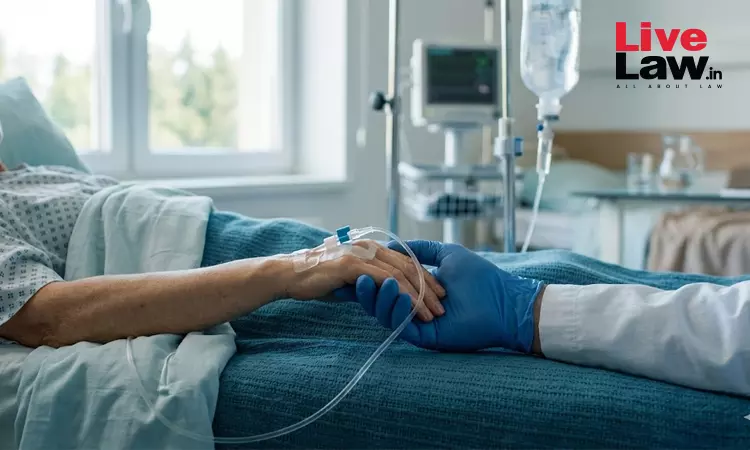
Whether rich, middle class, or poor, human beings are dying pathetic, isolated deaths inside a cold ICU. They die with plastic tubing taped to their faces, their hands restrained so they don't pull out their lifelines, completely cut off from the warmth of human touch. The final sounds they hear are not the soothing whispers of their spouses or children, but the rhythmic, mocking beep of a heart monitor and the hiss of a mechanical ventilator.
The Constitutional Right to Die with Dignity: In the landmark 2018 verdict (Common Cause v. Union of India), the Supreme Court of India ruled that the right to life under Article 21 of the Constitution includes the right to a dignified dying process, thereby granting legal sanctity to Living Wills.
To dismantle this agonizing paradigm, we must reclaim control over our bodies and our final chapters before the crisis hits. The most potent tool at our disposal to achieve this is the Living Will, legally known as an Advance Medical Directive. The legal landscape surrounding this tool changed fundamentally when the Supreme Court of India recognized Passive Euthanasia and the validity of Living Wills. In its historic 2018 judgment, a five-judge Constitution Bench declared that an adult human being of sound mental health has the right to decide that they do not want to be kept alive through artificial, mechanical life-support systems when medical recovery is impossible. To ensure its practical application, the Supreme Court further modified and simplified these guidelines in 2023, cutting through bureaucratic red tape so that citizens can seamlessly execute their directives before a notary or an officer of the court.
THE LIVING WILL BLUEPRINT |
Autonomy: You define your medical boundaries while your mind is entirely clear. |
Supreme Court Sanctity: Legally protected under the fundamental Right to Life (Article 21). |
Relief: Removes the crushing burden of guilt from your grieving family. |
A Living Will allows you to declare, clearly and unequivocally: “When my brain ceases to function, or when my illness is irreversible, do not tie me to a machine. Let me go gently.”
By explicitly choosing to refuse futile, invasive life-prolonging treatments (like ventilators or feeding tubes during terminal failure), a Living Will forces the healthcare system to pivot from aggressive engineering back to human care. It paves the way for robust palliative care—managing pain, ensuring comfort, and facilitating a peaceful, natural departure.
It is time for a collective cultural awakening. We must stop letting a highly institutionalized medical complex dictate how our lives should conclude. We must normalize conversations about death at our dinner tables, long before old age or illness shadows our doorsteps. Armed with the progressive legal framework provided by the highest court, we no longer have an excuse to remain silent.
Science has done its job by giving us longer lives. Now, it is up to us to do the human work of ensuring those lives end with peace, surrounded by the people we love rather than the machines we bought. We must advocate for the widespread awareness, legal simplification, and implementation of Living Wills in every household.
True medical progress should not be measured solely by how long we can delay the inevitability of the grave, but by how beautifully, gracefully, and peacefully we allow a human soul to cross the finish line. Let us take back our right to die with dignity.
Author is a Judge at Madras High Court . Views Are Personal.
Tags


