



- Home
- /
- Top Stories
- /
- Plea In Supreme Court Seeks Term...
Plea In Supreme Court Seeks Term Limit For Bar Council Chairperson, Review Of BCI's Functioning
LIVELAW NEWS NETWORK
15 Aug 2026 1:56 PM IST
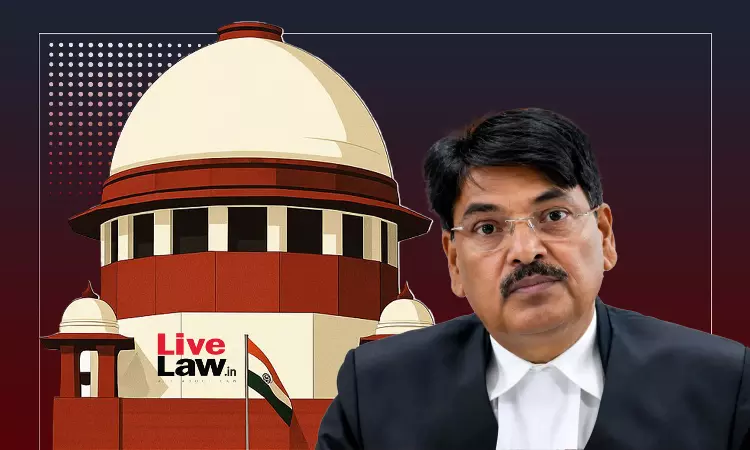
Amidst the immense public backlash faced by the present BCI Chairperson Manan Kumar Mishra over his recent directions passed against the NALSAR 2026 graduates, a writ petition has been filed before the Supreme Court challenging the provisions which allow the perpetual continuance of the same individuals at the top posts of the Bar Council of India (BCI) and State Bar Councils.The...
This is a premium content
Available exclusively to
Our subscribers
Subscribe Premium 
INR 1099+GST
Your support helps us to bring you more content at
an affordable subscription scheme !!!
All payment options available
Amidst the immense public backlash faced by the present BCI Chairperson Manan Kumar Mishra over his recent directions passed against the NALSAR 2026 graduates, a writ petition has been filed before the Supreme Court challenging the provisions which allow the perpetual continuance of the same individuals at the top posts of the Bar Council of India (BCI) and State Bar Councils.
The petitioner, Advocate M Varadhan, contended that prolonged continuance of elected representatives, delayed elections and the absence of cumulative tenure limits have weakened the democratic and representative character of the statutory bodies.
The petition, filed under Article 32 of the Constitution, has challenged the manner in which Section 4(3) of the Advocates Act, 1961, permitting members of the BCI to continue in office “until his successor is elected”, has operated when elections are delayed. The petitioner contended that a provision intended to prevent an institutional vacuum cannot be used to facilitate indefinite continuation of incumbents.
Referring to Sections 8 and 8A of the Advocates Act, the petitioner pointed out that State Bar Council members have a five-year tenure, with a statutory extension of not more than six months in specified circumstances. Section 8A provides for constitution of a Special Committee if elections are not held within the prescribed period and requires the committee to conduct elections within six months, subject to the statutory mechanism for extension.
The plea also raised concerns over Rule 32 of the Bar Council of India Certificate and Place of Practice (Verification) Rules, 2015, substituted by the BCI in June 2023.
According to the petition, the substituted Rule 32 enabled elected members and office-bearers of State Bar Councils to continue beyond the extended tenure contemplated under Section 8 where verification of advocates or preparation of electoral rolls remained incomplete. The rule contemplated an additional period of 18 months for verification followed by six months for elections.
The petitioner argues that the subordinate regulatory framework cannot enlarge the tenure prescribed by Parliament under Sections 8 and 8A of the Advocates Act. The petition therefore questioned Rule 32 on the ground that its operation can convert verification into a mechanism for postponing elections and prolonging the tenure of incumbent bodies.
The petition refers to earlier Supreme Court proceedings concerning verification of advocates, including Ajayinder Sangwan & Ors. v. Bar Council of Delhi, stating that the Court had directed verification and elections to proceed simultaneously rather than allowing verification to indefinitely stall the electoral process. It also refers to the Supreme Court's 2023 decision in Ajay Shankar Srivastava v. Bar Council of India, in which a High-Powered Committee headed by former Justice Deepak Gupta was constituted to supervise the verification exercise.
Continuation of BCI leadership with same individuals
The petitioner notes that Rule 12(2) of the BCI Rules prescribes a two-year tenure for the Chairman and Vice-Chairman but does not impose a cumulative ceiling on repeated occupation of the offices.
The petitioner pointed out, in recent decades, the top posts have been been occupied by representatives associated with only a limited number of States. It particularly highlights the present Chairmanship of Senior Advocate Manan Kumar Mishra, which has been continuing since November 9, 2014. The petitioner, however clarified that the challenge is not directed at the competence of any individual but at the absence of a mechanism ensuring periodic leadership renewal and wider regional representation.
The petition proposes a one-year tenure for the Chairman and Vice-Chairman, with a maximum of three terms in a lifetime, along with a rotational mechanism to provide representatives from different States and regions an opportunity to occupy the apex office.
Reliefs sought
The petitioner sought a declaration that the Section 4(3) proviso is unconstitutional to the extent that it permits indefinite or unreasonably prolonged continuation of BCI members, or alternatively that the provision be read down as a strictly transitional mechanism.
The petition further seeks directions for a one-year tenure for the BCI Chairman and Vice-Chairman, a lifetime ceiling of three terms, a transparent rotational system for the Chairmanship and safeguards against circumventing tenure limits through alternate designations or interim arrangements.
The petitioner has also sought an independent and periodic institutional review mechanism covering the BCI's compliance with the Advocates Act, functioning of its office-bearers, legal-education regulation, financial administration and compliance with Supreme Court directions.
It may be recalled that the Supreme Court last year directed the conduct of the much-delayed State Bar Councils in another petition filed by the same petitioner.
The petition has been filed by Advocate Rajesh Singh Chauhan.
Tags


