



- Home
- /
- Top Stories
- /
- Right To Dissent Must Be Protected...
Right To Dissent Must Be Protected Against Intolerant, Fanatical Groups: Justice Ujjal Bhuyan
Gursimran Kaur Bakshi
20 May 2026 1:49 PM IST
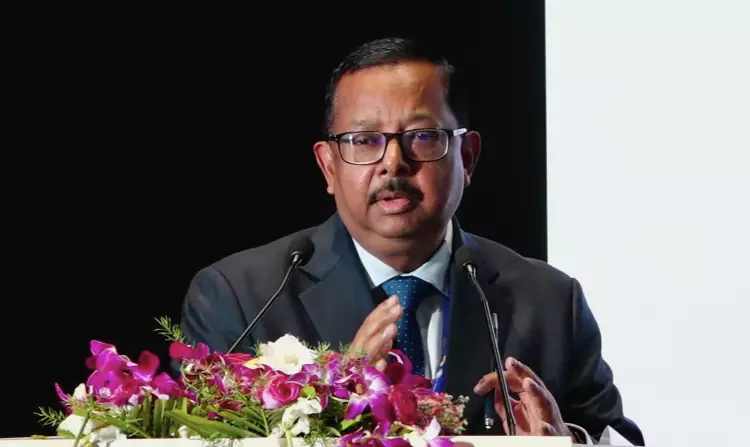
"When intolerance reigns, reason takes a back seat. An intolerant society can never be a progressive, inclusive society."
Justice Ujjal Bhuyan of the Supreme Court recently remarked that dissent must not be penalised and those who dissent must be protected against coercive State and non-State actors, especially those led by fanatical, intolerant groups. Speaking at the valedictory ceremony of the Smt. Nirmala Devi Bam International Moot Court Competition, organised by Indore Institute of Law, Justice...
This is a premium content
Available exclusively to
Our subscribers
Subscribe Premium 
INR 1099+GST
Your support helps us to bring you more content at
an affordable subscription scheme !!!
All payment options available
Justice Ujjal Bhuyan of the Supreme Court recently remarked that dissent must not be penalised and those who dissent must be protected against coercive State and non-State actors, especially those led by fanatical, intolerant groups.
Speaking at the valedictory ceremony of the Smt. Nirmala Devi Bam International Moot Court Competition, organised by Indore Institute of Law, Justice Bhuyan remarked that law constantly teaches us how to engage with differing viewpoints and opinions. He said that the Constitution itself recognises this spirit, including the Preamble, which resolves to secure to all citizens liberty of thought, expression, belief, faith and worship. Therefore, tolerance and respect for differing viewpoints occupy a very important place in our constitutional scheme.
Referring to his concurring opinion in Atul Mishra v. Union of India( plea against 'Ghooskhor Pandat' movie), he said: "I delved into the concepts of fraternity and free speech. Friends, when we talk about fraternity, there naturally comes the question of tolerance, dissent and respect for differing viewpoints. One of the solemn objectives of our Constitution, which finds mention in the Preamble itself, is to promote amongst all citizens, fraternity, thereby assuring the dignity of the individual and the unity and integrity of the nation. Fraternity, as articulated in the Preamble, embodies a sense of collective brotherhood amongst all Indians; a sense of acknowledgement; a sense of respect based on equality."
In Atul Mishra, Justice Bhuyan observed that it is constitutionally impermissible for anyone, including State and non-State actors, to vilify or denigrate any community through speeches, memes, cartoons or visual art. In this case, the title of the Netflix movie 'Ghooskhor Pandat' was challenged as denigrating a community. The case was closed after its director, Neeraj Pandey, informed by way of an affidavit that the objectionable title would be changed.
Justice Bhuyan also referred to how Dr BR Ambedkar had warned that without fraternity, liberty would produce the supremacy of a few over the many'.
The judge said that fraternity also advocates that there is always a space for dissent and tolerance, which gives space for all kinds of belief and ideology to exist: "Disagreements with the beliefs and ideology of others are no reason for their suppression because tolerance recognises that there can be more than one view. Intolerance stems from a dogmatic conviction about the rightness and superiority of one's own beliefs over others. When intolerance reigns, reason takes a back seat. An intolerant society can never be a progressive, inclusive society."
Adding to this, Justice Bhuyan told the audience that history repeatedly demonstrates that free speech and expression have often become instruments for social transformation. Whether it was the civil rights movement led by Martin Luther King Jr. in the United States or movements for dignity and equality closer home, free speech and expression have enabled the marginalised and the excluded to participate in shaping constitutional culture and democratic discourse.
Justice, equality and liberty make an egalitarian society through promoting inclusive growth. At the same time, the real test of these constitutional principles is not the lived experiences of the privileged but in the experiences of those who remain marginalised and unheard.
"In that context, it has been very poignantly said that constitutionalism must be viewed from the perspective of 'constitutional losers, not winners. Perhaps that is why human rights can be meaningful only when human suffering is taken seriously," Justice Bhuyan concluded.
Gursimran Kaur Bakshi
Gursimran is the Principal Correspondent with LiveLaw for the Supreme Court. She can be reached out at: simrankaurbakshi@livelaw.in

