



- Home
- /
- Top Stories
- /
- Sabarimala Reference | How Can...
Sabarimala Reference | How Can Judgment Be Challenged In Writ? Supreme Court Questions Plea Against Dawoodi Bohra Practice
Gursimran Kaur Bakshi
22 April 2026 6:44 PM IST
During the Sabarimala reference hearing today, the Supreme Court questioned the maintainability of a writ petition which was filed challenging the practice of excommunication in the Dawoodi Bohra community.Noting that the writ petition was essentially challenging the 1962 judgment in Sardar Syedna Taher Saifuddin Saheb vs The State Of Bombay, Justice BV Nagarathna asked how a writ petition...
This is a premium content
Available exclusively to
Our subscribers
Subscribe Premium 
INR 1099+GST
Your support helps us to bring you more content at
an affordable subscription scheme !!!
All payment options available
During the Sabarimala reference hearing today, the Supreme Court questioned the maintainability of a writ petition which was filed challenging the practice of excommunication in the Dawoodi Bohra community.
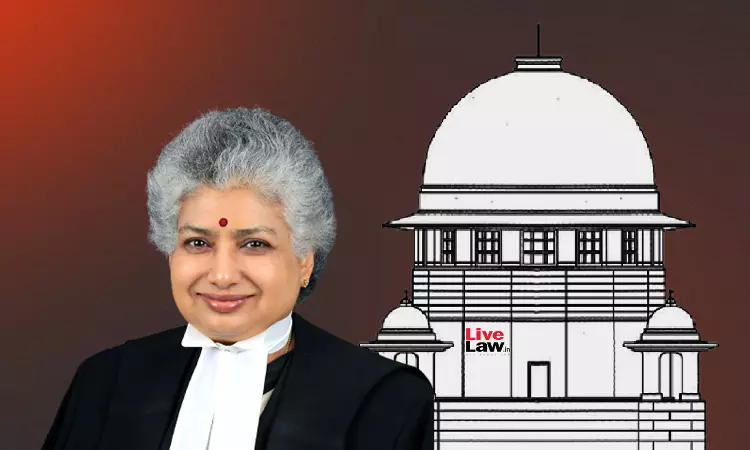
Noting that the writ petition was essentially challenging the 1962 judgment in Sardar Syedna Taher Saifuddin Saheb vs The State Of Bombay, Justice BV Nagarathna asked how a writ petition could be filed challenging a judgment.
In the 1962 judgment, the Supreme Court had struck down the Bombay Prevention of Ex-Communication Act by allowing a writ petition filed by the head of the community.
In 1986, a writ petition was filed by the Central Board of Dawoodi Bohra Community, seeking that the 1962 judgment be revisited. The petition remained pending in the Supreme Court for nearly three decades, until in 2023, a five-judge bench referred it to be heard along with the nine-judge bench reference in the Sabarimala matter. The 5-judge bench also expressed certain prima facie doubts regarding the 1962 judgment, which upheld the powers of the religious head to excommunicate members.
Today, before the 9-judge bench, Senior Advocate Neeraj Kishan Kaul(for the Syedna of the Dawoodi Bohra community, the respondent in the writ petition), questioned the maintainability of the writ petition.
Giving a history of the litigation, he said :
"How we came here is that original judgment of 1962, where Maharashtra legislation was challenged [and was struck down], and in 1986 came a writ petition which challenged the judgment of the constitution bench. First came a 7-judge bench, which we objected to, and then 5 judge was constituted. The 5-judge bench sent a reference saying that issues 3 and 4 have a direct bearing because of the balancing of rights under Article 21, and whether constitutional and public morality overlap."
Justice Nagarathna then asked if the principles of res judicata would not restrain the Court from going into the correctness of a judgment. She said that a Court can't be asked to sit in a review over its own judgments in writ jurisdiction.
She stated that recently, some NGO filed a writ petition challenging the 2014 judgment of the constitution bench, which upheld the exemption of minority educational institutions from the Right of Children to Free and Compulsory Education, 2009.
She remarked that the Court straightway deemed fit to impose an exemplary cost of Rs. 1 Lac because this is the grossest abuse of writ jurisdiction.
Justice Nagarathna said that if writ petitions are filed so carelessly, no judgment will ever attain finality.
"Recent case we dismissed it and imposed cost of 1 lac. Five judge Pramati [judgment] was challenged in an Article 32 petition. We didn't recall the order. Such a practice can't [inaudible]. There will be no finality then."
Senior Advocate Raju Ramachandran, for the petitioners, responded that he will argue the case and satisfy the Court as to why the Article 32 petition was filed.
But she remained seemingly unconvinced and said: "You can't go on like this, filling writ petitions and challenging judgments of this court. There will be no finality. In Antuly, two judges questioned five judges and raised 10 questions. The matter was referred to 7 judges, and by 5:2 the majority held that two judges were correct and set aside the five judges. That is different from this, where parties go on challenging, where is the end? What is the status of earlier judgments then? It has no finality. We are on practice rather than on law."
CJI Kant intervened and said the Court will have to determine, as a general principle of law, whether the Court, in exercise of Article 32 or 226, can revisit a judgment.
CJI Kant averted: "This is not with reference to one individual matter, but as general principle of law, we would like to examine whether the court in exercise of Article 32 or 226, is in a position or competent to revisit a judgment by assuming the power of review or recall."
Today was the seventh day of the Sabarimala reference.
Also from today's hearing - Can't Lay Down Blanket Rules On State Interference In Religion For Social Reform : Supreme Court In Sabarimala Reference Hearing
Gursimran Kaur Bakshi
Gursimran is the Principal Correspondent with LiveLaw for the Supreme Court. She can be reached out at: simrankaurbakshi@livelaw.in

